+3197010267156

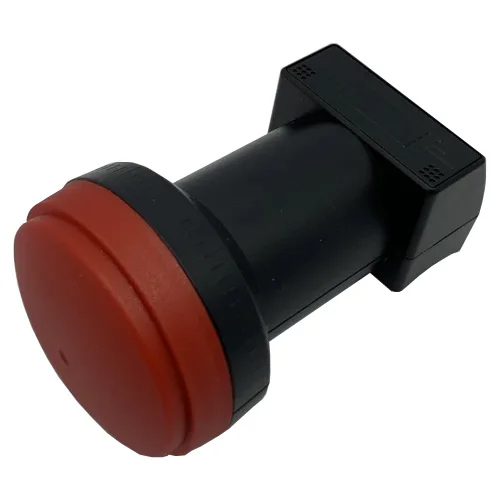
QO-100 Bullseye TCXO LNB - Ultra Stable LNB for QO-100 and Ku Band Satellites

Q-10-RTL--THGMIG
Academic & research discount available
For universities, labs and student engineering teams.
14 Days
Price in points: 70 points
Reward points: 1 point
Delivery

These are some of the delivery methods we use. However, availability and delivery times may vary depending on your country.

Payment options
Mastercard Visa IDeal Bancontact Bank Transfer
Explore and use a variety of other convenient payment methods available at the checkout page.
Our advantages
  • Order Protection: If your order is lost, we guarantee a replacement or a refund. Terms apply.
  • Easy Returns: Enjoy a simple and hassle-free return process.
  • Flexible Payments: Choose from multiple secure payment options that fit your needs.
  • Best Prices: Get the best value on all our products.
Description

Includes 1x QO-100 Bullseye TCXO LNB

This is a TCXO stabilized LNB for the QO-100 / Es'hail-2 geostationary amateur satellite and other Ku-band satellites. Manufactured by Othernet.

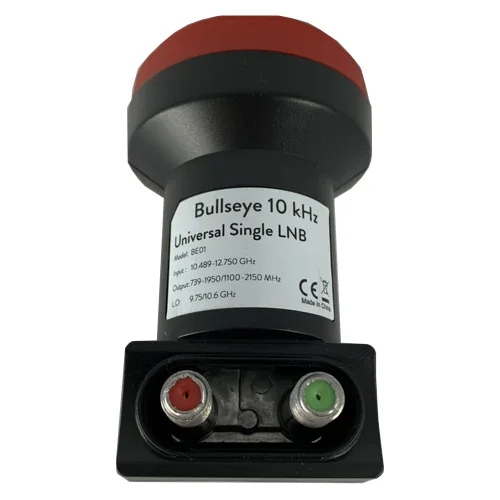
The Bullseye LNB is the world's most precise and stable DTH/consumer Ku-band down converter. Even a VSAT LNBF costing hundreds of dollars more is no match for the performance of the Bullseye 10K LNB. Each unit is calibrated at the factory to within 1 kHz of absolute precision against a GPS-locked spectrum analyzer. Under outdoor conditions, the stability of the LNB is well within 10 kHz of offset. As a bonus feature, the  Bullseye 10K provides access to its internal 25 MHz TCXO through the secondary F-connector. This reference output can be used to directly monitor the performance of the TCXO over time. 

Features

  • Bullseye 10 kHz BE01
  • Universal single output LNB
  • Frequency stability within 10 kHz in normal outdoor environment
  • Phase locked loop with 2 PPM TCXO
  • Factory calibration within 1 kHz utilizing GPS-locked spectrum analyzers
  • Ultra high precision PLL employing proprietary frequency control system (patent pending)
  • Digitally controlled carrier offset with optional programmer
  • 25 MHz output reference available on secondary F-connector (red)

Specifications 

  • Input frequency: 10489 - 12750 MHz
  • LO frequency 9750/10600 MHz
  • LO frequency stability at 23C: +/- 10 kHz
  • LO frequency stability -20 - 60C: +/- 30 kHz
  • Gain: 50 - 66 dB
  • Output frequency: 739 - 1950 MHz (low band) and 1100 - 2150 (high band)
  • Return loss of 8 dB (739 - 1950 MHz) and 10 dB (1100 - 2150 MHz)
  • Noise figure: 0.5 dB

NOTE: Requires a 12-19V bias tee power injector, the RTL-SDR Blog V3 dongles's 4.5V bias tee is NOT for this LNB. 11.5 - 14V enables vertical polarization and 16 - 19V enables horizontal polarization.

Products questions
Ask question
Hans
12/27/2025, 22:40
Hallo, ich hätte ein paar Fragen zum Bullseye: 1.Gibt es eine Begrenzung beim 10ghz Eingang bzw. der ZF? Benötige 10.200Ghz Eingang würde rechnerisch bei 9750/ 450Mhz ZF bedeuten. 2.Wieweit lässt sich die 25Mhz Injektions Frequenz ziehen? 3.Ist das Oberband / 10.500 / 22Khz noch funktionsfähig und ließe sich dieser auf 11.000 ziehen bzw. erweitern. Vielen Dank für die Bemühungen 73 de Dg7naj Hans
SDRstore Support
12/27/2025, 23:02
Hello Hans, Thank you for your questions about the Bullseye TCXO LNB. Here are the answers based on the product’s specifications: 1. Is there a limitation at 10 GHz input or the IF? I need 10.200 GHz input, which would mathematically mean 9750/450 MHz IF. The Bullseye LNB input frequency range covers 10489 MHz up to 12750 MHz. A 10.200 GHz signal is below the specified input range, so the LNB cannot properly downconvert that frequency. • Output IF ranges are approximately 739–1950 MHz (low band) and 1100–2150 MHz (high band) based on the L.O. being 9750/10600 MHz, respectively. 2. How far can the 25 MHz injection/reference frequency be pulled? The 25 MHz output is a reference signal taken from the internal TCXO. This output is provided so you can monitor or use that stable reference to lock external equipment, but its frequency is fixed at 25 MHz. It is not a variable injection frequency you can sweep. 3. Is the upper band / 10.500 / 22 kHz still functional and could it be extended to 11.000 GHz? The LNB does receive signals around 10.489 GHz (the QO-100 narrowband downlink) within its input range. Its upper input range goes up to ~12.75 GHz, so in principle frequencies near 11.000 GHz are within the supported input. However, just tuning the internal LO by tens of MHz (e.g., adjusting 10.500 to 11.000) is not something supported as a user control. The LO options are at the factory-set 9750 MHz (low) and 10600 MHz (high) modes for correct downconversion within the specified IF bands. Also, the ±22 kHz figure you mention likely refers to frequency stability tolerance, not a tunable range. The TCXO’s stability is typically within about ±10 kHz at 23 °C and variations up to ±30 kHz over wider temperatures. Summary: • The Bullseye LNB *does not support a 10.200 GHz input frequency — it starts at ~10.489 GHz. • The 25 MHz reference is fixed and not user-tunable. • The LO frequencies are fixed. You can receive up to ~12.75 GHz signals, but you cannot shift the internal LO freely to push a 10.2 GHz signal into the IF. If you want to receive frequencies outside the Bullseye’s specified input range, you might need an LNB with a suitable LO or an external conversion scheme. Best regards, The SDRstore Team
Reviews

No reviews found

You may be interested
  • Similar products
  • Most Popular
  • On Sale
  • Recently Viewed
 
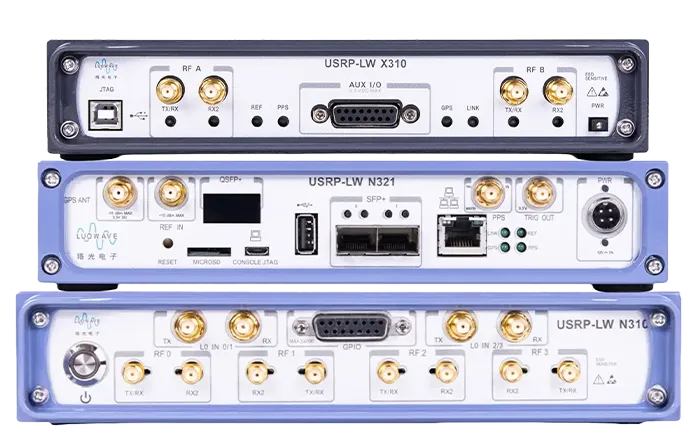
USRPDevices
Find your USRP today.
Shop now.
Buy
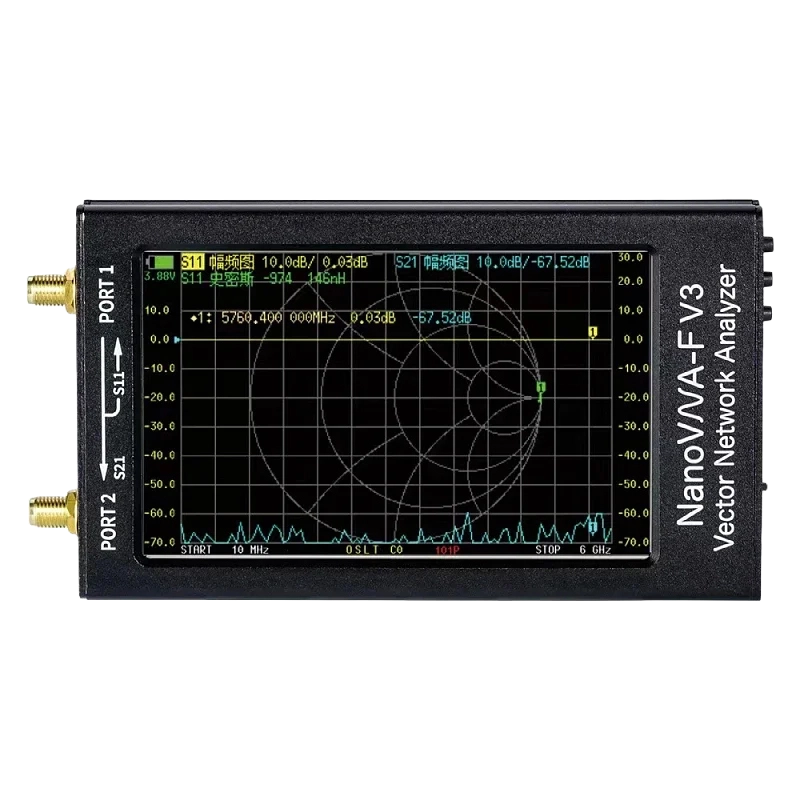
NanoVNA-FV3
Best Value Analyzer.
Start analyzing with confidence.
Buy
HackRF H4MClifford Edition
Compact. Capable.
Clifford delivers more.
Buy
Fast and high quality delivery

We deliver products internationally.

Quality assurance and service

We offer only those goods, in which quality we are sure

Returns within 14 days

You have 14 days to test your purchase