
+3197010267156
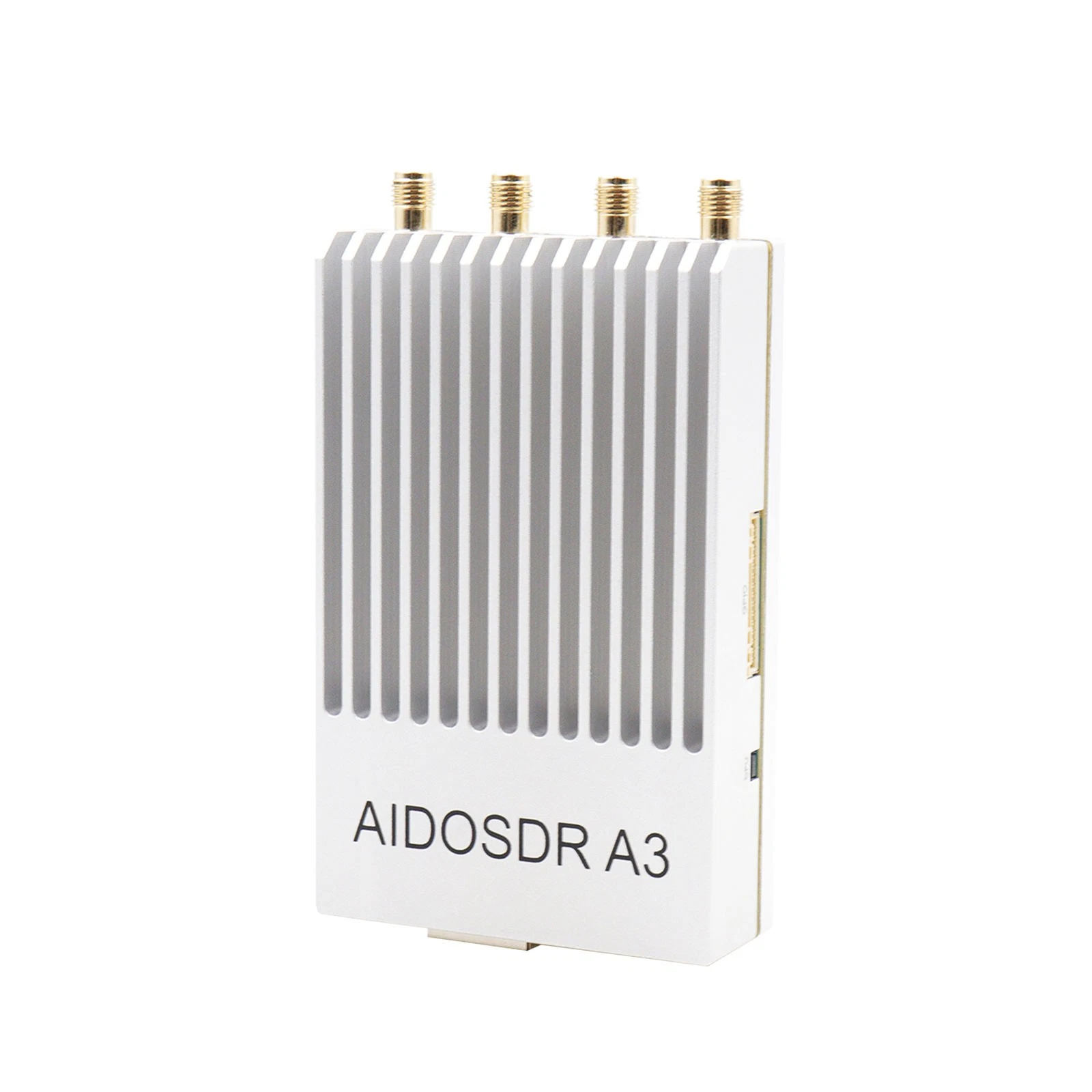
AIDOSDR A3 Zynq7020 + AD9363 2TX/2RX Open Source SDR Development Board for ADI Pluto
41231 49085

AIDOSDR A3 Zynq7020 + AD9363 2TX/2RX Open Source SDR Development Board for ADI Pluto
DSDR-PLTS-1FYKSO
14 Days
Price in points: 420 points
Reward points: 8 points
+
Add to wish list Compare Ask a question Please login to request quote for this product
If you order now
Destination: Netherlands
Estimated ship time
1 day
Mon, Jul 20
Estimated delivery
7-8 business days
Estimated total transit
Delivery

We offer free shipping for orders over 415 EUR. Free shipping also applies to products marked with the Free Shipping sticker, even if the order total is below this amount. Availability and delivery times may vary depending on your country.

Payment options
Mastercard Visa IDeal Bancontact Bank Transfer
Explore and use a variety of other convenient payment methods available at the checkout page.
Our advantages
  • Order Protection: If your order is lost, we guarantee a replacement or a refund. Terms apply.
  • Easy Returns: Enjoy a simple and hassle-free return process.
  • Flexible Payments: Choose from multiple secure payment options that fit your needs.
  • Best Prices: Get the best value on all our products.
Description

The AIDOSDR A3 is an open source software defined radio (SDR) development board built around a powerful Zynq7020 SoC + AD9363 RF transceiver combination, offering 2 transmit and 2 receive channels in a compact, integrated design. Positioned as a high-end upgrade path for Pluto-class SDRs, it delivers excellent RF performance with flat TX response, up to 70 dB RX gain, and receive sensitivity better than -110 dBm.

AIDOSDR A3 supports most mainstream SDR applications including SDR++, SDR#, IIO Oscilloscope, GNU Radio, Matlab, SDRangel, and STASAGEN, giving it a strong ecosystem and community base. With Python and C++ programming interfaces and ready-to-use demos, you can quickly build custom waveforms, signal processing pipelines, and wireless applications on top of its Zynq7020 + AD9363 platform.

Key Features

  • Baseband: Xilinx Zynq7020 SoC for FPGA + ARM processing
  • RF Front-end: AD9363 agile transceiver with 2 TX and 2 RX channels (2T2R)
  • RX Performance: Up to 70 dB receive gain, sensitivity better than -110 dBm (typ.)
  • Reference Clock: High-stability VCTCXO for low-jitter RF performance
  • Ecosystem: Works with SDR++, SDR#, IIO Oscilloscope, GNU Radio, Matlab, SDRangel, STASAGEN
  • APIs: Python and C++ interfaces, with demo projects for faster application development

Mechanical & Thermal Design

  • Enclosure: Integrated aluminum alloy shell for protection and EMI reduction
  • Thermal Management: High thermal conductivity silicone pads couple hot components to the case for efficient heat dissipation and stable long-term operation
  • Form Factor: Compact, robust design suitable for bench use and embedded deployments

Software & Development

  • Supported Software: SDR++, SDR#, IIO Oscilloscope, GNU Radio, Matlab/Simulink, SDRangel, STASAGEN
  • Programming: Python and C++ SDK support for custom control and signal processing
  • Use Cases: Openwifi/Open5G experimentation, digital communications, spectrum analysis, education, and research

Package Contents

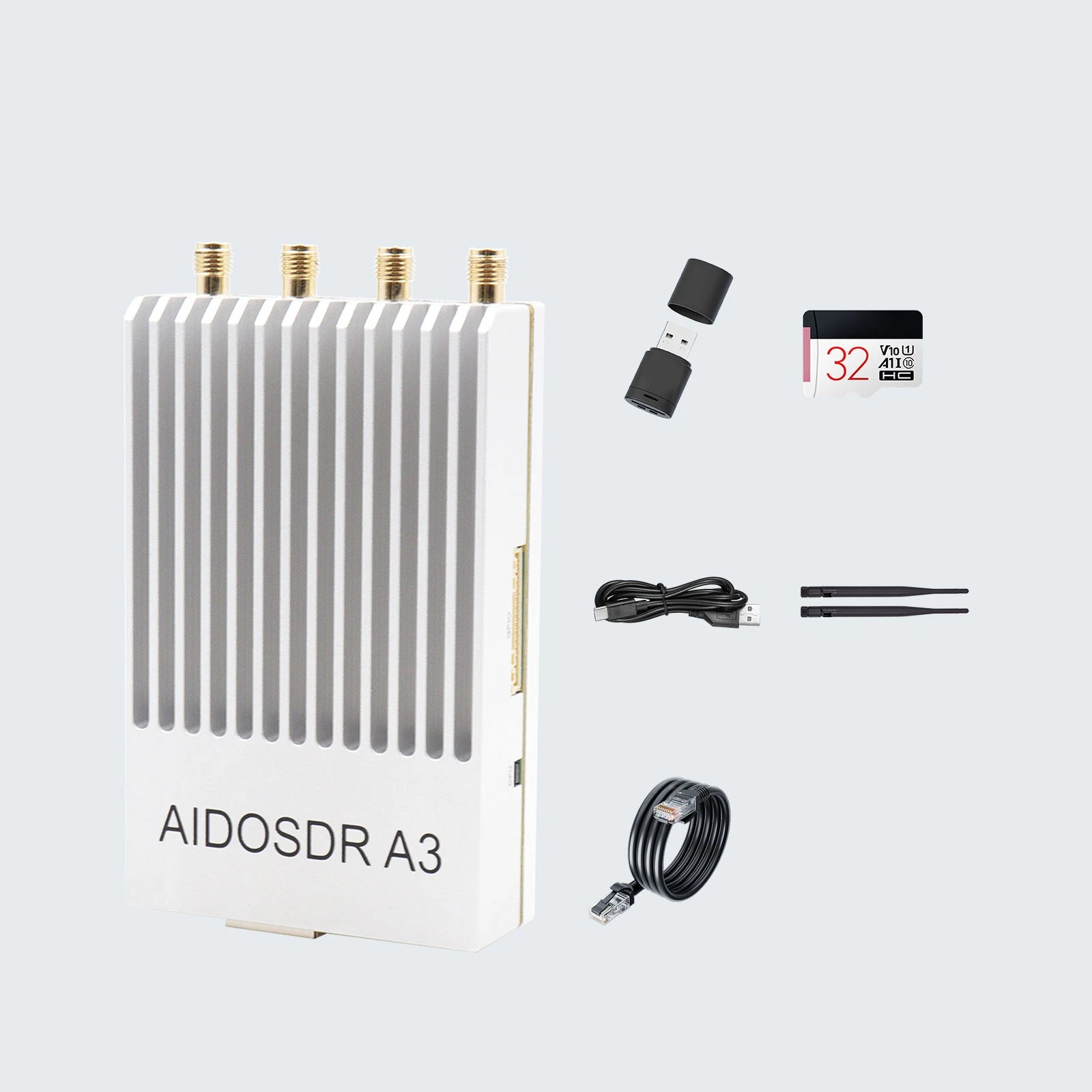
  • 1 × AIDOSDR A3 SDR Development Board (Zynq7020 + AD9363, 2TX/2RX)
  • 2 × USB data cables
  • 1 × Card reader
  • 1 × 32GB SD card
  • 1 × Network cable
  • 2 × Short rubber rod antennas

With its combination of Zynq7020 processing, AD9363 RF front-end, robust aluminum enclosure, and rich software support, the AIDOSDR A3 is an excellent platform for SDR developers, researchers, and advanced hobbyists who want an open, scalable alternative to ADALM-Pluto-class devices.

Products questions
Ask question
Max
06/12/2026, 00:01
Hello, I have a few questions 1. Boot method: does the board boot from the included microSD card, or is the SD card only used for storage? I'd like to be able to flash firmware images to the card and recover by simply reflashing it. 2. Firmware: does it ship with the AD9363 already "unlocked" (extended tuning toward ~70 MHz–6 GHz, AD9364-style), or do I unlock it myself? If self-unlock, do you have a short guide? 3. Exact parts: can you confirm the FPGA part number (XC7Z020-CLG400?) and the AD9363 marking (ABCZ or BBCZ)? 4. Recovery: do you provide a factory SD image / firmware download and the matching device tree, in case I need to restore the board to stock? 5. Dev compatibility: is the board compatible with PlutoSDR firmware and FPGA development via the ADI HDL reference designs / openwifi-style projects? 6. Is there any technical sheet i can take a look at?
SDRstore Support
07/15/2026, 18:46
Hello, Thank you for your detailed questions. Please see the answers below: Boot method: The board includes both onboard QSPI flash and a microSD card slot, and both can be used as boot sources. The supplied 32 GB microSD card contains PlutoSDR-compatible firmware. This means you can use the SD card for firmware testing and recovery without immediately overwriting the onboard flash. AD9363 frequency extension: The supplied firmware is configured for operation across approximately 70 MHz to 6 GHz and supports both transmit and receive channels. You should therefore not need to perform the standard ADALM-Pluto AD9363-to-AD9364 software modification yourself for normal use. Main components: The current manufacturer specification lists: FPGA/SoC: Xilinx XC7Z020-2CLG400I RF transceiver: AD9363BBCZ DDR3 memory: 1 GB QSPI flash: 16 MB If the exact physical chip marking is essential for your project, please contact us before ordering so that we can confirm the production batch. Recovery firmware: Factory firmware and recovery resources are available from the supplier and can be provided after purchase. The supplied SD card already contains compatible firmware. Availability of a separate, fully documented device-tree source package may depend on the firmware release, so please contact us with your order number if you require these development files. Development compatibility: The board is compatible with the PlutoSDR/libiio software ecosystem and can be used with applications such as GNU Radio, IIO Oscilloscope, SDR++, SDR#, MATLAB and SDRangel. However, it is not an official Analog Devices ADALM-Pluto board. ADI HDL reference projects, custom FPGA images and OpenWiFi-style projects may require modifications to the device tree, FPGA constraints, clock configuration and board-specific interfaces. They should not be considered completely drop-in without adaptation. Technical documentation: At present, we do not have a complete public datasheet comparable to the official Analog Devices documentation. We can provide the available firmware resources, specifications and supplier development materials after purchase. Please note that this board is mainly intended for experienced SDR and FPGA developers who are comfortable adapting PlutoSDR-compatible firmware to custom Zynq hardware. Best regards, The SDRstore Team
Reviews

No reviews found

You may be interested
  • Similar products
  • Most Popular
  • On Sale
  • Recently Viewed
 
USRPDevices
Find your USRP today.
Shop now.
Buy
NanoVNA-FV3
Best Value Analyzer.
Start analyzing with confidence.
Buy
HackRF H4MClifford Edition
Compact. Capable.
Clifford delivers more.
Buy
Fast and high quality delivery

We deliver products internationally.

Quality assurance and service

We offer only those goods, in which quality we are sure

Returns within 14 days

You have 14 days to test your purchase