





HackRF One Guide: Specs, Uses, Software & PortaPack Options

Updated for 2026: The HackRF One remains one of the best-known open-source software-defined radio platforms for learning about RF, monitoring the spectrum, developing wireless projects, and performing authorized radio-security research. This guide explains what the HackRF One can actually do, its important technical limitations, the software you can use with it, PortaPack options, and how it compares with newer HackRF hardware.
If you are ready to explore the hardware, you can browse the complete HackRF range at SDRstore, including HackRF One-compatible boards, PortaPack systems, antennas, accessories, and newer HackRF Pro options.
What Is the HackRF One?
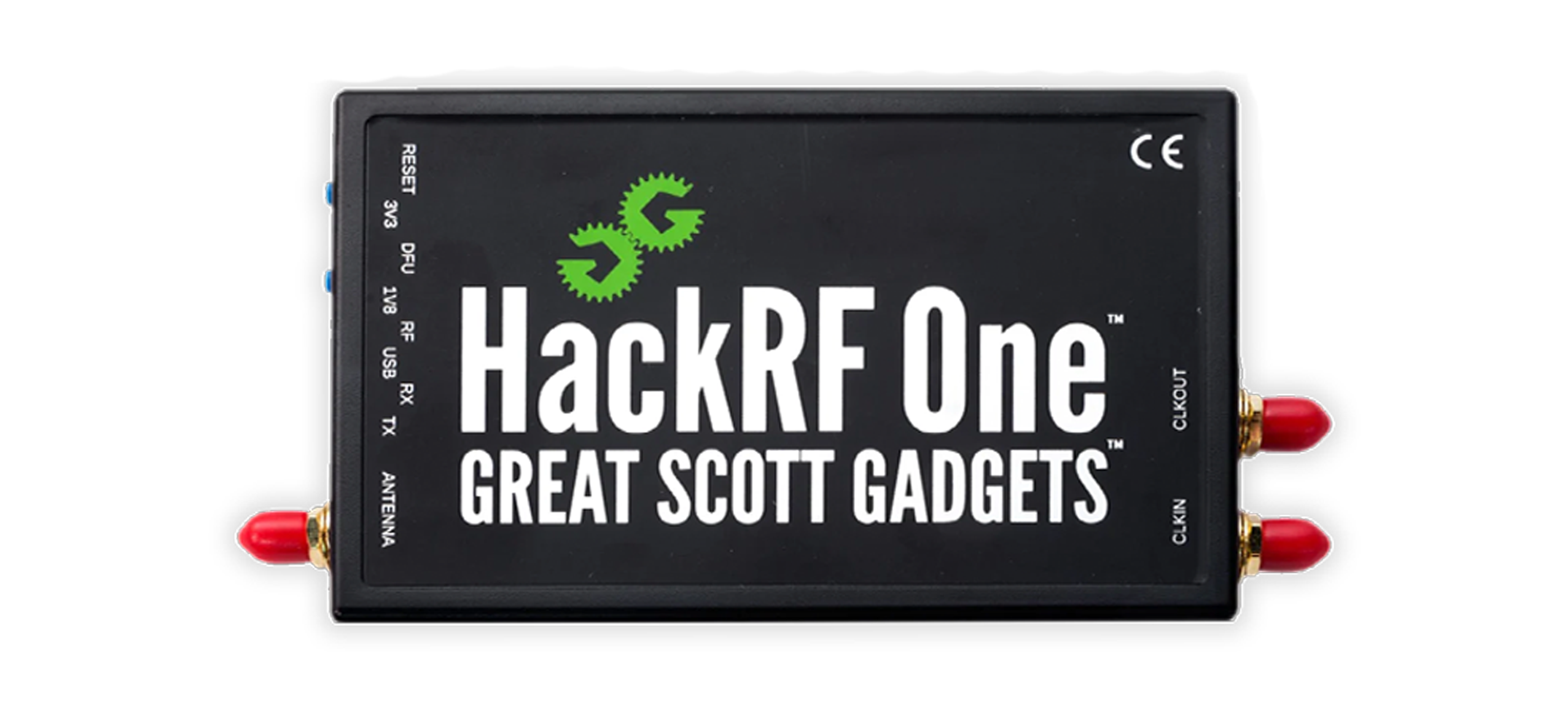
The HackRF One is an open-source software-defined radio, or SDR, originally developed by Great Scott Gadgets. It can receive or transmit radio signals across an operating frequency range of 1 MHz to 6 GHz, allowing one device to cover a large part of the RF spectrum used by consumer, amateur, industrial, scientific, satellite, navigation and experimental radio systems.
Unlike a conventional radio designed around one fixed protocol or frequency band, a software-defined radio moves much of the signal processing into software. That gives researchers, engineers, students and radio enthusiasts considerably more flexibility when studying different modulation types, examining spectrum activity, developing RF applications or experimenting with compatible protocols.
HackRF One is a half-duplex transceiver. It can transmit or receive, but it cannot do both simultaneously. This distinction is important when comparing it with full-duplex SDR platforms.
HackRF One Specifications at a Glance
| Feature | HackRF One specification |
|---|---|
| Operating frequency | 1 MHz to 6 GHz |
| Radio operation | Half-duplex transmit or receive |
| Sample rate | 2 to 20 MSps quadrature |
| Sample resolution | 8-bit quadrature samples: 8-bit I and 8-bit Q |
| Computer interface | Hi-Speed USB 2.0 |
| USB connector | USB Micro-B on the original HackRF One design |
| RF connector | SMA female, 50 ohm |
| Clock synchronization | SMA clock input and clock output |
| Antenna-port power | Software-controlled power for compatible active accessories |
| Gain and filters | Software-configurable RX/TX gain and baseband filtering |
| Power | USB powered |
| Hardware | Open source |
With up to 20 million samples per second, HackRF One can capture a relatively wide section of spectrum at once. Its 8-bit quadrature samples consist of separate 8-bit I and 8-bit Q values used by SDR software to represent the amplitude and phase of received radio signals.
How Does HackRF One Work?
When connected to a computer, HackRF One acts as a high-speed USB peripheral. Radio-frequency signals received through the antenna are converted into digital I/Q samples and transferred over Hi-Speed USB 2.0 to SDR software on the computer.
The software then performs tasks that would traditionally require dedicated radio hardware, including tuning, filtering, demodulation, visualization, recording and signal processing.
This architecture is what makes software-defined radio so flexible. Instead of purchasing a separate receiver or test instrument for every type of signal, the same RF hardware can be used with different software workflows.
What Can You Do With a HackRF One?
1. Explore and Monitor the RF Spectrum
One of the most useful applications is spectrum exploration. With suitable SDR software, you can tune across different frequency ranges and visualize activity using spectrum plots and waterfall displays.
This can help with RF education, interference investigation, locating active transmissions, antenna testing and understanding how different wireless systems occupy the spectrum.
2. Learn Digital Signal Processing
HackRF One is widely used as a practical introduction to software-defined radio and digital signal processing. Rather than studying modulation, filtering and sampling only in theory, students can work with real radio signals.
Great Scott Gadgets founder Michael Ossmann has also developed extensive educational material around software-defined radio and HackRF, which has helped make the platform particularly popular for RF training and experimentation.
3. Receive and Analyze Wireless Signals
Depending on the frequency, modulation, bandwidth and software being used, HackRF One can be used to examine many types of radio transmission.
Examples include broadcast radio, amateur-radio signals, ISM-band devices, telemetry, satellite transmissions, wireless sensors and other signals within its supported frequency range.
It is important to distinguish between receiving a signal and successfully decoding a protocol. Encryption, proprietary modulation, signal bandwidth and available software can all determine whether the information inside a transmission can actually be interpreted.
4. RF Development and Prototyping
Because HackRF One supports both RX and TX, developers can use it to prototype radio systems, generate test signals, evaluate modulation schemes and experiment with custom RF software.
Its open-source hardware design also makes it useful for engineers who want to understand or modify the platform instead of working with a closed radio architecture.
5. Authorized Wireless-Security Research
HackRF One is also frequently used in controlled security laboratories to understand how wireless devices communicate and to identify weaknesses in systems that the researcher owns or is authorized to test.
For example, researchers may study modulation patterns, protocol behavior or captured test signals inside an isolated environment. Transmission and signal-replay testing should only be performed where you have authorization and where the frequencies, power levels and equipment comply with local radio regulations.
HackRF One and PortaPack: Using SDR Without a Laptop
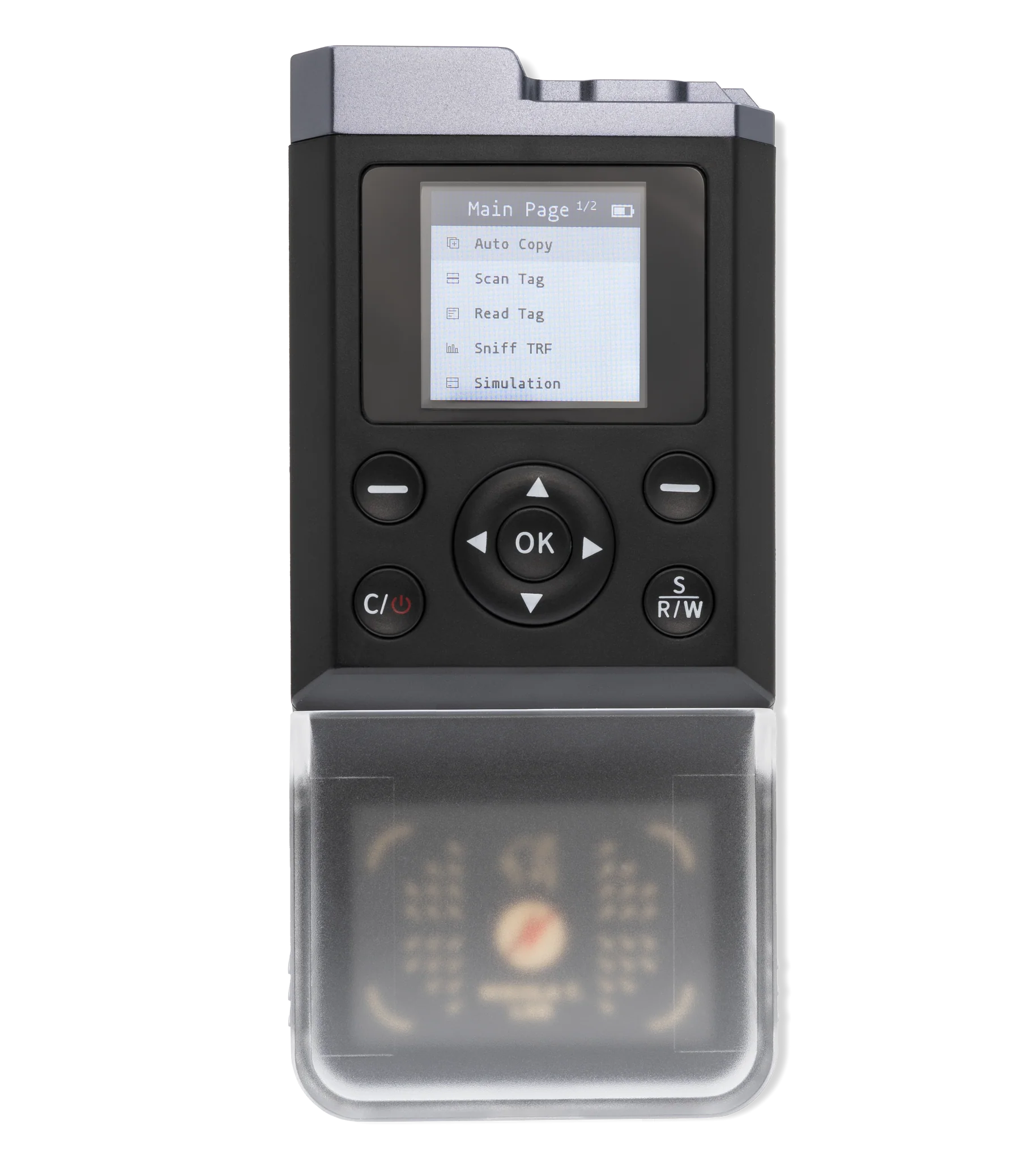
A standard HackRF One is most commonly used as a USB-connected SDR. Adding a compatible PortaPack changes the experience by providing a screen, controls and standalone firmware designed for portable RF work.
This is particularly useful for users who want to monitor the spectrum or perform field experiments without carrying a laptop.
For a ready-to-use portable configuration, SDRstore offers the HackRF One PortaPack H4M Mayhem Signature Edition. Available configurations can include the HackRF-compatible radio board, H4M hardware and additional accessories depending on the selected bundle.
PortaPack systems are especially attractive for portable spectrum visualization, receiver applications, signal recording and other RF experiments where a full computer setup would be inconvenient.
What Software Works With HackRF One?
HackRF One is supported by a broad SDR software ecosystem. Common options include:
- GNU Radio for building advanced signal-processing flowgraphs and custom radio applications.
- SDR# / SDRSharp for spectrum viewing, tuning and receiver applications with compatible HackRF support.
- CubicSDR for general-purpose SDR reception and spectrum exploration.
- hackrf-tools and libhackrf for direct interaction with HackRF hardware and command-line workflows.
- PortaPack firmware such as Mayhem for compatible standalone PortaPack configurations.
Your choice of software depends on whether you want simple spectrum monitoring, radio reception, development, digital-signal-processing experiments or more advanced custom applications.
Understanding the 20 MSps Sample Rate
The HackRF One supports quadrature sample rates from approximately 2 MSps up to 20 MSps. The sample rate determines how much spectrum can be processed at once and how much data has to travel through the USB connection.
A higher sample rate can provide a wider real-time view of the spectrum, but it also increases CPU, storage and USB bandwidth requirements.
This is one reason HackRF One uses Hi-Speed USB 2.0. A suitable USB cable and a reliable USB connection are important when operating at higher sample rates or recording large amounts of I/Q data.
Why Does HackRF One Have Clock Input and Output?
HackRF One includes SMA clock input and clock output connections. These can be used when multiple RF devices need a shared timing reference or when an experiment requires improved synchronization between pieces of equipment.
Clock synchronization is particularly useful in more advanced SDR laboratories, measurement systems and experiments involving multiple radios.
HackRF One Limitations You Should Know
HackRF One is extremely flexible, but understanding its limitations will help you decide whether it is the right SDR for your project.
- Half-duplex: it cannot transmit and receive simultaneously.
- 8-bit sampling: higher-end SDRs can offer greater dynamic range and higher-resolution ADCs.
- USB 2.0 interface: sufficient for its normal 20 MSps operation, but newer SDR platforms may offer faster host interfaces.
- RF performance depends on the setup: antenna selection, filters, gain settings, interference and external amplifiers can significantly affect results.
- Transmit power is limited: HackRF One is primarily an SDR development and experimentation platform rather than a high-power transmitter.
- The RF input requires care: excessive signal power can damage sensitive front-end components, so attenuation should be used when connecting strong RF sources.
HackRF One vs HackRF Pro
HackRF One is no longer the only modern HackRF-style option. The newer HackRF Pro architecture builds on the same concept while updating several important areas.
| Feature | HackRF One | HackRF Pro generation |
|---|---|---|
| Operating range | 1 MHz–6 GHz | 100 kHz–6 GHz |
| Normal sample rate | Up to 20 MSps | Up to 20 MSps in normal 8-bit mode |
| Standard sample resolution | 8-bit I/Q | 8-bit I/Q with additional precision modes available on supported hardware/software |
| USB | Micro-B, Hi-Speed USB 2.0 | USB-C, Hi-Speed USB 2.0 |
| Timing | Standard oscillator with clock I/O | Built-in TCXO plus clock/trigger capabilities |
| Logic | CPLD-based design | FPGA-based design |
| Best suited to | Learning, experimentation, established HackRF ecosystem | Users wanting newer hardware and improved RF/timing features |
If you are buying a new SDR and want the newer architecture, see the HackRF Pro-compatible 100 kHz–6 GHz USB-C SDR.
For a portable configuration, SDRstore also offers a HackRF Pro R1.2.1 with PortaPack H4M Pro.
HackRF One vs a Receive-Only SDR
If your main goal is simply listening to radio transmissions, a lower-cost receive-only SDR may be sufficient. HackRF One becomes more attractive when you need a much wider frequency range, transmitting capability, RF experimentation, custom development or compatibility with the HackRF and PortaPack ecosystem.
Users comparing several SDR platforms can explore the wider Software Defined Radio collection at SDRstore.
Do You Need a Special Antenna for HackRF One?
There is no single antenna that performs optimally across the entire 1 MHz–6 GHz frequency range. An antenna should ideally be selected for the part of the spectrum you plan to use.
Wideband antennas are convenient for general exploration, while band-specific antennas can provide substantially better performance for a particular application.
Always check what is included with a particular SDRstore bundle, as the HackRF board, enclosure, antenna, USB cable, PortaPack and other accessories can vary between configurations.
Is HackRF One Legal to Use?
Owning an SDR does not mean every possible transmission is permitted. Rules vary by country, frequency, application and transmit power.
Passive reception may also be regulated for certain services or types of communication. When transmitting, use HackRF hardware only on frequencies and under conditions where you are legally authorized to transmit.
For development and security research, the safest approach is to work with your own equipment in a controlled RF environment or use properly attenuated cable connections instead of transmitting over the air.
Is HackRF One Still Worth Buying in 2026?
Yes, for many applications. HackRF One remains attractive because of its broad 1 MHz–6 GHz operating frequency, mature software ecosystem, open-source design, large user community and extensive accessory support.
For someone learning SDR, experimenting with RF or wanting a platform with strong PortaPack compatibility, it remains highly capable.
However, buyers building a new high-end setup should also compare the newer HackRF Pro generation, particularly if USB-C, improved timing, extended low-frequency coverage or newer RF hardware are important.
Which HackRF Should You Choose?
Choose a classic HackRF One-style setup if you want a proven and widely supported SDR for computer-based experimentation, learning or integration into existing HackRF projects.
Choose a PortaPack H4M configuration if portability and standalone operation are important and you want to use compatible SDR applications without keeping a laptop connected.
Consider HackRF Pro hardware if you are building a new setup and want the newer platform, extended low-frequency coverage, USB-C and updated RF and timing features.
You can compare current availability, revisions, bundles and accessories in the HackRF store at SDRstore.eu.
Frequently Asked Questions About HackRF One
What frequency range does HackRF One cover?
HackRF One has a specified operating frequency range of 1 MHz to 6 GHz.
Can HackRF One transmit and receive at the same time?
No. HackRF One is a half-duplex transceiver, meaning it can transmit or receive but cannot perform both operations simultaneously.
What is the maximum HackRF One sample rate?
HackRF One supports quadrature sample rates up to 20 MSps, with 8-bit I and 8-bit Q samples.
Does HackRF One use USB 2.0?
Yes. The original HackRF One uses a Hi-Speed USB 2.0 interface with a USB Micro-B connector.
Can HackRF One be used without a computer?
The standard HackRF One is normally used as a USB peripheral, but compatible PortaPack hardware and standalone firmware can provide portable operation without a permanently connected computer.
What software can I use with HackRF One?
Common choices include GNU Radio, SDR#, CubicSDR, hackrf-tools and various other applications built around libhackrf. PortaPack configurations can also run compatible standalone firmware.
Should I buy HackRF One or HackRF Pro?
HackRF One remains a strong option for established HackRF workflows and cost-effective SDR experimentation. HackRF Pro-generation hardware is more appropriate when you specifically want newer RF hardware, USB-C, improved timing and extended low-frequency operation.
Explore HackRF Hardware at SDRstore
Whether you are starting with software-defined radio, upgrading a laboratory setup or building a portable PortaPack system, SDRstore carries multiple HackRF configurations for different use cases.
Browse HackRF One, PortaPack H4M, HackRF Pro and compatible accessories at SDRstore.eu →
Shop products for this guide
Explore relevant products from our store.
Alternatives considered
Other relevant options for this guide.
-
PortaRF HackRF One and PortaPack H4M Combined Portable SDR 1 MHz–6 GHz Multi-Tool with AI MDK Extension
A standalone HackRF One/H4M alternative covering 1 MHz–6 GHz; the selected bundle provides upgraded Pro hardware and H4M Pro’s removable-18650 battery design.





We support all major card and digital payment options. More local methods are available and shown during checkout.
You enter into a binding sales contract once you have received an 'order confirmation and sales receipt' email from us, in line with our Sales & Delivery conditions. Therefore, sdrstore.eu has the right to cancel your order in the event of technical problems, delivery failure, Fair use policy and other similar situations.






Your payments are protected by advanced encryption and 3-D Secure authentication for safe online shopping.