





Best SDR for Beginners in 2026: RTL-SDR, HackRF, PlutoSDR, and USRP Compared
Best SDR for Beginners in 2026: RTL-SDR, HackRF, PlutoSDR, and USRP Compared
Choosing the best SDR for beginners in 2026 can feel confusing because there are many different devices, price ranges, and use cases. Some SDRs are ideal for simple radio listening, while others are designed for RF testing, wireless development, research, or transmit-capable experiments.
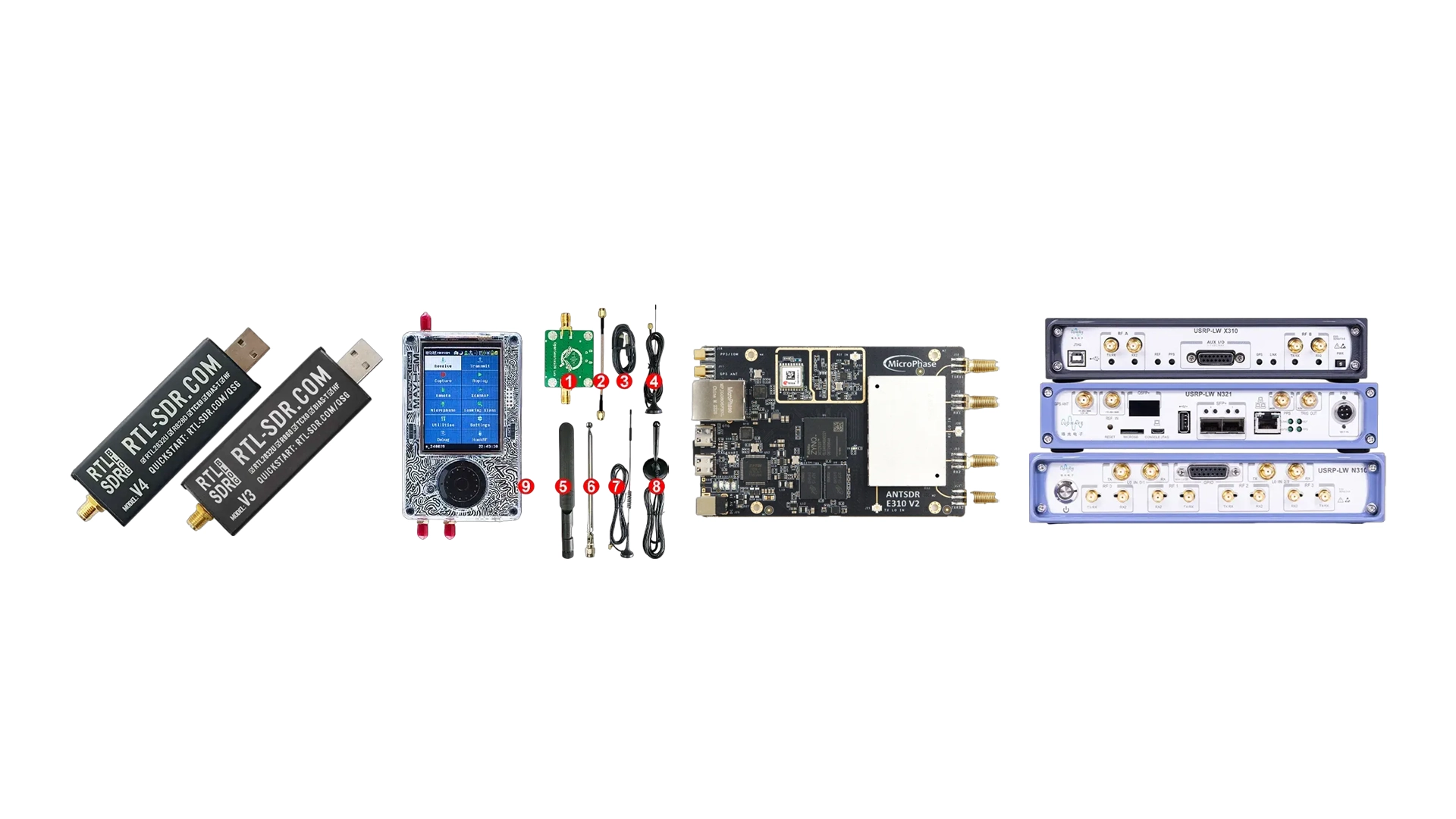
In this guide, we compare four of the most popular SDR options for new users: RTL-SDR, HackRF, PlutoSDR, and USRP. We will explain what each one is best for, who should buy it, and which SDR starter kit makes the most sense depending on your goals.
What Is an SDR?
SDR stands for software-defined radio. Instead of using fixed radio hardware for every function, an SDR uses software to receive, process, and sometimes transmit radio signals. With the right SDR receiver, antenna, and software, beginners can explore FM radio, airband, ADS-B aircraft tracking, weather satellites, AIS, amateur radio, and many other RF signals.
The best beginner SDR is not always the most expensive one. For most new users, the right choice depends on whether they only want to receive signals or whether they also need transmit capability for testing, education, or development.
Quick Comparison: Which SDR Should You Buy?
| SDR | Best For | Beginner Level | Receive | Transmit |
|---|---|---|---|---|
| RTL-SDR | Radio scanning, ADS-B, satellites, and learning SDR basics | Very beginner-friendly | Yes | No |
| HackRF PortaPack H4M / Clifford Heath H4M | Portable RF exploration, Mayhem firmware, testing, and wide frequency coverage | Beginner to intermediate | Yes | Yes |
| PlutoSDR | GNU Radio, wireless experiments, and SDR development | Intermediate beginner | Yes | Yes |
| USRP | Research, labs, universities, and professional SDR projects | Advanced beginner to professional | Yes | Yes |
1. RTL-SDR: Best SDR for Absolute Beginners
For most people asking which SDR to buy first, the answer is usually an RTL-SDR. It is affordable, easy to use, widely supported, and ideal for learning the basics of software-defined radio without spending too much.
A strong starting point is the RTL-SDR Blog V4 R828D RTL2832U 1PPM TCXO SMA SDR receiver. This type of SDR is commonly used for radio scanning, ADS-B aircraft tracking, weather satellite reception, and general RF learning.
RTL-SDR is receive-only, which makes it safer and simpler for beginners. Users do not need to worry about accidental transmissions, licensing issues, or RF output power. They connect the dongle, install compatible SDR software, attach an antenna, and start exploring the spectrum.
Choose RTL-SDR if you want to:
- Start SDR with the lowest learning curve
- Listen to radio signals without transmitting
- Track aircraft with ADS-B
- Receive weather satellite signals
- Learn SDR software such as SDR#, SDR++, GQRX, or CubicSDR
If you are completely new to SDR, an RTL-SDR receiver or kit is usually the best first step.
2. HackRF: Best Beginner SDR for Portable Wideband RX and TX
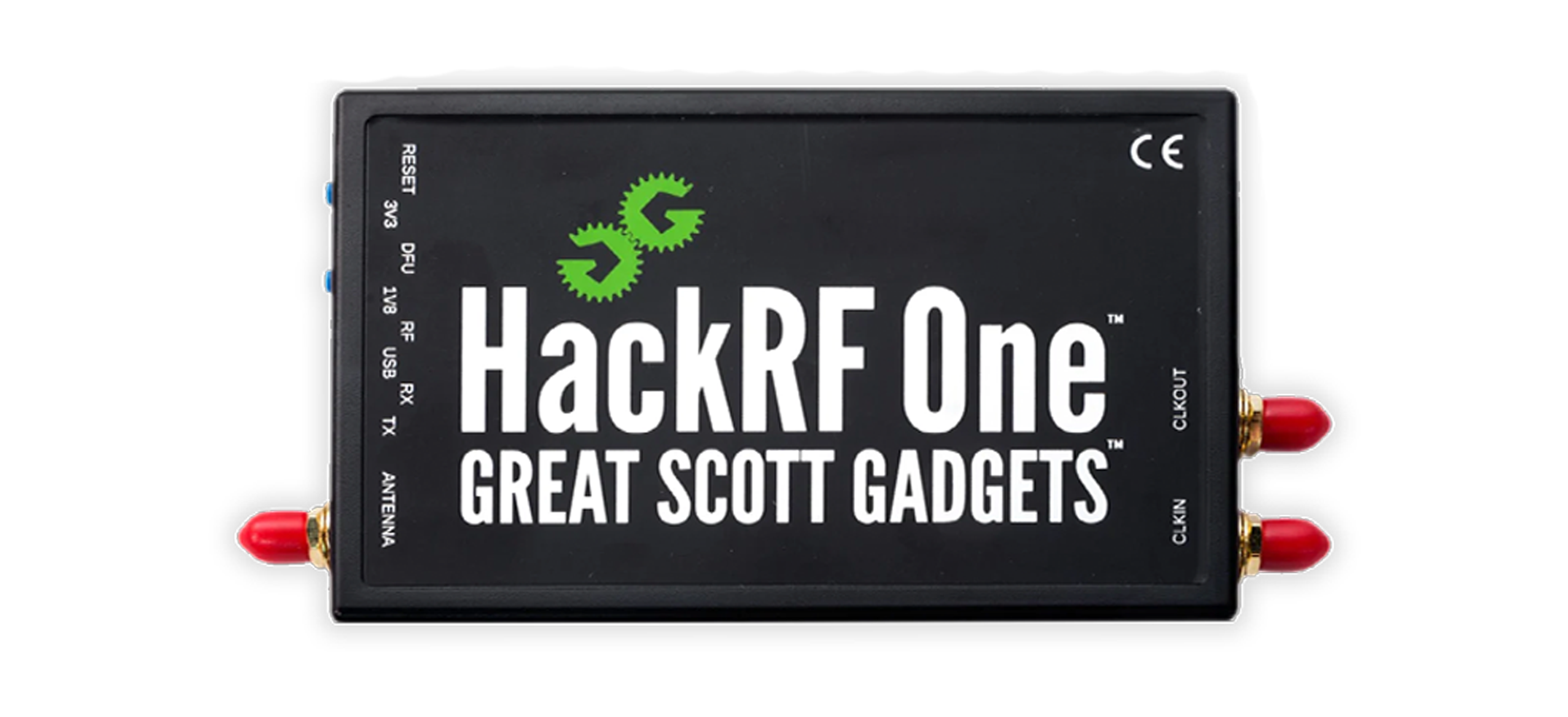
HackRF is one of the most popular SDR platforms for users who want more than basic receiving. Unlike RTL-SDR, HackRF can both receive and transmit, which makes it useful for RF testing, signal analysis, wireless experiments, and educational projects.
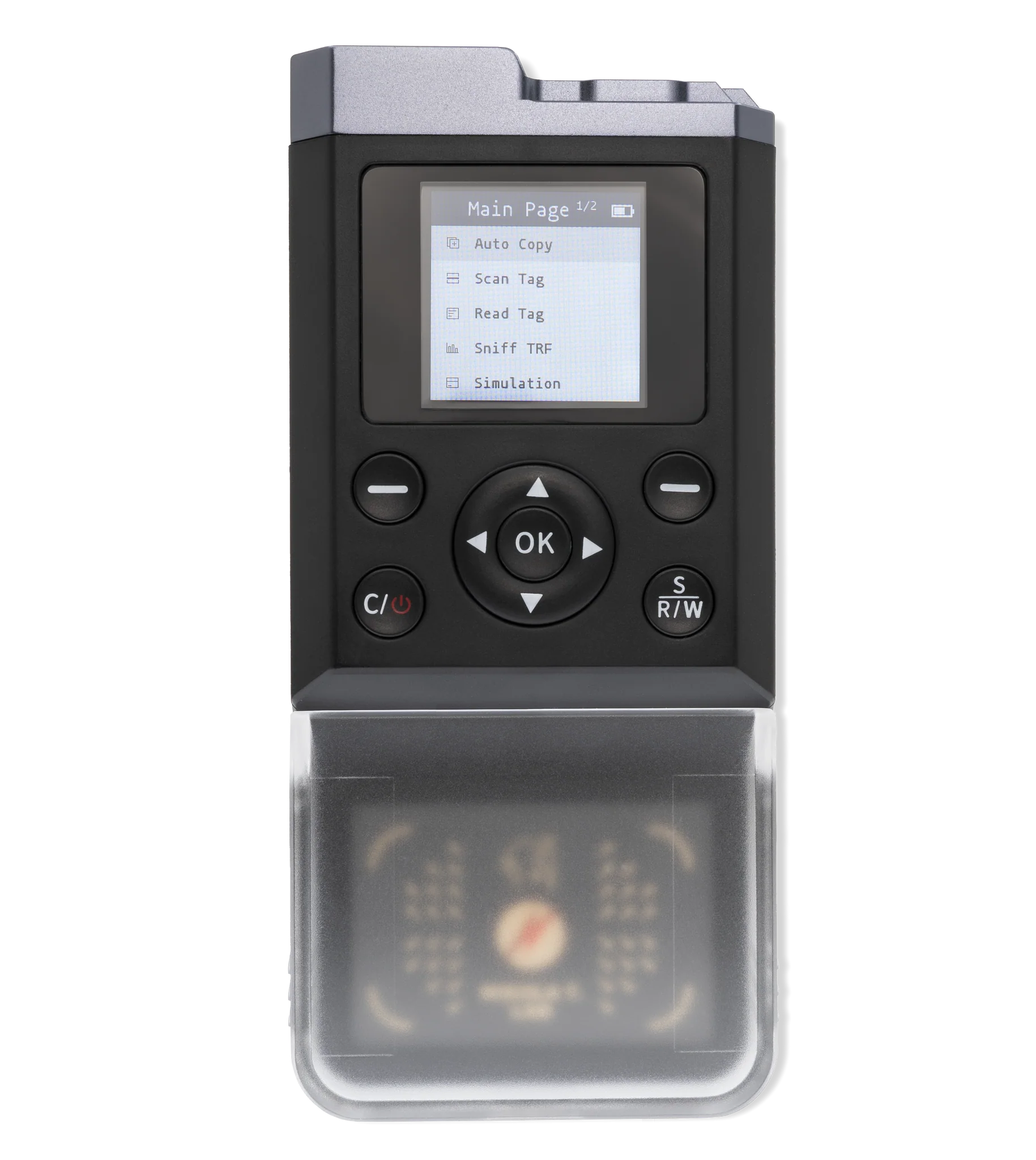
For beginners in 2026, the newer HackRF PortaPack H4M options are usually the most interesting choices. Compared with older PortaPack H2-style setups, the H4M generation feels more modern and practical for portable use, with features such as USB-C, improved battery handling, a dedicated power switch, GPIO expansion, and a more usable screen experience.
A strong option is the New Generation HackRF One PortaPack H4M Mayhem Signature Edition R10C. This is a good choice for users who want a portable HackRF setup with Mayhem firmware and a newer PortaPack design.
For users who want a more complete premium bundle, the Clifford Heath New Generation HackRF PortaPack H4M R10C Plus is the better option. It includes the Clifford Heath Black Edition HackRF with Type-C, PortaPack H4M, case, LNA, antennas, cables, and accessories, making it a more complete SDR starter kit for portable RF work.
Older HackRF PortaPack H2-style kits can still be useful for users who want a lower-cost HackRF setup, but for a new beginner buying in 2026, the H4M and Clifford Heath H4M versions are more attractive if the budget allows.
HackRF gives beginners much more flexibility than a receive-only SDR. However, because it can transmit, users must follow local radio regulations and only transmit where they are legally allowed to do so.
Choose HackRF if you want to:
- Experiment with both receiving and transmitting
- Use a portable SDR with a screen and controls
- Explore a very wide frequency range
- Learn more advanced RF concepts after RTL-SDR
- Use Mayhem firmware, GNU Radio, SDR++, or HackRF-compatible software
For most beginners choosing HackRF in 2026, the best options are the HackRF PortaPack H4M Mayhem Signature Edition or the Clifford Heath HackRF PortaPack H4M R10C Plus.
3. PlutoSDR: Best SDR for Learning Wireless Development
PlutoSDR is a strong option for beginners who want to move beyond listening and start learning real SDR development. It is often used with GNU Radio, MATLAB, Python tools, and wireless experimentation.
SDRstore offers PlutoSDR-compatible options in the PlutoSDR category. This type of SDR is better suited for users who are comfortable installing software, following tutorials, and experimenting with signal chains.
PlutoSDR is a good middle point between beginner SDR receivers and professional SDR platforms. It is more technical than RTL-SDR, but it can teach users much more about real transmit and receive workflows.
Choose PlutoSDR if you want to:
- Learn GNU Radio and SDR development
- Experiment with transmit and receive workflows
- Study digital communications
- Work with a development-focused SDR platform
- Prepare for more advanced SDR hardware later
PlutoSDR is not usually the easiest first SDR for casual listening, but it is one of the best beginner-friendly platforms for learning how SDR systems actually work.
4. USRP: Best SDR for Labs, Universities, and Serious Research
USRP devices are usually not the first SDR most beginners should buy, but they are excellent for students, universities, labs, and professional users who need higher performance and better development support.
A device such as the USRP B210 USB SDR is designed for advanced wireless research, SDR development, IoT prototyping, MIMO experiments, and GNU Radio workflows. Compared with RTL-SDR or HackRF, USRP devices are generally better suited for serious projects where reliability, bandwidth, and software ecosystem matter.
For a beginner, USRP makes sense if they are studying SDR in an academic environment, working in RF engineering, building a lab setup, or already know that they need a professional SDR platform.
Choose USRP if you want to:
- Build a professional SDR lab setup
- Use UHD and GNU Radio workflows
- Work on advanced wireless communications
- Run research or university projects
- Use higher-performance SDR hardware from the start
USRP is the most advanced option in this beginner comparison, but it is also the most expensive and usually requires more technical knowledge.
Best SDR Starter Kit by Use Case
The best SDR starter kit depends on what the user wants to do first. Here are the simplest recommendations:
- Best first SDR overall: RTL-SDR
- Best portable SDR starter kit: HackRF PortaPack H4M
- Best premium portable SDR kit: Clifford Heath HackRF PortaPack H4M
- Best SDR for GNU Radio learning: PlutoSDR
- Best SDR for university and research labs: USRP
Which SDR Should a Beginner Buy First?
If the user is completely new and mainly wants to listen to signals, RTL-SDR is usually the best first SDR. It is affordable, simple, and gives users a strong foundation before moving to more advanced SDR hardware.
If the user already knows they want transmit capability, HackRF or PlutoSDR makes more sense. HackRF is better for portable wideband RF exploration, especially with the newer H4M and Clifford Heath H4M versions. PlutoSDR is better for structured learning, SDR development, and digital communications experiments.
If the buyer is a university, research lab, or professional RF team, USRP is usually the better long-term platform. It costs more, but it is designed for more demanding SDR workflows.
Beginner SDR Buying Tips
Before buying a first SDR, users should think about antennas, connectors, adapters, and their main use case. Many beginners focus only on the SDR device, but the antenna is just as important. A good SDR with the wrong antenna can give disappointing results.
For general receiving, a simple wideband antenna or starter kit is often enough. For ADS-B, a 1090 MHz antenna is recommended. For HF reception, users should consider an HF-capable antenna or an SDR setup that supports their target frequency range. For portable use, a bundled kit can save time because it includes the basic accessories needed to get started.
Final Recommendation
The best SDR for beginners in 2026 is the RTL-SDR if the goal is affordable listening, scanning, ADS-B, and basic SDR education.
Choose HackRF PortaPack H4M if the user wants a more flexible portable SDR with receive and transmit capability. Choose the Clifford Heath HackRF PortaPack H4M if they want a more complete premium kit with accessories included. Choose PlutoSDR if the main goal is SDR development and digital communications. Choose USRP if the project requires a research-grade platform for labs, universities, or professional RF work.
For most new users, the smartest path is to start with RTL-SDR, learn the basics, and then upgrade to HackRF H4M, PlutoSDR, or USRP once their projects require more advanced features.
FAQ
What is the best SDR for beginners?
The best SDR for most beginners is RTL-SDR because it is affordable, easy to use, and widely supported by popular SDR software.
Can RTL-SDR transmit?
No. RTL-SDR is receive-only. If transmit capability is needed, HackRF, PlutoSDR, or USRP are better options.
Is HackRF PortaPack H4M good for beginners?
Yes. HackRF PortaPack H4M is a good choice for motivated beginners who want a portable SDR with receive and transmit capability, Mayhem firmware, and room to grow.
What is the difference between HackRF H4M and Clifford Heath H4M?
HackRF H4M is a newer PortaPack-style portable SDR option, while the Clifford Heath H4M version is a more complete premium kit that includes the Clifford Heath Black Edition HackRF, PortaPack H4M, case, LNA, antennas, and accessories.
Is PlutoSDR better than HackRF?
PlutoSDR is better for development and digital communication experiments, while HackRF is better for portable wideband RF exploration and Mayhem firmware use.
Should a beginner buy a USRP?
Most casual beginners do not need a USRP. However, it is a strong choice for university labs, research, and professional SDR development.
No posts found
Write a review






We support all major card and digital payment options. More local methods are available and shown during checkout.
You enter into a binding sales contract once you have received an 'order confirmation and sales receipt' email from us, in line with our Sales & Delivery conditions. Therefore, sdrstore.eu has the right to cancel your order in the event of technical problems, delivery failure, Fair use policy and other similar situations.





Your payments are protected by advanced encryption and 3-D Secure authentication for safe online shopping.