





Buying HackRF in Bulk: Accessories, Acceptance Tests and Support to Specify
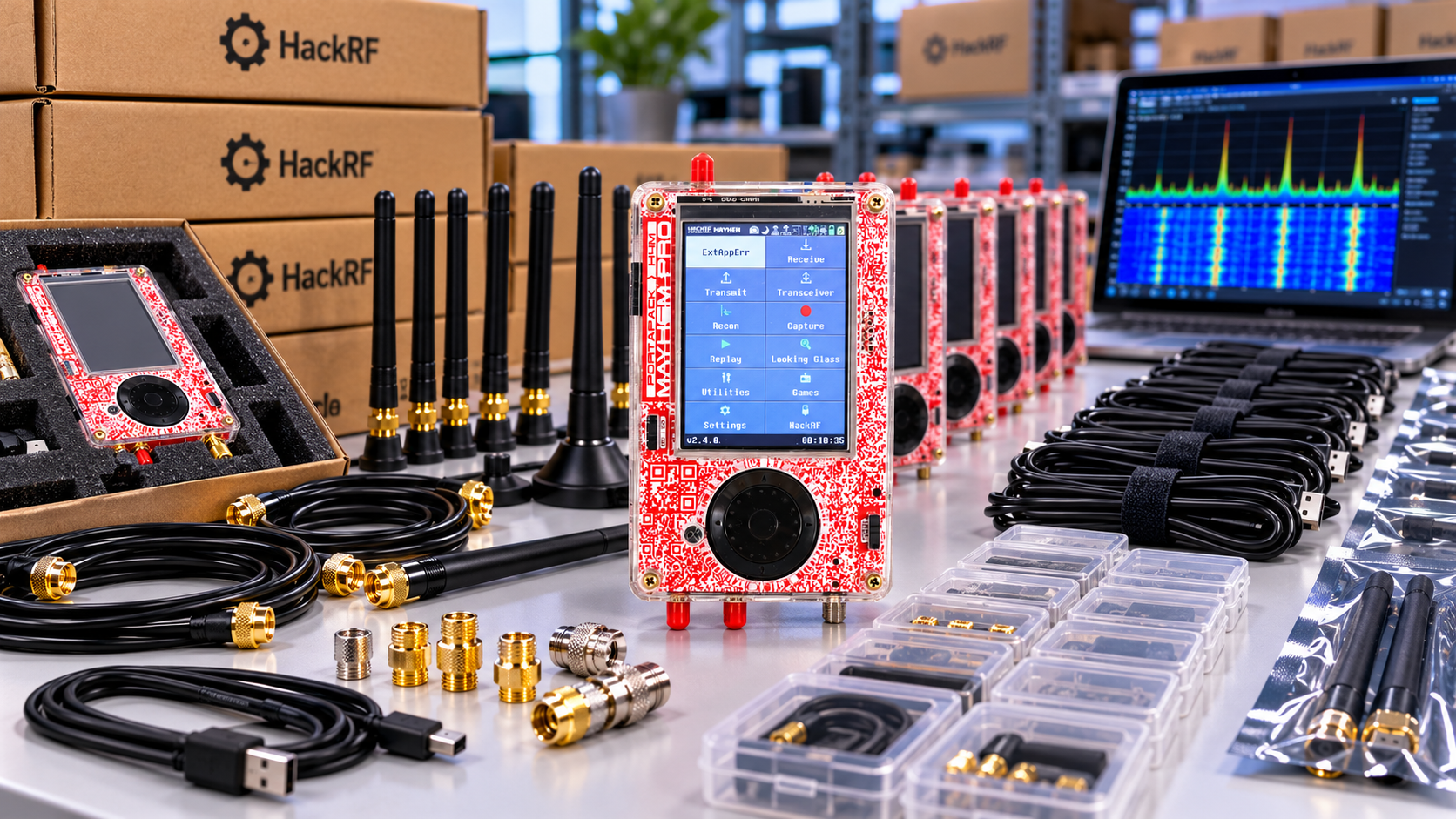
A useful bulk HackRF quotation should specify complete working stations, a separate spare pool and a repeatable acceptance test. Listing only the radio quantity leaves batteries, cables, firmware, RF protection and support responsibilities open to interpretation.
Start from the teaching or engineering task. A receive-only classroom, a portable PortaPack course and a host-based waveform lab need different accessories. One HackRF is half-duplex, so an experiment requiring simultaneous independent transmission and reception may need another radio or a different platform.
Freeze the hardware identity first
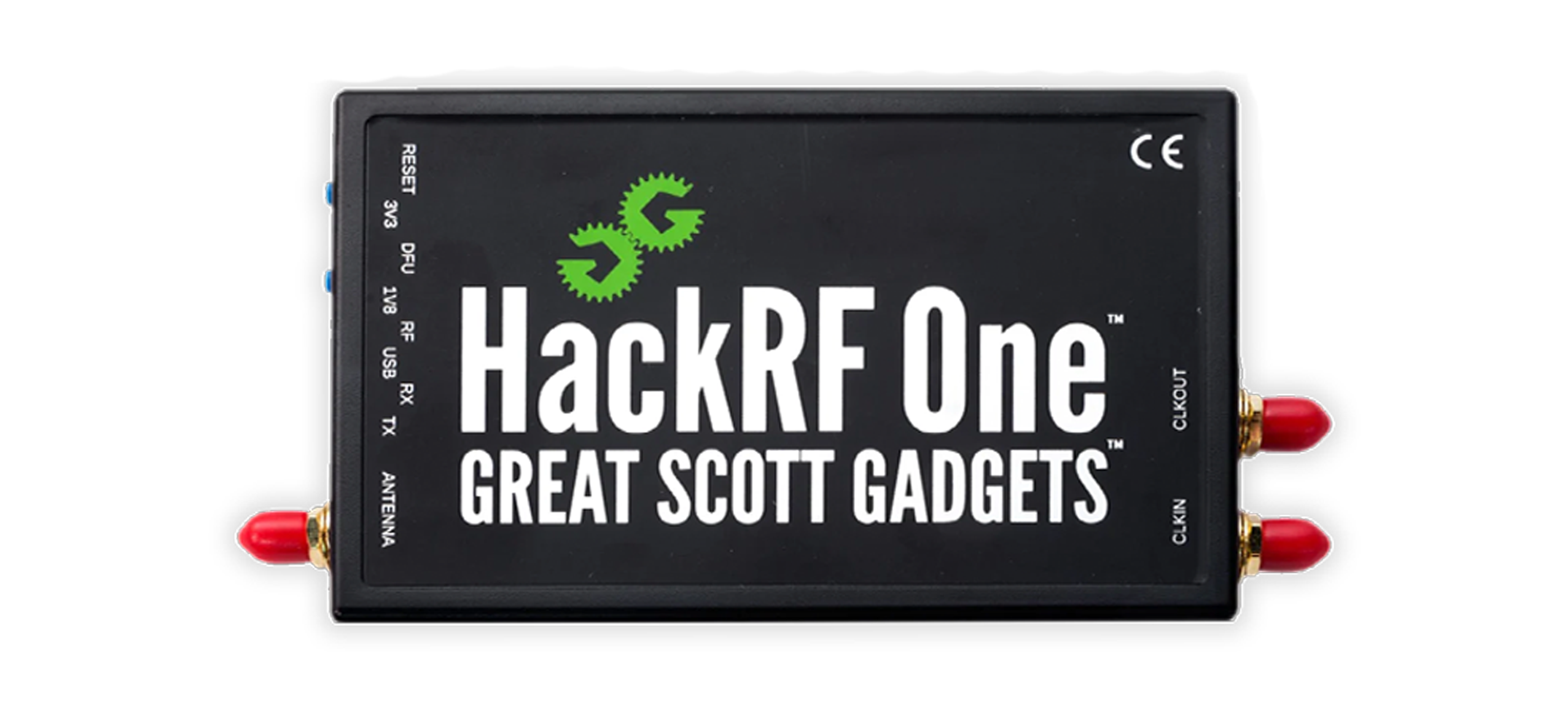
Specify manufacturer, product name, board revision and whether the order is for radios alone or assembled PortaPack bundles. Our HackRF Pro R1.2.1 with H4M Pro bundle is a particular third-party HackRF-compatible configuration supplied without a battery.
Do not use “HackRF with screen” as the purchase specification. State the required battery format, display and touch capability, enclosure, connectors and firmware target. Ask for substitution approval before shipment if any specified component changes.
For existing fleets, record the revision already in service. A mixed fleet can work, but firmware resources, recovery instructions and battery inventory must identify the relevant differences.
Build the bill of materials by station
| Item | What to specify |
|---|---|
| Radio assembly | Exact model, revision, manufacturer and enclosure |
| USB connection | Data-capable cable, connector types and suitable supply where required |
| Portable power | Approved cell model and dimensions, or an explicit battery exclusion |
| Storage | Card capacity, filesystem and matching firmware resources if needed |
| RF accessories | Band-specific antennas, coax, adapters, attenuators and loads |
| Documentation | Inventory identifiers, firmware version, recovery instructions and agreed test report |
Accessory quantity should follow actual use. A receive-only station does not need a power amplifier. A conducted transmit exercise needs a calculated safe RF path, not simply an antenna included in a box. Check connector gender and standard; SMA and RP-SMA are not interchangeable just because they look similar.
Separate operational units, spares and shared equipment
Consider a proposed lab with 20 active stations and two spare complete stations. It needs 22 radios, not 20 radios with two informally labelled as spares. If every station is portable, specify 22 compatible cells. Adding four spare cells makes 26 cells total.
If all 22 assemblies must be ready for immediate replacement, the example also needs 22 data cables and 22 prepared cards where the course uses SD-dependent applications. A shared instructor test receiver, reference signal source or RF measurement instrument is additional infrastructure, not another student station.
These quantities describe a proposed configuration. They do not represent an existing SDRstore kit or an included accessory pack. Decide whether spares must be fully equipped before calculating the quote.
Agree acceptance criteria before delivery
Use the same host, cables, software and RF setup for every unit. Record serial or inventory identifiers and test conditions. A device that appears in a USB list has passed enumeration, not an RF performance test.
- Inspect enclosure, connectors, controls, included accessories and battery compartment.
- Confirm USB detection and record reported hardware and firmware information.
- Check display, supported touch operation, encoder, audio and SD-card access on PortaPack assemblies.
- Receive a known signal through a repeatable path at the frequencies relevant to the course.
- Run a sample-transfer test at the intended rate and duration on the agreed host.
- If transmit is required, verify it through suitable attenuation and return to receive afterwards.
- For portable stations, confirm charging status and a defined battery-powered task.
Define pass criteria with the supplier or your engineering team. For example, specify the test duration and allowed transfer interruptions, rather than writing “works reliably.” Quantitative RF limits require a calibrated setup, uncertainty allowance and a documented measurement method.
The Mayhem issue tracker includes a version-specific report about returning to receive after host-mode transmission, with later developer guidance to try newer builds. That is a reason to test the selected firmware, not proof that every current unit has the fault or that every update fixes it.
Specify software preparation and recovery
If you want identical firmware, card contents or labels, request that work explicitly and obtain written confirmation that it is available. An online product listing does not automatically include fleet preparation, custom firmware development or calibration.
Keep a version manifest, firmware files, checksums and matching SD resources with your internal course materials. The H4M Pro manufacturer's manual describes charging and resource deployment, but your institution should still verify the exact supplied build before cloning a classroom setup.
Make support responsibilities concrete
- Identify the contact and process for missing parts, arrival faults and later failures.
- Agree any required response target, replacement arrangement and shipping responsibility.
- Separate hardware support from third-party firmware troubleshooting.
- Ask whether repair, loan units or advance replacement are available; do not assume them.
- Record quotation validity, delivery requirements, invoice details and permitted substitutions.
Run security-related exercises only on authorised systems. Conducted RF tests and controlled lab fixtures also make student results more consistent.
Frequently asked questions
Does a bulk order automatically qualify for a discount?
No discount is promised here. Request quantities and a formal offer through the quote system.
Should every station have a broadband antenna kit?
Only if the course needs those bands. A defined antenna for the actual exercise is often easier to document and troubleshoot.
Can the supplier install identical firmware?
Ask for availability, version, scope and cost in the quotation. Treat preparation as agreed work, not an assumed inclusion.
Are two spares enough for 20 stations?
That is a planning choice based on downtime tolerance and replacement lead time, not a demonstrated failure-rate estimate.
Use our online quotation process: add the exact products and quantities, then include the station list, spares, accessories and acceptance requirements. We can review the request against the actual offer.
Shop products for this guide
Explore relevant products from our store.
No posts found
Write a review






We support all major card and digital payment options. More local methods are available and shown during checkout.
You enter into a binding sales contract once you have received an 'order confirmation and sales receipt' email from us, in line with our Sales & Delivery conditions. Therefore, sdrstore.eu has the right to cancel your order in the event of technical problems, delivery failure, Fair use policy and other similar situations.






Your payments are protected by advanced encryption and 3-D Secure authentication for safe online shopping.