





HackRF H4M Pro vs LILYGO T-Embed CC1101: Which RF Tool Fits Your Projects?
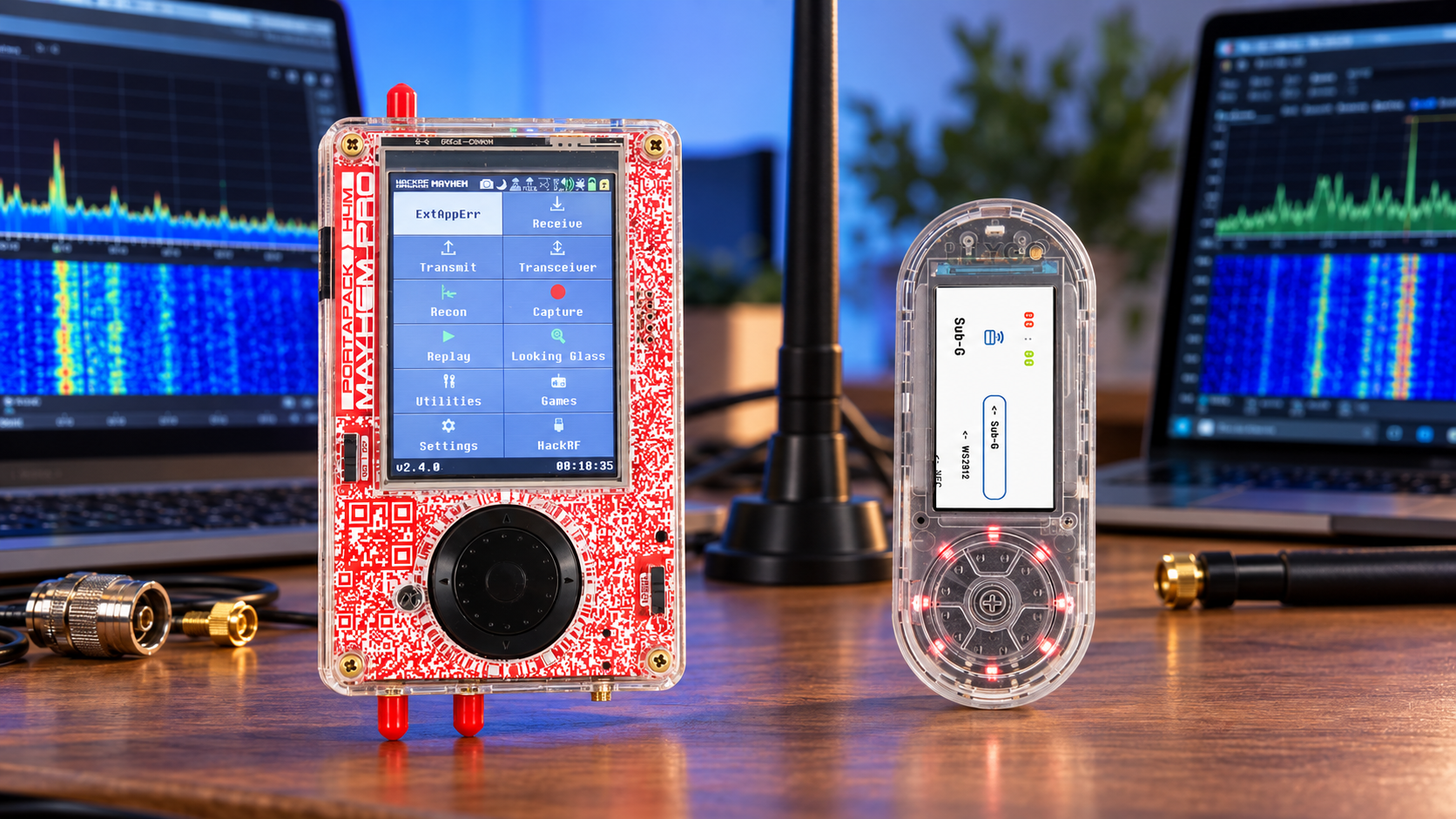
Choose the HackRF Pro with PortaPack H4M Pro when your project needs wideband RF observation, I/Q recording or computer-based SDR experiments. Choose the LILYGO T-Embed CC1101 when you want an embedded development platform combining a sub-GHz packet radio with NFC, infrared and an ESP32-S3.
The deciding question is what signal or peripheral your project needs. A screen full of RF applications does not make these devices interchangeable, and a chip's supported features do not guarantee that the installed firmware exposes them.
Identify the two products correctly
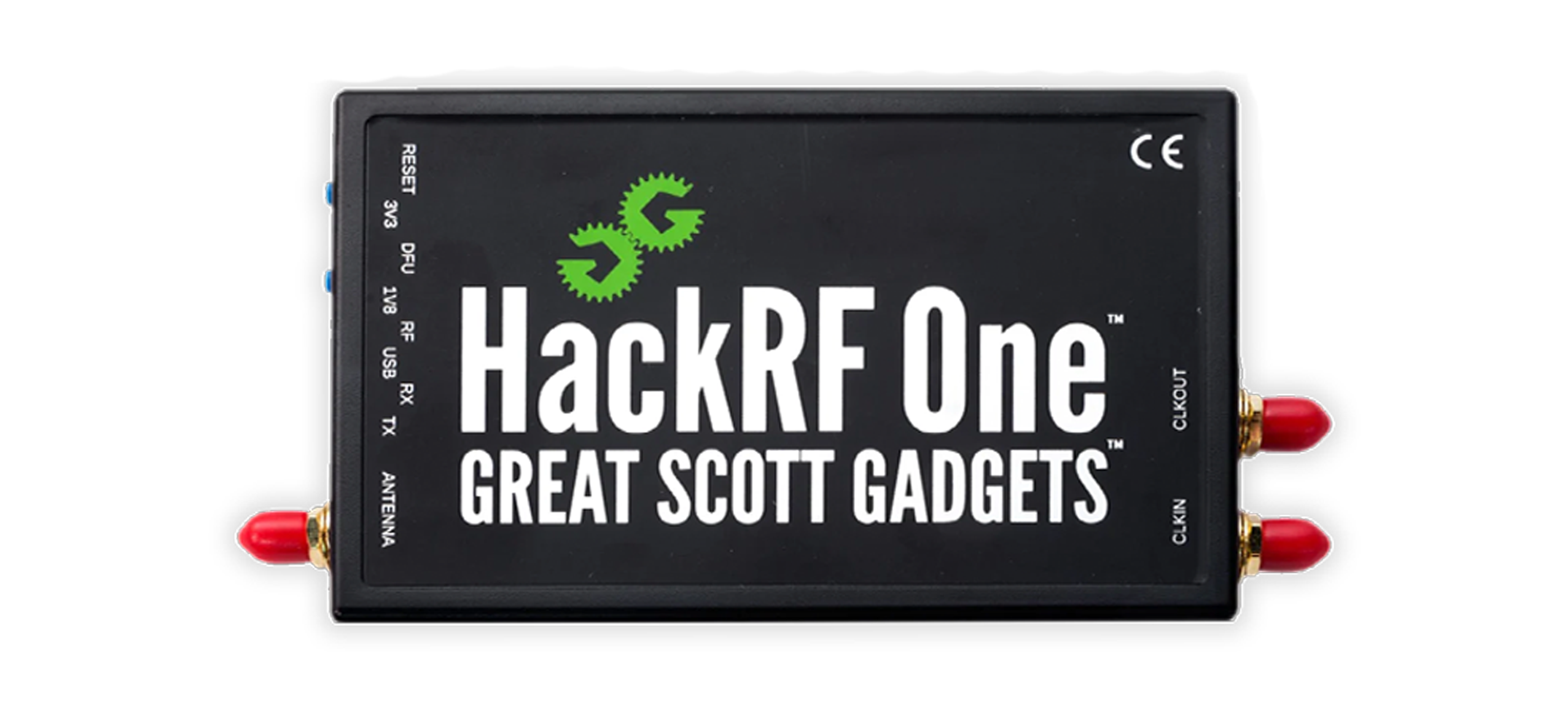
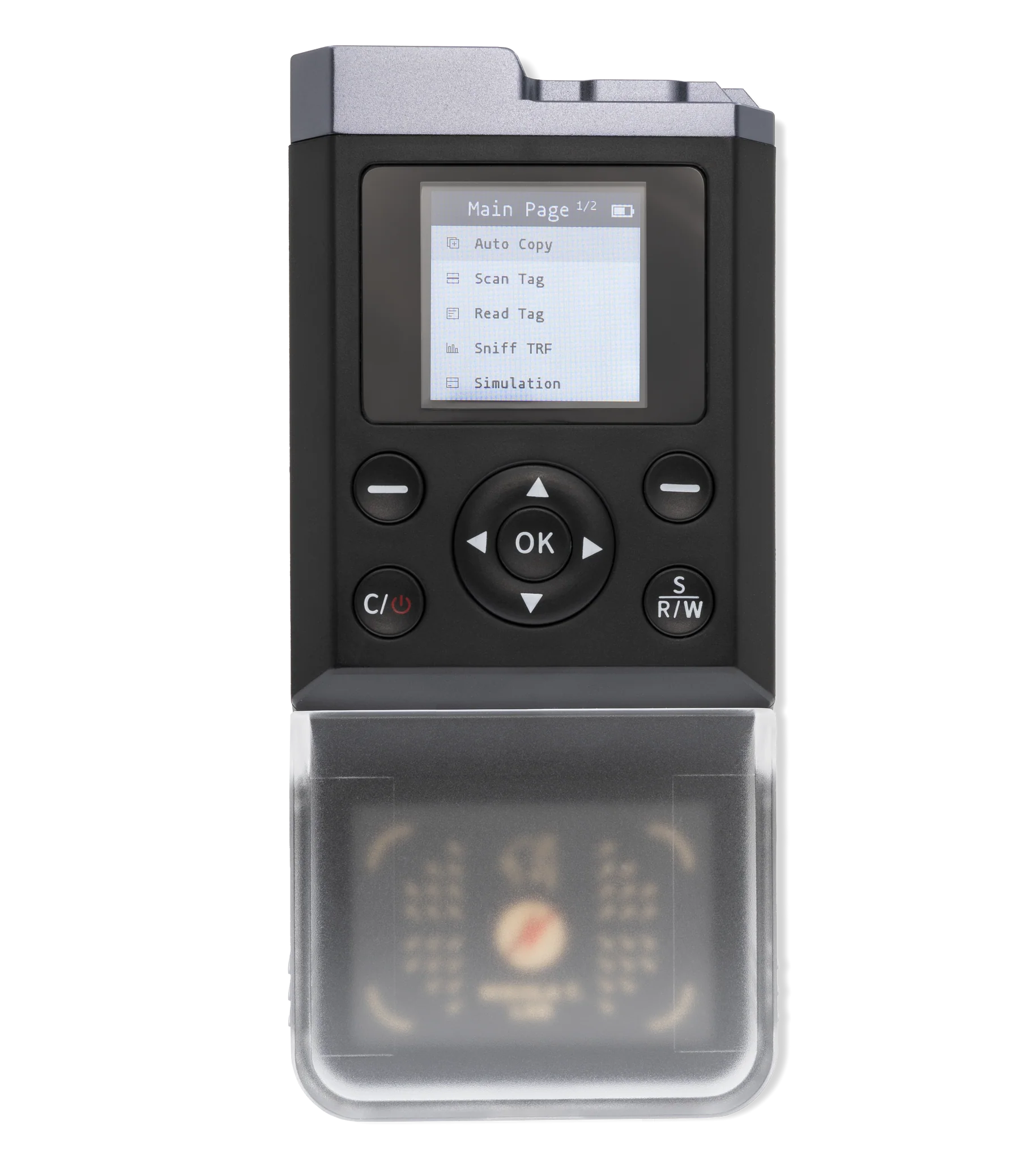
This comparison uses our HackRF Pro R1.2.1 with PortaPack H4M Pro Mayhem Signature Edition and the T-Embed CC1101 with built-in 1300 mAh battery. The HackRF listing is a third-party HackRF-compatible bundle; confirm manufacturer and board revision when ordering.
Do not substitute specifications from the original T-Embed, T-Embed CC1101 Plus, classic PortaPack H4M or another HackRF-branded assembly. Similar names can hide different radio chips, batteries, expansion modules and firmware requirements.
The practical differences
| Project requirement | H4M Pro bundle | T-Embed CC1101 |
|---|---|---|
| Wideband SDR work | HackRF I/Q workflow; host or supported standalone apps | CC1101 modem and embedded processing |
| Radio coverage | Listed 100 kHz–6 GHz; useful operation depends on setup | CC1101 chip bands: 300–348, 387–464 and 779–928 MHz |
| Simultaneous RF TX and RX | Half-duplex | CC1101 switches between TX and RX |
| NFC and infrared projects | Not established as built-in capabilities of this bundle | PN532 and IR hardware; firmware-dependent functions |
| Portable power | Replaceable 18650; cell excluded | Listed built-in 1300 mAh Li-Po |
| Development path | Mayhem and compatible host SDR tools | ESP32 development or an exact supported firmware target |
TI documents the CC1101's discontinuous frequency bands and configurable modem. Those are chip capabilities. Antenna matching, board routing and firmware still determine which configurations are practical on the assembled T-Embed.
When the H4M Pro bundle fits better
HackRF is the more relevant starting point when you need to observe an unfamiliar signal, inspect a wider spectrum segment or move I/Q data into software for your own analysis. A supported PortaPack application can provide a convenient portable interface, while host mode opens a different set of workflows.
For example, an RF teaching bench comparing modulation spectra has a stronger reason to choose HackRF than a developer building a battery-powered sensor remote. Frequency coverage helps the former, while efficient packet handling and direct peripheral control may matter more to the latter.
The bundle manufacturer's documentation describes the HackRF Pro hardware. Its wide tuning range is not a promise of equal sensitivity, matching or transmit output across that entire range. Budget for antennas and filtering appropriate to your actual bands.
Half-duplex also matters. One bundle cannot be a continuously transmitting radio and an independent simultaneous receiver. Choose a full-duplex platform or a second receiver when the experiment requires both.
When T-Embed CC1101 fits better
The T-Embed makes sense for controlled sub-GHz device development, NFC learning with your own tags, infrared projects and custom embedded interfaces. LILYGO's hardware repository identifies the ESP32-S3, CC1101, PN532 and onboard battery-management hardware.
Its CC1101 does not provide continuous coverage from 300 to 928 MHz, and it does not become a 2.4 GHz radio by changing a menu setting. The ESP32's Wi-Fi and Bluetooth are separate radio functions. Likewise, do not assume an nRF24 module is installed in the standard model because a Plus version or an expansion example includes one.
A useful starting project is a known packet link between devices you control. Record modulation, data rate, deviation, bandwidth and packet format. Matching carrier frequency alone is insufficient. A receiver can detect activity without understanding the transmitted data.
Check firmware before comparing application lists
For H4M Pro, confirm the supported HackRF Pro image and the matching SD-card resource package. For T-Embed, select firmware explicitly targeting the CC1101 hardware. Bruce provides a T-Embed CC1101 board configuration, but that does not establish that every menu item works with every onboard peripheral.
Before purchase, name the two or three functions that matter and verify their current implementation, required add-ons and recovery process. Keep a known-good firmware image and a copy of settings. A successful flash is only the first check; confirm input controls, display, radio reception and the particular peripheral your project uses.
Budget for the complete working setup
- H4M Pro: confirmed-fit 18650, suitable USB data cable and supply, microSD resources where required, and band-appropriate antennas.
- T-Embed: USB data cable, a supported development or flashing environment, and any storage, antenna or expansion module required by the chosen application.
- Both: appropriate RF attenuation, loads and cables for conducted transmit tests; verify connector type and gender.
Use RF and security functions only with equipment and systems you own or are authorised to test. For development, a controlled bench setup makes results easier to interpret and avoids unnecessary radiation.
Frequently asked questions
Can T-Embed replace HackRF for I/Q recording?
Do not buy it for that purpose. A CC1101 modem workflow is materially different from a general wideband SDR sample stream.
Can HackRF replace the T-Embed's NFC hardware?
Wide frequency coverage alone does not supply a PN532 reader interface, matching network or equivalent firmware. Buy for the supported workflow.
Which one is easier for beginners?
Choose the one matching a specific first project. A known sub-GHz packet example suits T-Embed; a guided spectrum or receive experiment suits the HackRF bundle.
Can either device decode every signal it receives?
No. Modulation, bandwidth, protocol support and encryption all matter. Seeing RF energy does not imply successful decoding.
Review the linked products and our H4M hardware comparison. For a project purchase, use Add to Quote with the exact hardware, firmware requirements and accessories you need confirmed.
Shop products for this guide
Explore relevant products from our store.
Alternatives considered
Other relevant options for this guide.
-
HackRF Pro-Compatible SDR Transceiver Board – 100 kHz–6 GHz USB-C
A HackRF Pro-compatible SDR board with wideband I/Q capability, but the listing does not include the PortaPack H4M interface supplied with this bundle.
-
LILYGO® T-Embed ESP32-S3 Custom Control Panel with 1.9" LCD Display
A related T-Embed ESP32-S3 control-panel board, but its listing does not confirm a CC1101 or the 1300 mAh battery required for the article’s specific comparison.
No posts found
Write a review





We support all major card and digital payment options. More local methods are available and shown during checkout.
You enter into a binding sales contract once you have received an 'order confirmation and sales receipt' email from us, in line with our Sales & Delivery conditions. Therefore, sdrstore.eu has the right to cancel your order in the event of technical problems, delivery failure, Fair use policy and other similar situations.





Your payments are protected by advanced encryption and 3-D Secure authentication for safe online shopping.