





9 Practical HackRF One Applications

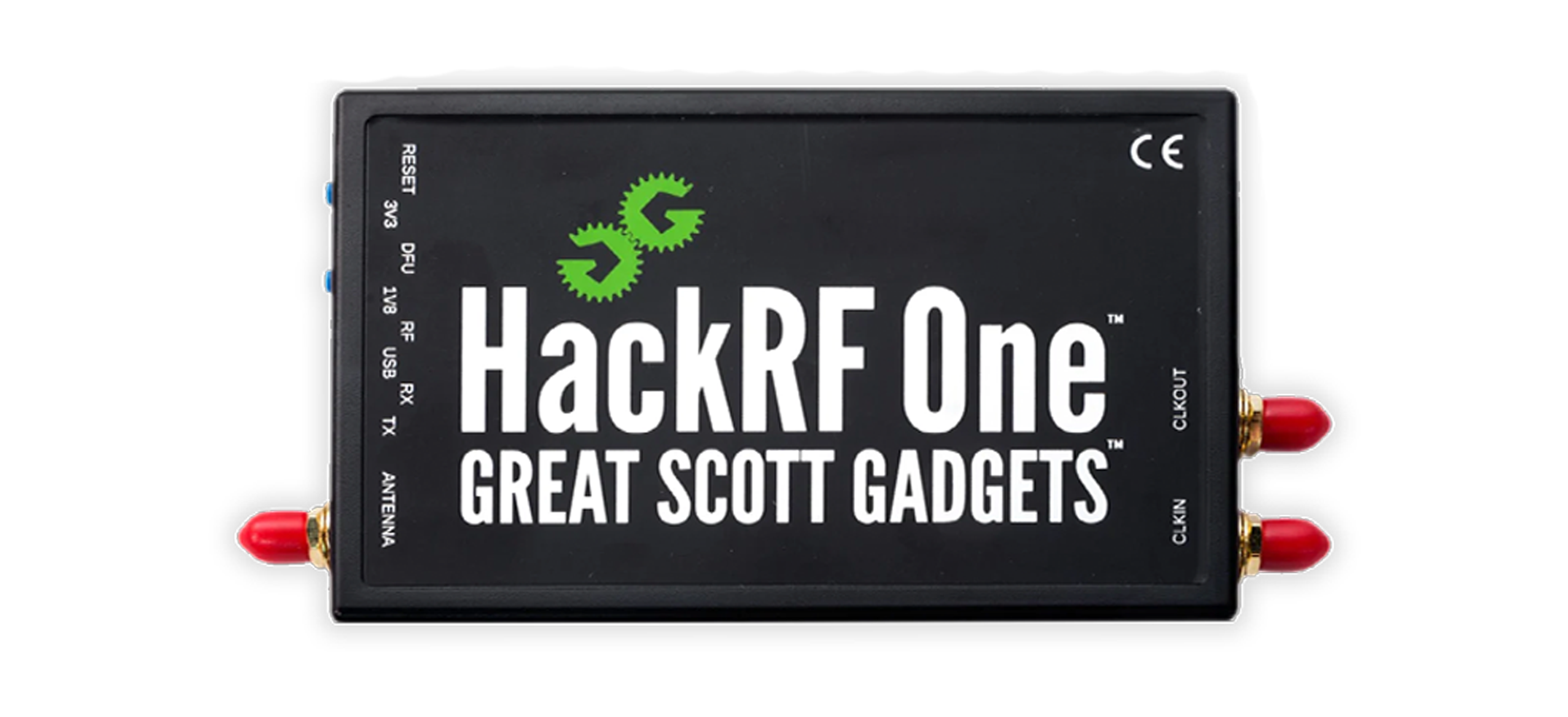
A HackRF One earns its bench space when you stop thinking of it as a gadget and start treating it as a general-purpose RF tool. The most useful HackRF One applications are not just flashy demos - they are repeatable workflows for signal analysis, protocol exploration, lab testing, and early-stage wireless development.
Why HackRF One still matters
HackRF One sits in a useful middle ground. It covers a very wide frequency range, supports transmit and receive, and works with a large software ecosystem that many SDR users already know. That combination makes it attractive for hobby work, teaching labs, RF troubleshooting, and proof-of-concept development.
The trade-off is just as important. This is not the highest dynamic range SDR on the market, and it is not the best choice for every serious measurement task. If your work depends on weak-signal performance, very clean transmit behavior, or demanding multi-channel direction finding, other platforms may fit better. But for broad RF exploration and practical experimentation, HackRF One stays relevant because it is flexible, widely supported, and relatively easy to integrate into a bench setup.
HackRF One applications in real RF work
1. Wideband spectrum monitoring and signal discovery
One of the most common uses is simple but valuable: finding out what is happening in the air around you. HackRF One can be used to inspect ISM bands, public service allocations, paging channels, trunked systems, satellite downlinks, and many other signal environments, depending on local regulations and the front-end setup.
For new users, this is usually the fastest path to useful results. A basic receive chain with the right antenna, low-loss adapters, and suitable software lets you visualize occupancy, identify modulation types, and spot intermittent transmissions that are hard to catch with narrower tools. For engineers, that same workflow can help validate whether an embedded device is actually transmitting where and when it should.
The practical limit is front-end performance. In dense RF environments, nearby strong signals can desensitize the receiver and create misleading artifacts. Filters, attenuators, and a better antenna choice often matter as much as the SDR itself.
2. Protocol reconnaissance for unknown wireless devices
If you are working with remote controls, sensors, key fobs, weather stations, or industrial telemetry, HackRF One is often the first instrument used to examine the signal. It is well suited for capturing bursts, estimating occupied bandwidth, checking symbol timing, and narrowing down whether a device uses OOK, FSK, PSK, or something more proprietary.
This is especially helpful when documentation is poor or the original vendor tools are unavailable. Instead of guessing, you can observe the actual RF behavior and build from there. In a lab or repair context, that shortens the time needed to determine whether the problem is in the radio layer, the application layer, or the device hardware itself.
For complete protocol reverse engineering, though, software support and analysis skill become the bottleneck. HackRF One captures the signal, but the decoding effort may still be substantial.
3. Transmit-side prototyping and waveform testing
Because it supports transmission as well as reception, HackRF One is useful for quick waveform generation and air-interface prototyping. That can mean replaying test bursts in a shielded setup, validating basic modulation chains, or checking whether a receiver under development responds correctly to expected RF conditions.
This is where the device becomes more than a scanner. A developer can move from observing an existing signal to generating a controlled test input with the same platform. For educational use, that is a strong advantage because students can see both sides of the link without changing hardware.
The caution here is obvious but necessary. Transmitting outside legal limits, in the wrong bands, or without proper isolation is a bad idea. Even in legitimate work, output filtering and attenuation are often required to avoid harmonics, overload, and unwanted emissions.
4. Wireless security research and controlled testing
HackRF One is frequently used in wireless security labs for controlled research into remote keying systems, low-power telemetry, RFID-adjacent workflows, and custom embedded links. Its value is not that it replaces every specialized tool, but that it provides a general RF layer for capture, replay, and experimental interaction.
For security researchers, this is useful during reconnaissance and validation. If a target system uses an unusual frequency plan or a simple proprietary modulation, HackRF One often provides enough flexibility to characterize the link before moving to a more specialized platform.
It does have limits in demanding attack simulation or full duplex scenarios. Some workflows are better served by hardware with stronger receive performance, tighter timing behavior, or multiple coherent channels. Still, as an adaptable first-line SDR for research benches, it remains very practical.
5. Educational labs and RF training
HackRF One applications are especially strong in training environments because the hardware covers many teaching objectives with a single device. Instructors can use it to demonstrate spectrum occupancy, modulation concepts, frequency translation, sampling effects, and basic digital communications without maintaining a separate instrument for every lesson.
That matters for cost and setup time. A course built around one SDR platform is easier to support, easier to document, and easier for students to reproduce at home. For self-learners, the same advantage applies. A single purchase can support months of RF exploration if the user also has the right antennas, adapters, and measurement accessories.
The best results come from structured exercises. Without a clear lab goal, students often spend too much time browsing the spectrum and too little time understanding what they are seeing.
6. GNSS, satellite, and other receive experiments
HackRF One can also be used in receive-focused experiments involving satellite signals, weather imagery, beacon monitoring, and navigation-related study. The exact feasibility depends heavily on signal strength, antenna quality, low-noise amplification, filtering, and software chain design.
This is a good example of where expectations matter. The SDR itself may be capable of tuning the band, but the success of the application often depends on the rest of the RF path. A poor antenna placement or the lack of a proper LNA can make the experiment look impossible when the real issue is front-end setup.
For technical buyers, that is why accessory compatibility matters. SDR hardware is rarely a complete system by itself. Coax quality, connectors, bias tees, filters, and enclosures can determine whether an experiment is frustrating or productive.
7. IF and RF troubleshooting on the bench
In development and repair work, HackRF One can serve as a practical instrument for inspecting intermediate-frequency stages, local oscillator leakage, spurious outputs, and basic transmitter behavior. It is not a replacement for a high-end spectrum analyzer, but it can answer many first-pass questions quickly.
That speed is useful when diagnosing embedded wireless products or custom boards. You can verify whether a PLL is near the intended frequency, whether a transmitter is active during a trigger event, or whether an unwanted spur appears only under certain firmware conditions. In many cases, you do not need perfect lab-grade numbers at the start - you need fast visibility.
When the work moves from diagnosis to compliance-grade measurement, the tool chain usually needs to change. But as a bench companion for iterative engineering, HackRF One is often enough to keep progress moving.
8. Replay and simulation in controlled environments
Another practical use is recording and replaying known signals for device testing. This can help validate receiver sensitivity behavior, event triggering, decoder stability, and automation routines in shielded or otherwise controlled RF conditions.
The advantage is repeatability. Instead of waiting for a live over-the-air event, you can capture a representative signal and reuse it during development. That saves time when testing firmware updates, decoder changes, or hardware revisions.
The caveat is fidelity. Replay workflows are only as good as the original capture, the transmit chain, and the isolation of the test environment. For some protocols, timing and power-level realism matter enough that a simpler replay is not fully representative.
9. Early-stage SDR software development
For developers building DSP chains, decoders, or SDR applications, HackRF One provides a widely recognized target for testing. That matters because support is mature across many common SDR environments, and a broad user base means setup issues are usually well understood.
This makes it a sensible platform for prototyping receive pipelines, experimenting with demodulators, and validating software against real RF data rather than only simulated inputs. If the goal is to get from concept to working prototype without fighting hardware complexity, it is often a practical place to start.
At the same time, software teams should be honest about future requirements. If the final system needs synchronized channels, lower noise figure, or higher precision, the development path may eventually move to different hardware.
Choosing the right setup around the SDR
The most productive HackRF One applications usually depend on the accessories around the radio. Antennas should match the band and use case. Filters are often essential in crowded spectrum. Attenuators protect the front end and improve measurement realism. Low-noise amplifiers help in weak-signal work, but only when used carefully and in the right order.
Power, shielding, and cabling also matter more than many first-time buyers expect. USB noise, poor connectors, and random adapters can turn a clean RF task into a troubleshooting session. That is why many users prefer sourcing the SDR, antennas, adapters, and lab accessories from a specialist catalog such as SDRstore.eu rather than assembling a setup from unrelated suppliers.
Where HackRF One fits best
HackRF One is at its best when the job requires range, flexibility, and transmit-receive capability in one compact platform. It is a strong fit for wireless exploration, bench testing, protocol study, and training. It is less ideal when you need top-tier dynamic range, highly accurate measurements, or advanced multi-channel coherence.
That is not a weakness so much as a purchasing decision. The right SDR depends on what you need to prove, test, or build next. If your work spans multiple bands and multiple types of experiments, HackRF One remains one of the most practical tools to keep within reach.
A good SDR setup should remove friction from the work, not add to it - and that is exactly where HackRF One tends to justify itself.
No posts found
Write a review






We support all major card and digital payment options. More local methods are available and shown during checkout.
You enter into a binding sales contract once you have received an 'order confirmation and sales receipt' email from us, in line with our Sales & Delivery conditions. Therefore, sdrstore.eu has the right to cancel your order in the event of technical problems, delivery failure, Fair use policy and other similar situations.






Your payments are protected by advanced encryption and 3-D Secure authentication for safe online shopping.