





HackRF Pro vs HackRF One Inside PortaPack H4M: Is the Upgrade Worth It?
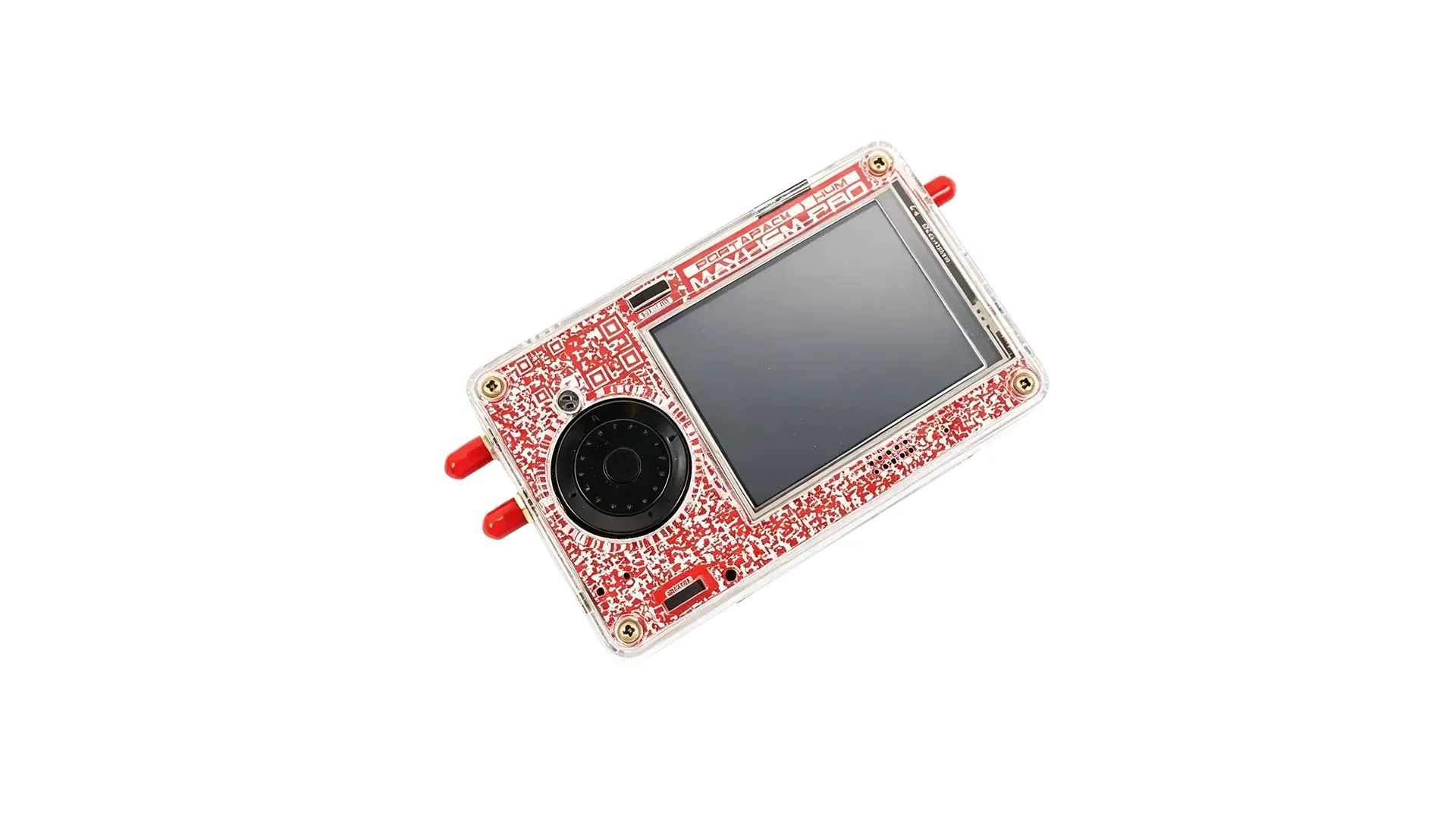
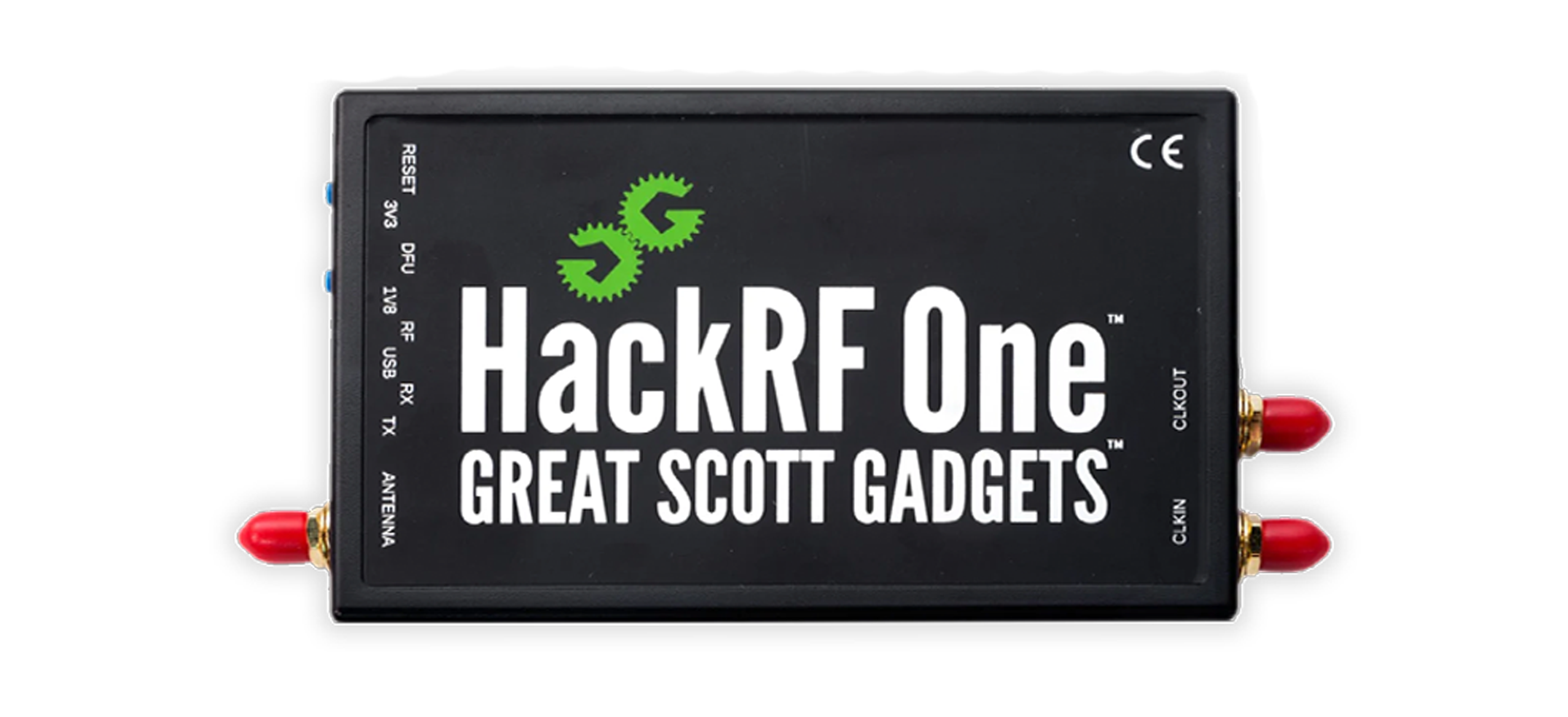
HackRF Pro vs HackRF One is becoming one of the most important questions for PortaPack buyers. For years, the classic HackRF One inside a PortaPack H4M has been the popular choice for portable SDR use, Mayhem firmware, spectrum exploration, and field testing. Now, the HackRF Pro R1.2.1 with PortaPack H4M Pro gives buyers a newer hardware option.
The question is simple: is the upgrade worth it, or should you still buy the current HackRF One-based PortaPack H4M?
The short answer is that the HackRF Pro R1.2.1 with PortaPack H4M Pro is worth it if you want the newest hardware platform, 100 kHz–6 GHz listed coverage, upgraded MCU, FPGA, more flash memory, improved shielding, antenna port protection, USB-C, and 18650 battery support. The current HackRF One PortaPack H4M still makes sense if you want a proven, available, ready-to-use Mayhem device now.
Quick Answer: Is HackRF Pro Worth the Upgrade?
| Buyer Type | Best Choice | Why |
|---|---|---|
| You want the newest hardware | HackRF Pro with PortaPack H4M Pro | Upgraded MCU, FPGA, flash, TCXO, shielding, USB-C, and protection |
| You want a proven device now | HackRF One PortaPack H4M | Available, tested by many users, and ready for Mayhem firmware use |
| You already own H4M | Upgrade only if you need the new hardware | The current H4M is still useful for portable SDR and Mayhem apps |
| You are buying your first PortaPack | H4M Pro if you can wait, H4M if you need it now | The Pro is more future-looking, but the current H4M is lower-risk |
| You want field battery flexibility | HackRF Pro with PortaPack H4M Pro | Uses a removable 18650 battery format, but battery is not included |
What Is Inside the Current PortaPack H4M?
The current PortaPack H4M is built around the classic HackRF One-style SDR platform. It gives users a portable screen-based SDR experience with Mayhem firmware support, physical controls, battery operation, and a handheld interface.
This is why the H4M became popular. Instead of using HackRF only as a USB SDR connected to a computer, the PortaPack turns it into a portable tool that can be used for many common receive, spectrum, and field workflows.
The current HackRF One-based H4M is best for:
- Portable Mayhem firmware use
- Wideband signal monitoring
- Field spectrum exploration
- Beginners who want a visual SDR interface
- Users who want a proven device now
- Buyers who do not need the newest HackRF Pro hardware
The current HackRF PortaPack H4M Mayhem Signature Edition is still a strong option because it is already available, familiar, and designed for portable Mayhem use.
What Is New with HackRF Pro Inside PortaPack H4M Pro?
The HackRF Pro inside the PortaPack H4M Pro is the newer hardware platform. It is not just a different case or a small visual refresh. The main upgrade is the HackRF Pro R1.2.1 board itself.
The HackRF Pro R1.2.1 with PortaPack H4M Pro Mayhem Signature Edition is designed for advanced signal analysis, RF testing, portable SDR experiments, and standalone workflows through the H4M Pro interface.
Main HackRF Pro upgrades include:
- Working frequency range listed from 100 kHz to 6 GHz
- HackRF Pro R1.2.1 hardware version
- Upgraded LPC4330 main MCU
- iCE40 UltraPlus FPGA logic chip
- 32M-bit flash memory
- MAX2831 RF transceiver chip
- MAX5865 ADC/DAC chip
- Built-in 25 MHz 0.5 ppm TCXO
- USB-C USB 2.0 interface
- Reinforced internal RF shielding
- Enhanced antenna port surge protection
- Designed for Mayhem firmware and portable SDR use
HackRF Pro vs HackRF One: Main Hardware Differences
| Feature | HackRF One Inside H4M | HackRF Pro Inside H4M Pro |
|---|---|---|
| Hardware generation | Classic HackRF One-style platform | Newer HackRF Pro R1.2.1 platform |
| Listed frequency range | Typically 1 MHz–6 GHz | 100 kHz–6 GHz |
| Main MCU | LPC4320-class HackRF One platform | Upgraded LPC4330 |
| Logic chip | Classic CPLD-based design | iCE40 UltraPlus FPGA |
| Flash memory | 8M-bit class on classic HackRF One designs | 32M-bit flash memory |
| Clock stability | Depends on board version | Built-in 25 MHz 0.5 ppm TCXO |
| USB connector | USB-C on newer H4M versions, older HackRF One designs used Micro-B | USB-C |
| RF shielding | Depends on version and enclosure | Reinforced internal RF shielding |
| Antenna port protection | Classic HackRF-style protection level | Enhanced antenna port surge protection |
| Best for | Proven portable Mayhem workflows | Newest hardware, better long-term upgrade path, advanced users |
Frequency Range: 100 kHz–6 GHz vs 1 MHz–6 GHz
One of the easiest differences to understand is the listed lower frequency range. The classic HackRF One platform is commonly listed from 1 MHz to 6 GHz. HackRF Pro is listed from 100 kHz to 6 GHz.
This matters if you want more flexibility near the lower end of the spectrum. However, buyers should not assume that every signal near 100 kHz will be easy to receive perfectly with a small portable antenna. Low-frequency and HF performance still depends heavily on antenna design, noise level, filtering, grounding, and local RF environment.
In buyer terms, the HackRF Pro gives a wider listed tuning range and more hardware flexibility. The current H4M still covers the main wideband HackRF use cases that many users care about, especially portable monitoring, spectrum exploration, and Mayhem firmware apps.
MCU, FPGA, and Flash: Why the Pro Hardware Matters
The biggest technical upgrade is not only the frequency range. HackRF Pro moves to an upgraded LPC4330 MCU, iCE40 UltraPlus FPGA logic chip, and 32M-bit flash memory.
This matters most for users who care about firmware development, future expansion, advanced experiments, and long-term platform potential. For casual users who only want to open Mayhem and explore signals, these specs may not feel immediately dramatic on day one. For developers and advanced RF hobbyists, they are much more interesting.
The upgraded hardware is most useful for:
- Firmware development
- Future Mayhem feature potential
- Advanced RF experiments
- Users who want more modern logic hardware
- Buyers who plan to keep the device long term
- Technical users comparing HackRF Pro vs HackRF One
TCXO and Stability: A Practical Upgrade
HackRF Pro includes a built-in 25 MHz 0.5 ppm high-stability TCXO. Clock stability matters because SDR signals can drift if the reference clock is not stable enough. For many casual spectrum tasks, this may not be the first thing a beginner notices, but it becomes more important for narrowband signals, repeatable testing, and serious RF work.
The current HackRF One-based H4M remains very useful, but the Pro’s built-in stability is a clear advantage for buyers who want a more refined hardware platform.
RF Shielding and Antenna Port Protection
Reinforced internal RF shielding and enhanced antenna port surge protection are two of the most buyer-friendly upgrades. Portable SDRs are often used in unpredictable environments, with different antennas, cables, adapters, and field setups.
Better shielding can help reduce unwanted internal interference and improve overall hardware robustness. Better antenna port protection is also attractive because SDR front ends can be sensitive to static discharge, strong signals, incorrect transmit setups, and poor handling.
This does not make the device indestructible. Users should still use proper attenuators, avoid overloading the input, be careful with antennas, and follow RF safety practices. But compared with classic HackRF One-style hardware, these protection-focused improvements make the Pro platform more appealing.
Battery Design: 18650 Is a Real Practical Upgrade
The H4M Pro version uses a removable 18650 cylindrical lithium battery design. This is a practical upgrade because 18650 cells are easier to source and replace than custom soft-pack battery formats.
For field users, this matters. A removable 18650 battery can make long-term maintenance easier. If the battery wears out later, replacement should be simpler than dealing with a specific internal soft-pack battery shape.
The important warning is that the H4M Pro preorder product is sold without battery. Buyers need to add a compatible 18650 cell for portable operation.
Current H4M Advantages: Why HackRF One Still Makes Sense
Even with the HackRF Pro upgrade, the current HackRF One-based H4M is not outdated overnight. It is still a strong portable SDR choice because it already does what most PortaPack buyers want: it runs Mayhem, provides a screen and controls, supports portable field use, and works without a laptop for many workflows.
It also has the advantage of being proven. Many users already know what to expect from the current H4M generation, and existing tutorials, videos, firmware workflows, and community experience are mostly built around HackRF One-style hardware.
The current H4M still makes sense if:
- You want a device now instead of waiting for preorder stock
- You mainly care about Mayhem apps, not hardware development
- You want a lower-risk, proven PortaPack experience
- You do not need 100 kHz lower-end coverage
- You do not care about the upgraded MCU, FPGA, or flash memory
- You want an existing product with buyer feedback
HackRF Pro vs HackRF One for Mayhem Firmware
Both devices are designed around the Mayhem firmware experience when used with a PortaPack. The difference is not only software; it is the hardware underneath the interface.
The current H4M gives users the established Mayhem experience. The H4M Pro gives users the newer Signature Edition design and HackRF Pro platform, which may offer more future potential as firmware support and community testing mature.
If your main goal is simply to explore Mayhem apps now, the current H4M is still excellent. If your goal is to buy the most future-looking Mayhem hardware, the H4M Pro is the stronger choice.
HackRF Pro vs HackRF One for Beginners
Beginners do not always need the newest hardware. Many new users will get more value from a proven H4M that is available now, especially if they want to learn basic spectrum use, Mayhem firmware, and portable SDR operation.
However, if a beginner wants to buy once and keep the device for a long time, the HackRF Pro with H4M Pro is attractive. It gives a newer platform from the start and avoids buying the older hardware just before the Pro version becomes more common.
Beginner recommendation
- Buy current H4M if you want the easiest proven start today.
- Preorder H4M Pro if you want the newest hardware and can wait.
- Choose Clifford Heath H4M if you want a premium current-generation kit with accessories.
- Choose HackRF Pro board-only if you want development hardware without a PortaPack interface.
HackRF Pro vs HackRF One for Advanced Users
For advanced users, HackRF Pro is the more interesting option. The upgraded MCU, FPGA, flash memory, TCXO, shielding, protection, and 100 kHz–6 GHz listed range make it the better platform for serious experimentation.
Advanced users are also more likely to benefit from the Pro’s future firmware possibilities. If you already understand HackRF limitations and want a more modern board inside a PortaPack, the H4M Pro upgrade is easier to justify.
HackRF Pro Board Only vs H4M Pro Bundle
SDRstore also offers the HackRF Pro Development Board 100kHz–6GHz USB-C SDR Transceiver. This is important because not every buyer needs a PortaPack.
If you want PC-based SDR development, GNU Radio, SDR software, bench testing, or custom integration, the HackRF Pro board-only option may be the better buy. If you want standalone portable Mayhem use with a screen and controls, choose the HackRF Pro with PortaPack H4M Pro.
| Product | Best For | Buyer Advice |
|---|---|---|
| HackRF Pro Development Board | PC-based development, GNU Radio, bench testing, custom projects | Best if you do not need a portable screen interface |
| HackRF Pro with PortaPack H4M Pro | Standalone portable use, Mayhem firmware, screen and controls | Best if you want the full portable Pro experience |
| Current HackRF One PortaPack H4M | Proven portable Mayhem workflows available now | Best if you want a lower-risk current option |
Should Existing H4M Owners Upgrade?
If you already own a current HackRF One-based PortaPack H4M and it works well for your projects, you do not need to upgrade immediately. The current H4M remains useful for Mayhem firmware, portable spectrum work, field use, and learning.
Upgrade to H4M Pro if you want the newer hardware platform, better long-term battery format, improved shielding, enhanced antenna port protection, wider listed lower frequency coverage, or more future development potential.
Upgrade if you care about:
- HackRF Pro R1.2.1 hardware
- 100 kHz–6 GHz listed working range
- Improved MCU and FPGA hardware
- More flash memory
- Better timing stability
- Better RF shielding and port protection
- Removable 18650 battery format
- Owning the newest Mayhem Signature Edition platform
Should New Buyers Choose HackRF Pro or HackRF One?
New buyers have a harder decision. If you are buying your first PortaPack now, the H4M Pro is the more future-looking choice. It gives you the newest platform from the beginning.
But the current H4M still has a strong argument: it is available, proven, and already widely used. If you need a device immediately, or if you want the most predictable buying experience, the current H4M is still a smart choice.
Best Buying Recommendation
Choose the HackRF Pro R1.2.1 with PortaPack H4M Pro if you want the newest portable HackRF platform and are comfortable with a preorder. It is the better choice for advanced users, long-term buyers, Mayhem enthusiasts, and people who want improved hardware under the PortaPack interface.
Choose the HackRF One PortaPack H4M if you want a proven device now. It remains a strong portable SDR for Mayhem firmware, field operation, and general RF exploration.
Choose the HackRF Pro Development Board if you want the Pro hardware for PC-based SDR work but do not need the PortaPack screen and handheld controls.
Final Verdict: Is the HackRF Pro Upgrade Worth It?
Yes, the HackRF Pro upgrade is worth it if you care about the hardware. The move from HackRF One to HackRF Pro brings a newer MCU, FPGA, more flash memory, built-in high-stability TCXO, USB-C, reinforced RF shielding, enhanced antenna port protection, and a wider listed lower frequency range.
However, the upgrade is not mandatory for everyone. If your main goal is simply to use Mayhem firmware on a portable SDR, the current HackRF One-based PortaPack H4M is still a very good choice.
For the best long-term purchase, choose HackRF Pro with PortaPack H4M Pro. For the safest available option today, choose HackRF One inside PortaPack H4M. For development without the handheld interface, choose the HackRF Pro board-only version.
FAQ
What is the difference between HackRF Pro and HackRF One?
HackRF Pro uses newer hardware with an upgraded LPC4330 MCU, iCE40 UltraPlus FPGA, 32M-bit flash, built-in 25 MHz 0.5 ppm TCXO, USB-C, reinforced RF shielding, enhanced antenna port protection, and a listed 100 kHz–6 GHz working range. HackRF One is the classic platform commonly listed from 1 MHz to 6 GHz.
Is HackRF Pro better than HackRF One inside PortaPack H4M?
HackRF Pro is better if you want newer hardware, better long-term platform potential, improved shielding, antenna port protection, and 18650 battery support in the H4M Pro bundle. HackRF One inside H4M is still better if you want a proven available device now.
Should I upgrade from HackRF One PortaPack H4M to H4M Pro?
Upgrade if you need the newer HackRF Pro hardware, 100 kHz lower-end coverage, improved TCXO, better shielding, enhanced antenna protection, and 18650 battery format. Keep your current H4M if it already meets your needs.
Does HackRF Pro with H4M Pro include a battery?
No. The HackRF Pro R1.2.1 with PortaPack H4M Pro is sold without battery. It requires a compatible removable 18650 cylindrical lithium battery for portable operation.
Is HackRF Pro good for Mayhem firmware?
Yes. The HackRF Pro with PortaPack H4M Pro is designed for Mayhem firmware and portable SDR use. The current HackRF One-based H4M also remains a strong Mayhem firmware platform.
Should beginners buy HackRF Pro or HackRF One H4M?
Beginners who want a proven device now should choose the current HackRF One PortaPack H4M. Beginners who want the newest hardware and can wait for preorder processing should choose HackRF Pro with H4M Pro.
Is HackRF Pro board-only the same as H4M Pro?
No. The HackRF Pro board-only version is for PC-based SDR development and does not include the PortaPack screen and handheld interface. The H4M Pro bundle combines HackRF Pro hardware with the PortaPack H4M Pro interface.
Is HackRF Pro worth it for advanced users?
Yes. Advanced users are more likely to benefit from the upgraded MCU, FPGA, flash memory, TCXO, shielding, antenna protection, and wider listed lower frequency coverage.
No posts found
Write a review






We support all major card and digital payment options. More local methods are available and shown during checkout.
You enter into a binding sales contract once you have received an 'order confirmation and sales receipt' email from us, in line with our Sales & Delivery conditions. Therefore, sdrstore.eu has the right to cancel your order in the event of technical problems, delivery failure, Fair use policy and other similar situations.






Your payments are protected by advanced encryption and 3-D Secure authentication for safe online shopping.