





Under the Hood: A Close-Up Look at the LilyGO T-Dongle-S3 Internals
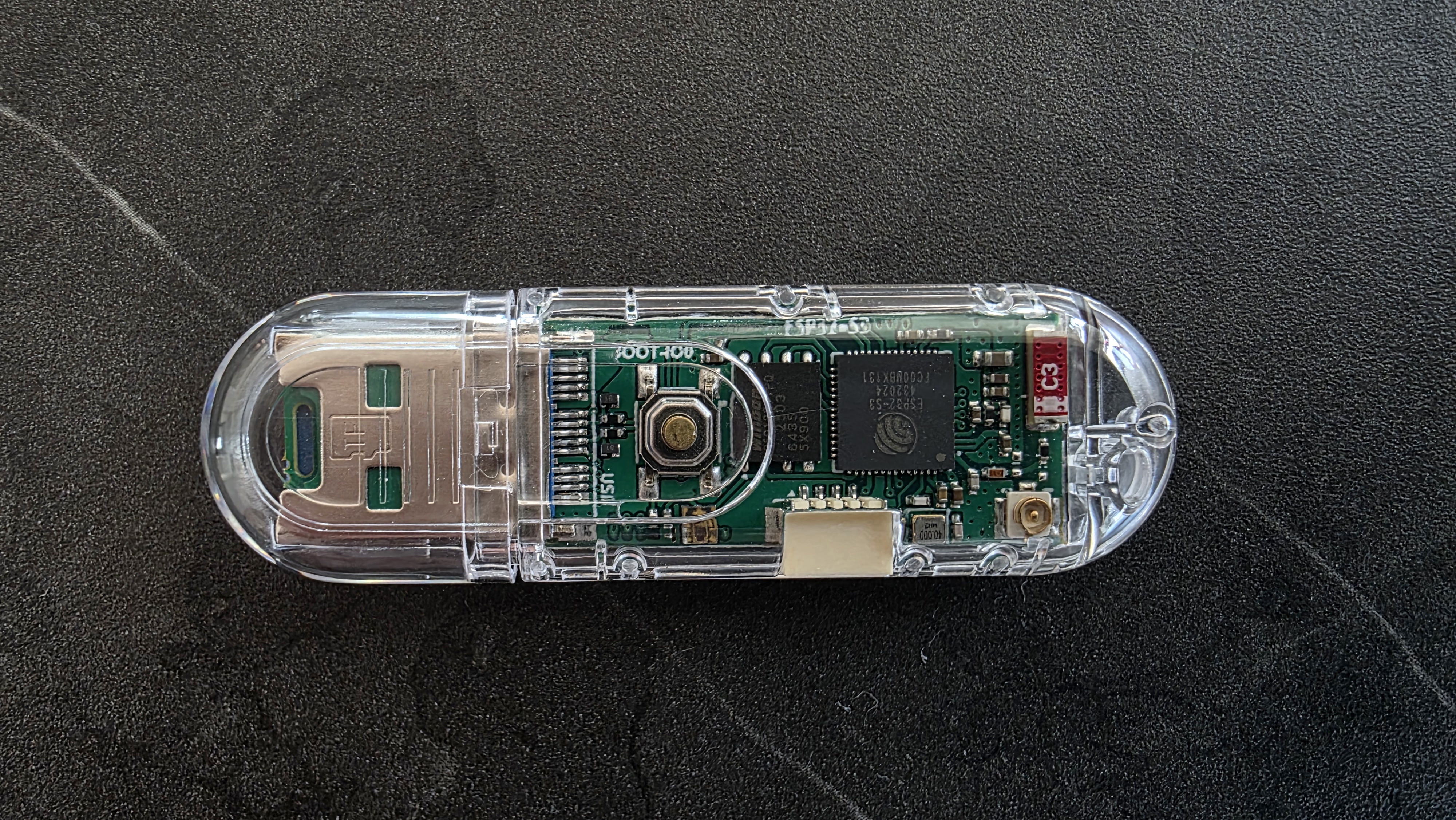
There is something uniquely satisfying about hardware that doesn't hide its secrets. One of the best things about the LilyGO T-Dongle-S3 is the transparent casing—it gives us a front-row seat to the engineering without ever needing to reach for a screwdriver. We took some high-resolution macro shots of the board, and honestly, seeing the 2026-spec ESP32-S3 traces through the shell tells a much better story than any datasheet ever could. If you're comparing this to a generic SDR dongle, the difference in component density is staggering.
The Transparent Advantage: Hardware Verification
Let's be real: in 2026, "hardware trust" is a big deal. Being able to look through the clear shell of the T-Dongle-S3 allows you to verify the components instantly. You can see the ESP32-S3 chip sitting right in the center, flanked by the ST7735 LCD circuitry. For security researchers, this isn't just about aesthetics—it's about confirming there are no unexpected "extras" on the PCB. It’s a level of transparency that we wish more manufacturers would adopt, especially in the portable hacking tool market.
The Powerhouse: ESP32-S3 R8 and Native USB
If you zoom in on the main IC, you’re looking at the ESP32-S3 R8. This is a dual-core beast that handles 2.4GHz WiFi and Bluetooth LE with significantly more headroom than the older chips we used a few years ago. Because it supports native USB, the signal path is incredibly short and direct. This is a massive upgrade over the legacy boards that relied on external bridge chips like the CP2102. When you're running a high-speed stealth WiFi scanner, that lack of latency is actually noticeable.
PCB Routing: No "Paper-Thin" Traces Here
One of the easiest ways to spot a cheap knockoff is by the quality of the copper traces. Through the clear casing of the T-Dongle-S3, you can see the wide, clean power planes feeding the USB-C port and the TF (microSD) card slot. This matters because the ESP32-S3 can pull a fair amount of current when it’s crunching data or writing to the SD card. Thin traces would lead to voltage drops and the dreaded "reboot loop" that plagues lower-end DIY SDR projects.
The layout around the 0.96-inch LCD is equally impressive. The ribbon cable is secured with precision, and the support components are tucked away to minimize the overall footprint. It’s a masterclass in 2026 industrial design—proving that you don’t need a bulky case to have a professional-grade development platform.
The Workbench Verdict
Getting a clear look at the T-Dongle-S3's internals only confirms its "Elite" status in our catalog. Between the R8 memory variant of the S3 and the rock-solid PCB routing, this is a tool built for the long haul. Whether you’re using it as a dedicated WiFi Marauder node or a portable data logger, the hardware is clearly up to the task.
Want to see the engineering for yourself? You can get the 100% authentic LilyGO T-Dongle-S3 directly from our stock below—just hit "Add to Cart" and get yours on the workbench.
No posts found
Write a review





We support all major card and digital payment options. More local methods are available and shown during checkout.
You enter into a binding sales contract once you have received an 'order confirmation and sales receipt' email from us, in line with our Sales & Delivery conditions. Therefore, sdrstore.eu has the right to cancel your order in the event of technical problems, delivery failure, Fair use policy and other similar situations.



Your payments are protected by advanced encryption and 3-D Secure authentication for safe online shopping.