





RTL-SDR Blog V3 Kit Review: Is It Still Worth Buying in 2026?
The RTL-SDR Blog V3 Kit is one of the most well-known beginner SDR kits ever made. It has been recommended for years because it is affordable, easy to use, widely supported, and flexible enough for many radio projects. But in 2026, with newer SDRs, RTL-SDR Blog V4 models, USB-C variants, and more advanced devices available, many buyers are asking the same question: is the RTL-SDR Blog V3 Kit still worth buying?
The short answer is yes, the RTL-SDR Blog V3 Kit is still worth buying in 2026 if you want a proven, beginner-friendly SDR receiver for scanning, ADS-B, airband, AIS, radiosondes, weather satellites, and general RF learning. It is not the newest RTL-SDR model, and it is not the best choice for every use case, but it remains one of the safest and easiest ways to start with software-defined radio.
You can view the product here: RTL-SDR Blog V3 R820T2 RTL2832U 1PPM TCXO SMA Software Defined Radio Kit.
Quick Verdict: Is the RTL-SDR Blog V3 Kit Still Worth It in 2026?
Yes, the RTL-SDR Blog V3 Kit is still a good buy in 2026, especially for beginners. It is affordable, reliable, easy to set up, and works with a huge amount of SDR software. The included multipurpose dipole antenna kit also makes it more useful than buying only a dongle with no antenna.
The V3 is especially good if you want a simple receive-only SDR for learning. It does not transmit, which makes it safer for beginners. You can connect it to a computer, install SDR software, attach the antenna, and start exploring signals without worrying about accidental transmissions or licensing issues.
Buy the RTL-SDR Blog V3 Kit if you want:
- A low-cost beginner SDR starter kit
- A proven RTL-SDR receiver with strong software support
- ADS-B aircraft tracking
- Airband and marine AIS monitoring
- General VHF and UHF scanning
- Radiosonde and weather balloon tracking
- Meteor weather satellite reception with the dipole in V-dipole configuration
- Basic HF experimentation using direct sampling mode
What Is Included in the RTL-SDR Blog V3 Kit?
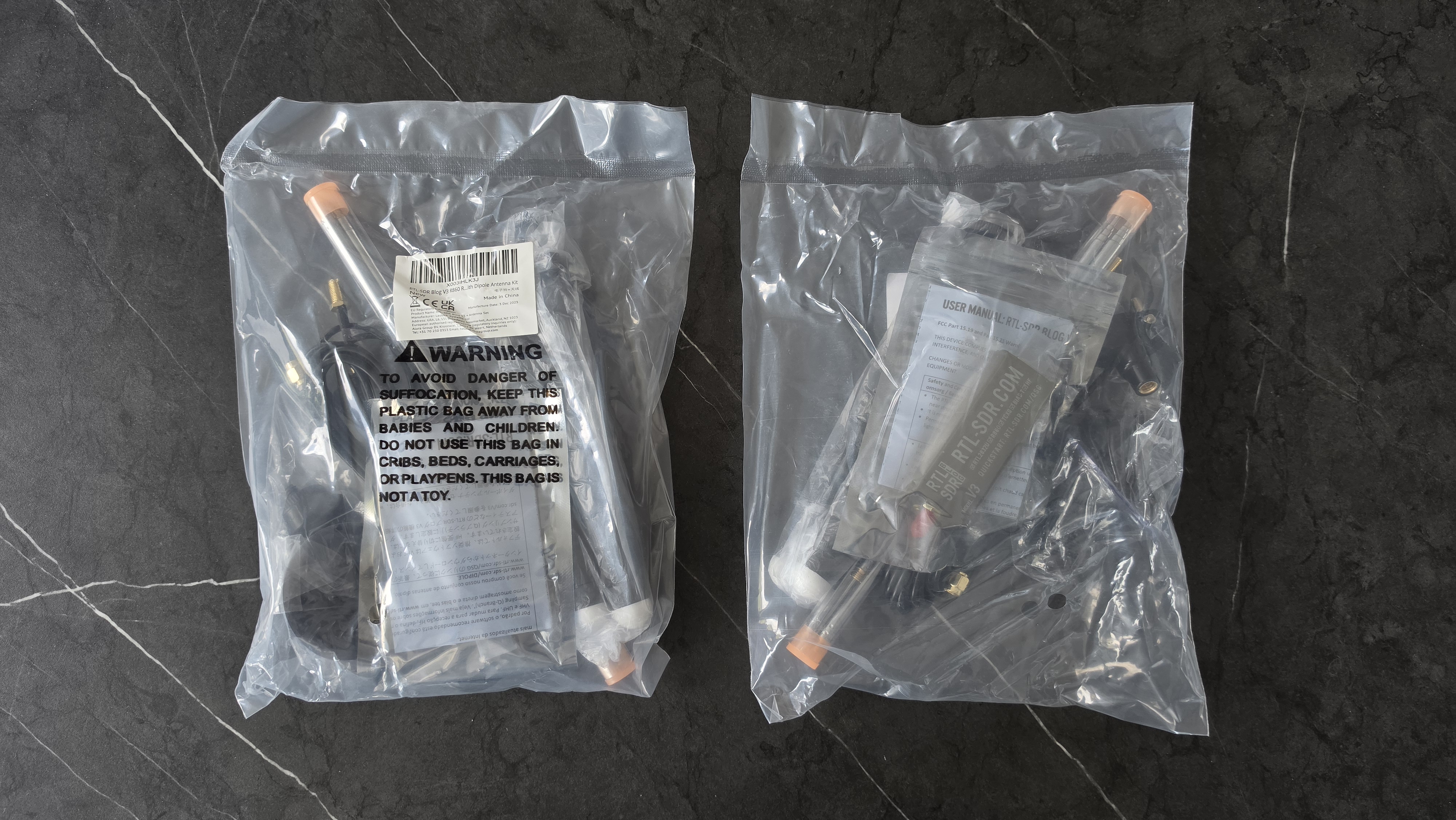
The main advantage of the kit version is that it includes both the RTL-SDR Blog V3 dongle and a multipurpose dipole antenna set. This makes it easier for beginners because you do not need to immediately buy a separate antenna, cable, mount, and adapter.
| Item | Included in the Kit | Why It Matters |
|---|---|---|
| RTL-SDR Blog V3 dongle | Yes | The main SDR receiver for scanning and decoding radio signals |
| Multipurpose dipole antenna base | Yes | Useful for beginner terrestrial and satellite reception |
| Long telescopic antenna elements | Yes | Useful for lower VHF and 137 MHz satellite reception |
| Short telescopic antenna elements | Yes | Useful for higher frequency signals such as ADS-B experiments |
| Extension cable | Yes | Helps place the antenna in a better location |
| Tripod mount | Yes | Useful for portable and temporary setups |
| Suction cup mount | Yes | Useful for window mounting and quick indoor tests |
This is why the RTL-SDR Blog V3 Kit is still a strong beginner package. It gives you enough hardware to start experimenting on day one.
RTL-SDR Blog V3 Key Specifications
| Feature | RTL-SDR Blog V3 |
|---|---|
| Receiver type | Receive-only software-defined radio |
| Main chips | RTL2832U with R820T2 / R860 tuner family |
| Frequency coverage | Approximately 500 kHz to 1.7 GHz depending on mode and setup |
| Bandwidth | Up to 3.2 MHz, with around 2.4 MHz commonly treated as stable |
| Clock stability | 1PPM TCXO |
| Antenna connector | SMA female |
| Case | Aluminium case with passive cooling |
| Bias tee | Software-switchable bias tee for compatible LNAs and active antennas |
| HF reception | Basic HF reception through direct sampling mode |
| Transmit support | No, receive only |
Why the RTL-SDR Blog V3 Still Makes Sense in 2026
The biggest reason the RTL-SDR Blog V3 still makes sense is trust. It is a mature receiver with years of community experience behind it. Beginners can find tutorials for SDR#, SDR++, GQRX, HDSDR, CubicSDR, dump1090, rtl_433, AIS decoders, radiosonde tools, SatDump, and many other projects.
That matters because the hardest part of starting with SDR is usually not the dongle. It is software setup, drivers, antenna placement, gain control, and choosing the right project. Because the V3 has been used by so many people, troubleshooting is easier than with unknown generic dongles.
The V3 is still strong because:
- It is widely supported by SDR software
- It uses a stable and well-known RTL-SDR design
- It has a 1PPM TCXO for better frequency stability
- It has an SMA connector instead of weaker TV-style connectors
- It includes an aluminium case for passive cooling
- It supports software-switchable bias tee power
- It works for many beginner radio projects
Best Projects for the RTL-SDR Blog V3 Kit
The RTL-SDR Blog V3 Kit is best for receive-only projects. It is not a transmitter, but it can receive many types of radio signals when paired with the right antenna and software.
| Project | Works with V3 Kit? | Difficulty |
|---|---|---|
| FM broadcast listening | Yes | Easy |
| Airband listening | Yes | Easy |
| ADS-B aircraft tracking | Yes | Easy |
| Marine AIS | Yes | Easy to medium |
| Radiosonde tracking | Yes | Medium |
| Weather satellites on 137 MHz | Yes | Medium |
| Basic HF reception | Yes, with direct sampling mode | Medium |
| Transmit experiments | No | Requires a different SDR |
RTL-SDR Blog V3 for ADS-B Aircraft Tracking
ADS-B is one of the best first projects for the RTL-SDR Blog V3 Kit. Aircraft transmit ADS-B messages around 1090 MHz, and the V3 can receive these signals with the right antenna setup.
The included dipole kit can be used for basic ADS-B testing, especially if placed near a window or outside. For better results, a dedicated 1090 MHz antenna and a filtered LNA can improve range and signal quality.
If you want to build an aircraft tracking station, the V3 is still a very practical choice in 2026. It is affordable enough to dedicate one dongle only to ADS-B while using another SDR for scanning or satellite projects.
RTL-SDR Blog V3 for Weather Satellites
The RTL-SDR Blog V3 Kit is also useful for 137 MHz weather satellite reception. The included dipole antenna can be arranged as a V-dipole, which is one of the simplest beginner antennas for low Earth orbit weather satellite passes.
In 2026, the old NOAA APT workflow is no longer the strongest beginner recommendation because the classic NOAA APT satellites have reached the end of their operational life. However, RTL-SDR weather satellite reception is still active through newer workflows such as Meteor LRPT when available.
For beginners, the V3 kit is still a good way to learn antenna placement, satellite pass timing, gain settings, and decoding software such as SatDump.
RTL-SDR Blog V3 for HF: Good, But Understand the Limits
The RTL-SDR Blog V3 can receive basic HF signals using direct sampling mode. This is useful for experimenting below 28.8 MHz, but buyers should understand that this is not the same as using a dedicated HF receiver.
HF reception with the V3 can be affected by strong AM broadcast signals, local noise, poor antennas, and direct sampling limitations. For casual experiments and learning, it is a useful feature. For serious HF listening, a dedicated HF SDR or an upconverter-based setup may perform better.
V3 HF reception is good for:
- Learning how HF reception works
- Testing simple wire antennas
- Experimenting with shortwave signals
- Basic amateur radio monitoring
- Understanding noise, filtering, and antenna placement
RTL-SDR Blog V3 vs V4: Which Should You Buy?
The RTL-SDR Blog V4 brought several improvements, especially for filtering and HF reception. It uses an upconverter design for HF instead of the V3 direct sampling approach, and it has improved front-end filtering.
However, the V3 still has advantages. It is mature, simple, widely supported, and based on the familiar R820T2 / R860 RTL-SDR ecosystem. If you want the easiest compatibility and a proven beginner kit, the V3 is still a safe option.
| Feature | RTL-SDR Blog V3 | RTL-SDR Blog V4 |
|---|---|---|
| Best for | Simple beginner use, compatibility, proven tutorials | Improved filtering and better HF design |
| HF method | Direct sampling | Built-in upconversion |
| Software compatibility | Very mature and widely supported | Good, but may require correct RTL-SDR Blog drivers |
| Beginner friendliness | Excellent | Excellent, but slightly more dependent on correct drivers |
| Availability context | Still useful as a stable older model | More modern, but V4 stock has been affected by tuner chip availability |
If the RTL-SDR Blog V4 is available and you want the newer design, it is worth considering. If you want a stable, proven, beginner-friendly kit with antenna included, the RTL-SDR Blog V3 Kit remains a very good choice.
RTL-SDR Blog V3 Kit vs Dongle Only
Buyers often ask whether they should buy the V3 kit or the dongle-only version. The answer depends on what you already own.
If you are completely new, buy the kit. The antenna set is useful for learning and lets you start immediately. If you already own antennas, cables, mounts, and adapters, the dongle-only version may be enough.
| Option | Best For | Recommendation |
|---|---|---|
| RTL-SDR Blog V3 Kit | Beginners starting from zero | Best overall choice for first-time buyers |
| RTL-SDR Blog V3 Dongle Only | Users who already own antennas and cables | Best if you already have a setup |
For most first-time SDR users, the kit is the better value because the included dipole antenna can be used for multiple beginner projects.
What the RTL-SDR Blog V3 Kit Does Well
The V3 kit is not popular by accident. It solves the most important beginner problem: getting a working SDR setup without spending too much or choosing the wrong accessories.
Main strengths
- Affordable entry point into SDR
- Excellent beginner documentation and community support
- Good enough for many real radio projects
- Included antenna kit is useful and flexible
- Works on Windows, Linux, macOS, Android, and Raspberry Pi setups
- Supports popular software such as SDR#, SDR++, GQRX, HDSDR, CubicSDR, and SatDump
- Receive-only design is safer for beginners
Where the RTL-SDR Blog V3 Kit Shows Its Age
The V3 is still useful, but it is not perfect. Newer SDRs can offer more bandwidth, transmit capability, better HF performance, Ethernet, MIMO, higher dynamic range, or cleaner front-end filtering.
Main limitations
- Receive only, with no transmit capability
- Limited bandwidth compared with more advanced SDRs
- HF direct sampling is useful but not ideal for serious HF work
- Strong local signals may require filters or attenuation
- Included antenna is good for learning but not a replacement for dedicated antennas
- Not a professional measurement instrument
These limitations are normal for an entry-level SDR. The V3 kit is designed to help users learn and explore, not replace higher-end SDR platforms.
Should You Still Buy an RTL-SDR Blog V3 Kit in 2026?
You should buy the RTL-SDR Blog V3 Kit in 2026 if you want a low-risk beginner SDR that works with many tutorials and projects. It is especially good for users who want to learn the basics before buying more advanced hardware.
If your goal is simple scanning, ADS-B, airband, AIS, radiosondes, weather satellites, or general SDR learning, the V3 kit still makes sense.
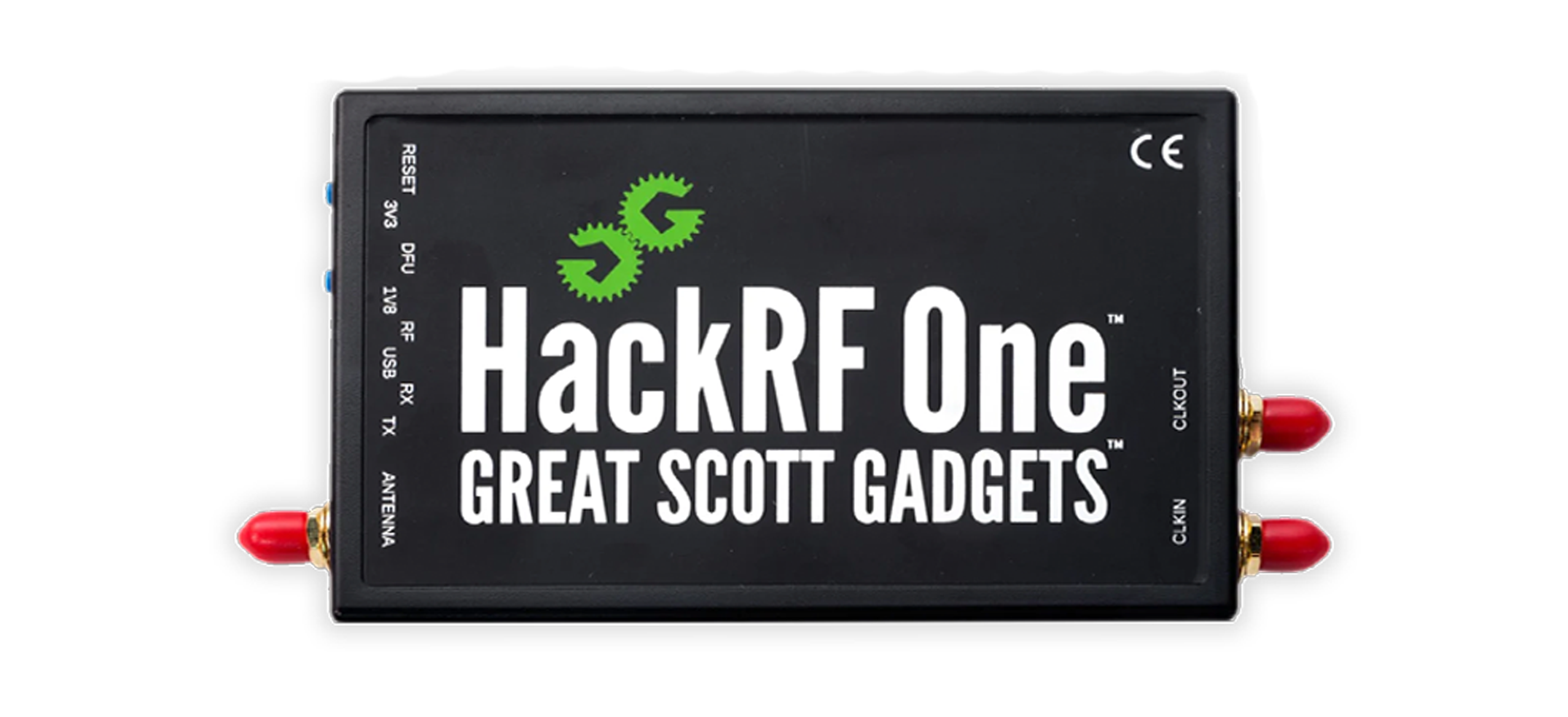
If your goal is transmit-capable testing, wideband RF generation, 2TX/2RX experiments, GNU Radio development, or professional lab work, you may want to look at more advanced SDRs such as HackRF, PlutoSDR, or USRP.
Best Buyer Recommendation
For a first SDR, the RTL-SDR Blog V3 Kit is still one of the easiest recommendations in 2026. It gives you the SDR receiver, antenna kit, mounts, and cable needed to start exploring radio signals without building a custom setup from scratch.
If you already know you want the newest RTL-SDR Blog model and it is available, compare it with the V4. But if you want a proven, stable, beginner-friendly SDR starter kit, the V3 remains a smart purchase.
Final Verdict
The RTL-SDR Blog V3 Kit is still worth buying in 2026 because it remains one of the most practical and beginner-friendly SDR kits available. It is not the newest model, and it is not the most advanced SDR, but it still does exactly what beginners need: it helps them receive real signals, learn SDR software, test antennas, and understand radio without spending too much.
For many buyers, that is more important than having the newest hardware. The V3 kit is affordable, proven, widely supported, and still useful for a long list of projects.
If you are buying your first SDR in 2026 and want a reliable starting point, the RTL-SDR Blog V3 Kit is still a very good choice.
FAQ
Is the RTL-SDR Blog V3 Kit still worth buying in 2026?
Yes. The RTL-SDR Blog V3 Kit is still worth buying in 2026 for beginners who want an affordable, proven, receive-only SDR for scanning, ADS-B, satellites, AIS, radiosondes, and general radio learning.
What comes with the RTL-SDR Blog V3 Kit?
The kit includes the RTL-SDR Blog V3 dongle and a multipurpose dipole antenna set with telescopic antenna elements, antenna base, extension cable, tripod mount, and suction cup mount.
Can the RTL-SDR Blog V3 receive HF?
Yes, the RTL-SDR Blog V3 can receive basic HF signals using direct sampling mode. However, serious HF users may want better antennas, filters, or a more dedicated HF SDR setup.
Is the RTL-SDR Blog V3 better than the V4?
The V4 has newer filtering and an improved HF upconverter design, but the V3 remains simpler, mature, widely supported, and still excellent for beginners.
Can the RTL-SDR Blog V3 transmit?
No. The RTL-SDR Blog V3 is receive-only. If you need transmit capability, consider SDRs such as HackRF, PlutoSDR, or USRP.
Is the RTL-SDR Blog V3 good for ADS-B?
Yes. The RTL-SDR Blog V3 is a popular choice for ADS-B aircraft tracking, especially when paired with a good 1090 MHz antenna and, if needed, a filtered LNA.
Is the RTL-SDR Blog V3 Kit good for weather satellites?
Yes. The included dipole antenna can be arranged as a V-dipole for 137 MHz weather satellite reception, making the kit useful for beginner satellite projects.
No posts found
Write a review






We support all major card and digital payment options. More local methods are available and shown during checkout.
You enter into a binding sales contract once you have received an 'order confirmation and sales receipt' email from us, in line with our Sales & Delivery conditions. Therefore, sdrstore.eu has the right to cancel your order in the event of technical problems, delivery failure, Fair use policy and other similar situations.






Your payments are protected by advanced encryption and 3-D Secure authentication for safe online shopping.