





RTL-SDR Blog V4 Lite Explained: R828S, Driver Update, and What Changes
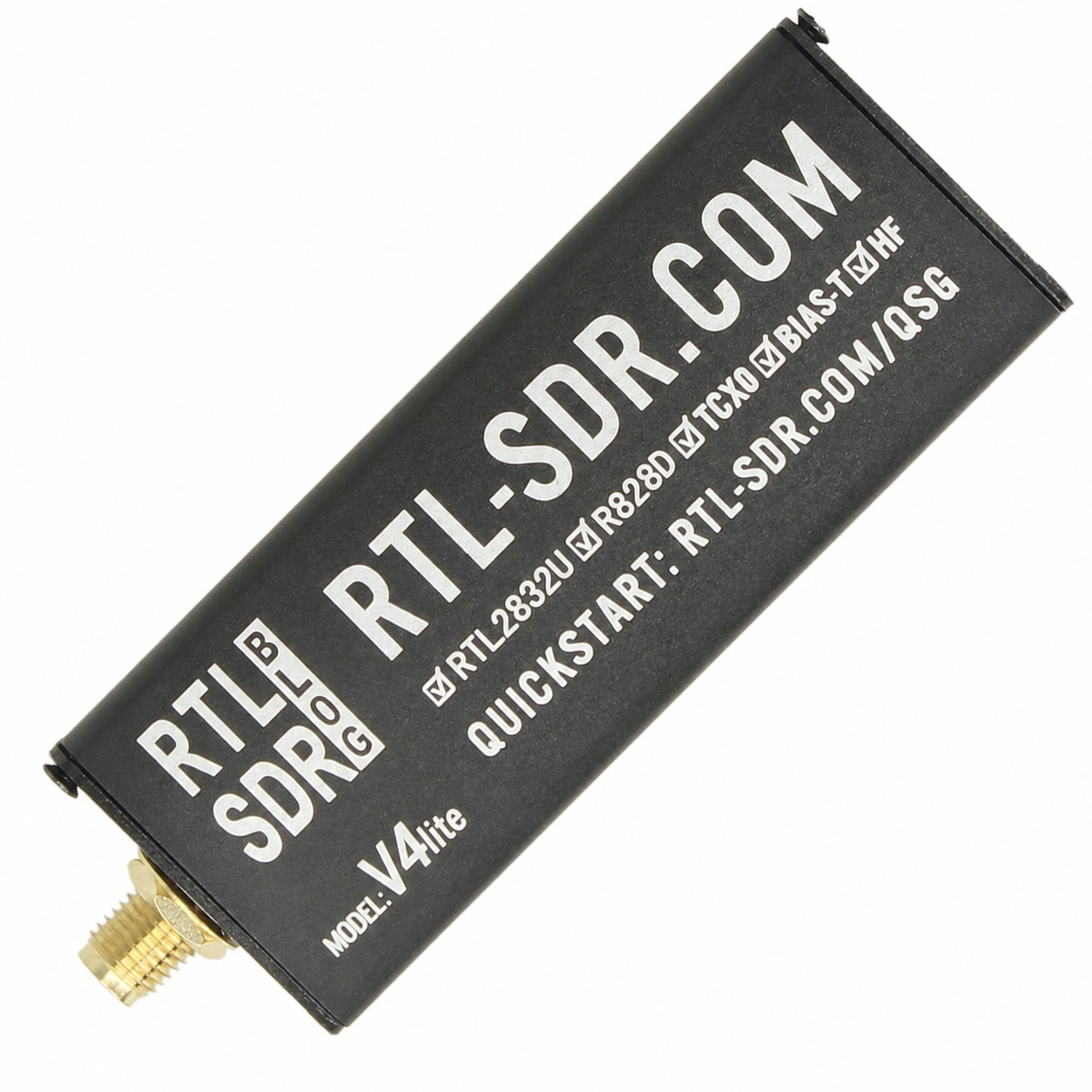
The RTL-SDR Blog V4 Lite, also known as the RTL-SDR Blog V4L, is one of the most important budget SDR updates of 2026. It exists because the original RTL-SDR Blog V4 can no longer continue in the same form, mainly due to the end of usable R828D tuner chip stock.
For buyers, this raises an obvious question: what exactly changes with the RTL-SDR Blog V4 Lite, and should you wait for it, buy a remaining RTL-SDR Blog V4, or choose the stable RTL-SDR Blog V3 instead?
This guide explains the R828S tuner chip, the required RTL-SDR driver update, what V4 Lite keeps from the original V4, what it loses, and what buyers should expect before ordering.
Quick Answer: What Is RTL-SDR Blog V4 Lite?
RTL-SDR Blog V4 Lite is the planned replacement-style version of the RTL-SDR Blog V4. It is expected to use the R828S tuner chip instead of the R828D used in the original V4.
The important part is that V4 Lite should keep the V4-style HF upconverter architecture. That means it should still be more interesting for HF reception than the older V3 direct sampling approach. However, because the R828S has fewer inputs than the R828D, the V4 Lite will not be able to keep the same additional VHF/UHF split filtering used on the original V4.
In simple terms: the RTL-SDR Blog V4 Lite should be a lower-filtering, R828S-based version of the V4 concept, not an identical replacement for the original V4.
Why Is the RTL-SDR Blog V4 Lite Needed?
The original RTL-SDR Blog V4 was based on the Rafael Micro R828D tuner chip. That chip is no longer in production, and the stockpile used for V4 production has now been exhausted. Because of that, no more original R828D-based V4 production is expected.
This does not mean the RTL-SDR Blog product line is ending. The RTL-SDR Blog V3 is expected to remain in stable production, while the V4 Lite is planned as a way to continue a similar V4-style architecture using available stockpiled R828S chips.
You can browse current options in the RTL-SDR category at SDRstore.eu, including the RTL-SDR Blog V3 Kit and remaining RTL-SDR Blog V4 options when available.
RTL-SDR V4 Lite vs V4: Main Changes
| Feature | RTL-SDR Blog V4 | RTL-SDR Blog V4 Lite / V4L |
|---|---|---|
| Main tuner chip | R828D | R828S |
| Production status | End-of-line due to exhausted R828D stock | Planned limited model using stockpiled R828S chips |
| HF reception | Built-in V4-style HF upconverter | Expected to keep the V4-style HF upconverter |
| VHF/UHF filtering | Stronger filtering using the R828D’s extra input options | Simplified filtering because R828S has fewer inputs |
| Driver support | Needs V4-compatible RTL-SDR drivers | Will require a new/updated driver for V4L detection |
| Best buyer | Users who want the original R828D V4 design | Users who want a future V4-style option once V4 stock is gone |
What Is the R828S Tuner?
The R828S is the tuner chip planned for the RTL-SDR Blog V4 Lite. It is related to the tuner family used in many RTL-SDR-style devices, but it has an important difference compared with the R828D used in the original V4: it has fewer usable inputs.
That difference matters because the original RTL-SDR Blog V4 used the R828D’s extra input options to create a more advanced filtering arrangement. With the R828S, the same full filtering layout is not possible, which is why the new model is called “Lite.”
The R828S also creates a software challenge. It may appear to software like an R820T or R860 over I2C, so updated driver logic is needed to correctly detect a V4 Lite dongle and apply the right tuning behavior.
Why Does RTL-SDR V4 Lite Need a Driver Update?
The RTL-SDR Blog V4 Lite needs a driver update because the R828S has not commonly been used in RTL-SDR-type products before. Software needs to know that the connected device is not a normal R820T/R860-style dongle and not an original R828D-based V4.
The planned detection method uses EEPROM identification strings such as “RTLSDRBlog” and “V4L” so the driver can recognize the dongle as a V4 Lite and apply the correct settings.
This is similar to the original V4 situation, where updated drivers were required for the device to work correctly. If the wrong driver is used, an RTL-SDR device may show no signals, incorrect frequencies, or corrupted signal behavior.
What buyers should expect from the driver update
- Older RTL-SDR software may not support V4 Lite immediately.
- Updated RTL-SDR Blog or Osmocom drivers may be required.
- Some programs may need a new
rtlsdr.dllon Windows. - Linux users may need updated rtl-sdr packages or a source build.
- Android and macOS support may depend on app updates.
- V4 Lite support should improve over time as software packages update.
Will RTL-SDR V4 Lite Be Worse Than V4?
Not exactly. The RTL-SDR Blog V4 Lite should be understood as a trade-off, not simply a downgrade.
The main downside is that it will not keep the full additional VHF/UHF filtering system of the original V4. That means the original V4 may remain the better option for users who want the strongest filtering and best strong-signal handling from the V4 generation.
The possible upside is sensitivity. Because the V4 Lite removes some of the extra filtering complexity, it may offer slightly better sensitivity in some conditions. However, real-world testing will be needed before buyers can know exactly how it performs compared with V3 and V4.
What Stays the Same from the Original V4?
The most important feature expected to remain is the V4-style HF upconverter architecture. This matters because HF reception was one of the biggest improvements of the V4 over the V3.
The RTL-SDR Blog V3 can receive basic HF using direct sampling mode, but the V4’s upconverter approach is generally more practical and easier to use. If V4 Lite keeps that architecture, it should remain attractive for buyers interested in shortwave, HF amateur bands, and general lower-frequency experimentation.
Expected V4 Lite strengths
- V4-style HF upconverter architecture
- Possible improved sensitivity compared with heavily filtered paths
- Lower-cost V4-style option if pricing is reduced
- Future replacement when genuine V4 stock disappears
- Better HF-focused choice than V3 for many users
What Changes Compared With the Original V4?
The biggest change is filtering. The original V4 used the R828D chip’s three inputs to allow more advanced separation between HF, VHF, and UHF paths. The R828S has only two inputs, so V4 Lite cannot keep the same additional VHF/UHF split filtering.
This means the V4 Lite may not perform exactly like the original V4 in difficult RF environments. If you live near strong FM broadcast transmitters, AM broadcast stations, DAB transmitters, or other high-power signals, the original V4 may still be the better design if you can find genuine stock.
Expected V4 Lite compromises
- Less additional filtering than the original V4
- Different switching design due to R828S input limitations
- Driver update required before full compatibility
- Limited production because R828S is also based on stockpiled chips
- Real-world performance still needs community testing after release
RTL-SDR V4 Lite vs V3
The RTL-SDR Blog V3 remains the stable and safe budget SDR option. It is widely supported, easy to use, and expected to stay in production. For many beginners, the RTL-SDR Blog V3 Kit is still the best first SDR because it includes a useful antenna set and works with many existing tutorials.
The V4 Lite may be more interesting for users who care about HF reception. If it keeps the V4-style HF upconverter, it should be more practical for HF than the V3 direct sampling mode.
| Feature | RTL-SDR Blog V3 | RTL-SDR Blog V4 Lite |
|---|---|---|
| Best for | Beginner SDR, ADS-B, scanning, airband, AIS, radiosondes | Future HF-friendly budget SDR option |
| HF method | Direct sampling | Expected V4-style upconverter |
| Driver maturity | Very mature | New driver support required |
| Availability | Stable production | Planned limited model |
| Best buyer | Beginner who wants something proven now | Buyer who can wait for the next V4-style model |
Should You Buy RTL-SDR V4 Lite?
You should consider RTL-SDR Blog V4 Lite if you want a future V4-style SDR and are not in a hurry. It is especially interesting if you care about HF reception but missed the original V4.
However, if you need an SDR immediately, the V3 is the safer choice. It is proven, available, and well supported. If you can still find a genuine original V4 from a trusted seller, that may be the better choice for buyers who want the full R828D filtering design.
Buy V4 Lite if:
- You want a future RTL-SDR V4-style replacement.
- You care about HF reception and want an upconverter-style design.
- You are comfortable waiting for driver support and early reviews.
- You do not need the original V4’s full filtering system.
- You want a possible lower-cost V4 alternative.
Do not wait for V4 Lite if:
- You need an SDR today.
- You want the safest beginner setup right now.
- You do not want to deal with early driver updates.
- You mainly need ADS-B, airband, AIS, radiosondes, or simple scanning.
- You can still buy a genuine original V4 and specifically want the R828D design.
What Should Existing RTL-SDR V4 Owners Do?
If you already own an RTL-SDR Blog V4, there is no need to panic or replace it immediately. The V4 remains a strong SDR receiver, especially for HF and strong-signal environments.
The main thing to remember is that original V4 production is ending, so if you need matching units for a lab, classroom, fleet, or project, future availability may be limited. For new deployments, the V3 or V4 Lite may be more realistic depending on your timing and requirements.
What Should New Buyers Do?
| Buyer Situation | Best Choice |
|---|---|
| You want a proven SDR immediately | Buy RTL-SDR Blog V3 |
| You want the original V4 design | Buy genuine V4 only if trusted stock is available |
| You want a future V4-style option | Wait for RTL-SDR Blog V4 Lite |
| You mainly want HF on a budget | V4 if available, or V4 Lite once tested |
| You mainly want ADS-B and scanning | RTL-SDR Blog V3 Kit |
| You want long-term stable supply | RTL-SDR Blog V3 |
Fake RTL-SDR V4 Listings: Be Careful
As the original RTL-SDR Blog V4 becomes harder to find, buyers should be careful with marketplace listings. Some fake listings may copy the V4 enclosure or product images while using V3-style clone hardware inside.
This is one reason the V4 Lite matters. Once genuine V4 stock becomes scarce, buyers need a trusted replacement path instead of chasing questionable listings. Always buy from reliable sellers and avoid deals that look too good to be true.
Best SDRstore Buying Path
If you want a reliable SDR now, the RTL-SDR Blog V3 Kit remains the safest choice. It is a complete beginner kit with the receiver and multipurpose dipole antenna set.
If remaining V4 stock is available, you can compare it in the RTL-SDR category. The original V4 is still attractive for HF and filtering-focused buyers, but availability is limited.
If you are specifically waiting for the RTL-SDR Blog V4 Lite, check back for new availability once the V4L model becomes available and driver support is confirmed.
Final Recommendation
The RTL-SDR Blog V4 Lite is not just a random new dongle. It is the planned answer to the original V4’s R828D supply problem. By moving to the R828S tuner, RTL-SDR Blog can keep a V4-style product alive, at least in limited form.
The key change is that V4 Lite should keep the V4-style HF upconverter but lose the original V4’s extra VHF/UHF filtering. It will also require a driver update because software needs to detect the V4L correctly.
For buyers, the advice is simple: choose RTL-SDR Blog V3 if you want the safest SDR today, buy original V4 only from trusted remaining stock if you want the full R828D design, or wait for V4 Lite if you want the upcoming R828S-based V4-style replacement.
FAQ
What is RTL-SDR Blog V4 Lite?
RTL-SDR Blog V4 Lite, also called V4L, is a planned R828S-based replacement-style model for the original RTL-SDR Blog V4. It is expected to keep the V4-style HF upconverter but use simplified filtering.
What tuner chip does RTL-SDR V4 Lite use?
RTL-SDR V4 Lite is expected to use the R828S tuner chip instead of the R828D used in the original RTL-SDR Blog V4.
Why does RTL-SDR V4 Lite need a driver update?
V4 Lite needs a driver update because the R828S may identify like an R820T or R860 over I2C. Updated software needs to detect the V4L EEPROM strings and apply the correct settings.
Is RTL-SDR V4 Lite the same as RTL-SDR V4?
No. V4 Lite is expected to keep the V4-style HF upconverter, but it will not have the same additional VHF/UHF filtering as the original R828D-based V4.
Is RTL-SDR V4 Lite better than RTL-SDR V3?
V4 Lite may be better for HF reception because it is expected to keep the V4-style upconverter. The V3 remains better for stable beginner use, mature driver support, and immediate availability.
Should I wait for RTL-SDR V4 Lite?
Wait for V4 Lite if you want the upcoming V4-style replacement and are comfortable waiting for launch stock and driver support. Buy V3 now if you need a reliable SDR immediately.
Is the original RTL-SDR Blog V4 discontinued?
Yes. The original R828D-based RTL-SDR Blog V4 is at end-of-line because usable R828D stock is exhausted. Some resellers may still have limited remaining stock.
Will RTL-SDR V4 Lite be limited edition?
Yes, it is expected to be limited because the R828S is also not in current production and V4 Lite will rely on stockpiled chips.
No posts found
Write a review






We support all major card and digital payment options. More local methods are available and shown during checkout.
You enter into a binding sales contract once you have received an 'order confirmation and sales receipt' email from us, in line with our Sales & Delivery conditions. Therefore, sdrstore.eu has the right to cancel your order in the event of technical problems, delivery failure, Fair use policy and other similar situations.






Your payments are protected by advanced encryption and 3-D Secure authentication for safe online shopping.