





RTL-SDR V3 vs V4 vs V4 Lite: Which Budget SDR Should You Buy?
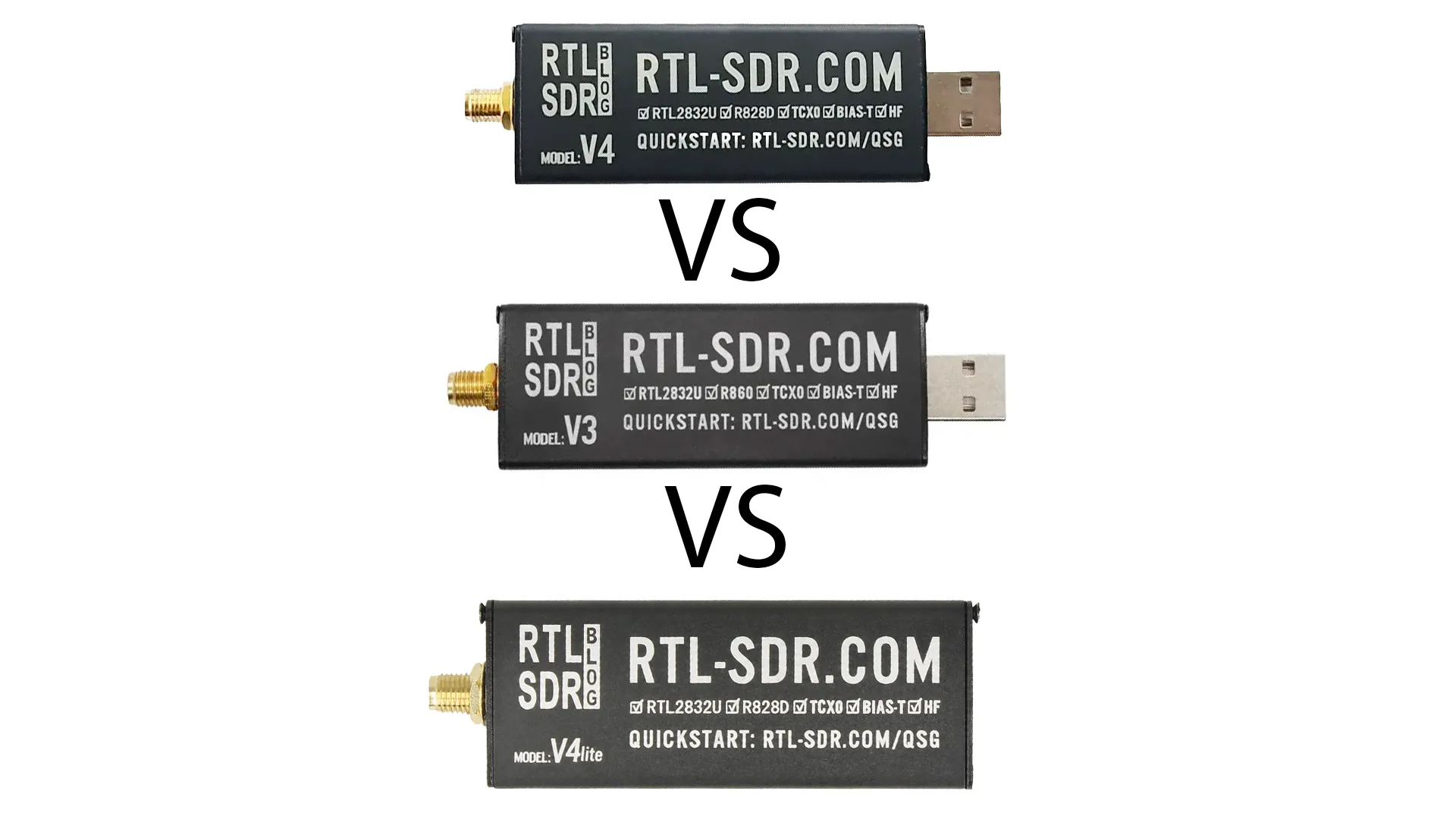
Choosing between the RTL-SDR Blog V3, RTL-SDR Blog V4, and the upcoming RTL-SDR Blog V4 Lite can be confusing, especially now that the original V4 is reaching the end of its production cycle. The V3 is the proven classic, the V4 is the improved but limited-stock model, and the V4 Lite is expected to become the next V4-style replacement.
If you are searching for “RTL-SDR V3 vs V4” or wondering whether to wait for “RTL-SDR V4 Lite,” this guide explains the real differences in simple buyer-focused terms. We will compare HF reception, VHF/UHF performance, drivers, availability, beginner friendliness, and the best SDR to buy in 2026.
You can browse current options in the RTL-SDR category at SDRstore.eu, including the RTL-SDR Blog V3 Kit and available RTL-SDR Blog V4 variants when stock is still listed.
Quick Answer: Which RTL-SDR Should You Buy?
| Model | Best For | Buyer Recommendation |
|---|---|---|
| RTL-SDR Blog V3 | Stable beginner use, ADS-B, airband, AIS, scanning, tutorials, and long-term availability | Best safe budget choice in 2026 |
| RTL-SDR Blog V4 | Better HF experience, improved filtering, better strong-signal handling, and original R828D design | Buy if you can still find genuine stock |
| RTL-SDR Blog V4 Lite | Upcoming V4-style replacement with HF upconverter but simplified filtering | Wait if you want the next model and are not in a hurry |
For most beginners, the safest recommendation is the RTL-SDR Blog V3 because it remains available, mature, affordable, and well supported. If you want the best original V4 design and can still find a genuine unit, the V4 is attractive. If you are not in a rush, the V4 Lite may become the practical replacement once it launches.
RTL-SDR V3 vs V4 vs V4 Lite: Main Differences
| Feature | RTL-SDR Blog V3 | RTL-SDR Blog V4 | RTL-SDR Blog V4 Lite |
|---|---|---|---|
| Main tuner | R820T2 / R860 family | R828D | Expected R828S |
| Production status | Stable production | End-of-line / limited remaining reseller stock | Expected limited replacement model |
| HF reception | Direct sampling mode | Built-in upconverter | Expected built-in upconverter |
| Filtering | Simpler front end | Best filtering of the three, using R828D advantages | Simplified compared with V4 due to fewer tuner inputs |
| Driver needs | Very mature support | Requires V4-compatible drivers/software | Expected to require a driver update |
| Best use case | Beginner SDR projects | HF, noisy RF environments, strong-signal areas | Future V4-style budget option |
What Is the RTL-SDR Blog V3?
The RTL-SDR Blog V3 is the classic budget SDR receiver that helped make software-defined radio accessible to beginners. It is receive-only, affordable, widely supported, and compatible with a huge number of SDR tutorials and applications.
The RTL-SDR Blog V3 Kit remains a strong option because it includes the receiver and a multipurpose dipole antenna kit. That makes it easier for new users to start with FM radio, ADS-B, airband, AIS, radiosondes, weather satellite experiments, and general radio scanning.
RTL-SDR Blog V3 is best if you want:
- The safest beginner SDR choice
- Strong software compatibility
- Easy setup with many tutorials online
- ADS-B aircraft tracking
- Airband, AIS, radiosonde, and general scanning
- A budget SDR that should remain available
- A kit with antenna included
The V3 is not the newest model, but it is still one of the best budget SDRs for people buying their first receiver.
What Is the RTL-SDR Blog V4?
The RTL-SDR Blog V4 was released as a more advanced RTL-SDR design based on the R828D tuner. It improved several areas where the V3 had limitations, especially HF reception and strong-signal handling.
The V4 uses a built-in upconverter for HF reception instead of the V3 direct sampling approach. This makes HF listening cleaner and more practical for many users. It also added improved filtering and notch filtering to help reduce overload from strong broadcast signals such as AM, FM, and DAB.
Available V4 product options may include models such as the RTL-SDR Blog V4 USB-C receiver, depending on stock.
RTL-SDR Blog V4 is best if you want:
- Better HF reception than V3
- Built-in HF upconversion
- Improved filtering for strong-signal environments
- Better overload resistance in difficult RF areas
- The original R828D-based V4 design
- A stronger budget SDR for HF, VHF, and UHF experiments
The main problem with the V4 in 2026 is availability. Because the R828D tuner chip is no longer available for new production, the original V4 is now limited to remaining stock from resellers.
What Is the RTL-SDR Blog V4 Lite?
The RTL-SDR Blog V4 Lite, also called V4L, is expected to be the replacement-style model for the original V4. It is planned to use the R828S tuner instead of the R828D.
The important point is that the V4 Lite is expected to keep the V4-style HF upconverter architecture, which means it should still be more attractive than V3 for buyers who care about HF reception. However, because the R828S has fewer inputs than the R828D, the V4 Lite is not expected to have the same full VHF/UHF split filtering system as the original V4.
RTL-SDR Blog V4 Lite is likely best if you want:
- A newer V4-style model after original V4 stock runs out
- HF upconverter-style reception without buying a used or fake V4
- A possible lower-cost V4 alternative
- A budget SDR for general receiving once V4 Lite becomes available
- A future option rather than something you need immediately
The V4 Lite should be treated as an upcoming product, not as a guaranteed direct copy of the original V4. It may become the best RTL-SDR V4 alternative, but buyers should wait for real-world testing once it is available.
RTL-SDR V3 Review: Why the V3 Still Matters
A proper RTL-SDR V3 review in 2026 should not judge the V3 only by whether it is newer than the V4. The V3 still matters because it is stable, proven, and beginner-friendly.
Most SDR software, tutorials, drivers, scripts, and beginner projects support the V3 very well. That matters for new users because the hardest part of SDR is often not the hardware. It is installing the correct software, choosing the right gain settings, placing the antenna correctly, and understanding what signals to receive.
The V3 is still a good choice for users who want low risk. If you are buying for a classroom, beginner lab, student project, ADS-B station, radiosonde receiver, or general scanning setup, the V3 remains a practical SDR.
RTL-SDR V4 Review: Why the V4 Was a Real Upgrade
The RTL-SDR Blog V4 was not just a cosmetic update. It changed the tuner design and added a more advanced RF front end. The biggest real-world improvements were better HF usability and better resistance to strong out-of-band signals.
This makes the V4 attractive for users in urban areas with strong FM broadcast stations, AM broadcast transmitters, DAB signals, or other local RF noise. In those environments, better filtering can matter more than raw sensitivity.
The trade-off is that the V4 can have slightly lower sensitivity on some VHF/UHF bands compared with V3. For many users this is not a major problem, but it is worth knowing before buying.
RTL-SDR V4 Lite Review Preview: What Buyers Should Expect
Since the V4 Lite is not yet widely proven by long-term user testing, buyers should treat it as a preview rather than a final review. Based on the announced design direction, it should sit between the V3 and the original V4.
It may keep one of the most important V4 benefits: the HF upconverter architecture. At the same time, it is expected to lose some of the original V4’s additional filtering because the R828S tuner has fewer inputs than the R828D.
This means the V4 Lite could become a very good budget SDR, but not necessarily a full replacement for every original V4 advantage.
Which One Is Best for HF Reception?
For HF reception, the RTL-SDR Blog V4 is the strongest of the three if you can still find a genuine unit. Its built-in upconverter design is more practical than the V3 direct sampling mode.
The V4 Lite is expected to keep a similar HF upconverter approach, so it may become the best future budget option for HF once the original V4 is gone. The V3 can still receive basic HF through direct sampling mode, but it is more limited and more sensitive to antenna, noise, and filtering problems.
| HF Ranking | Model | Reason |
|---|---|---|
| 1 | RTL-SDR Blog V4 | Best HF design thanks to built-in upconverter and stronger filtering |
| 2 | RTL-SDR Blog V4 Lite | Expected to keep V4-style HF upconverter, but with simplified filtering |
| 3 | RTL-SDR Blog V3 | Works for basic HF through direct sampling, but less clean and less flexible |
Which One Is Best for ADS-B, Airband, and VHF/UHF?
For ADS-B, airband, AIS, radiosondes, and normal VHF/UHF scanning, the V3 is still excellent. The V4 can also work very well, but its extra filtering may slightly reduce sensitivity in some bands while improving strong-signal handling.
In clean RF environments, the V3 may feel just as good or even slightly more sensitive for some VHF/UHF work. In noisy RF environments, the V4 may behave better because it is less likely to be overloaded by strong broadcast signals.
For buyers who mainly want ADS-B or simple scanning, the V3 is often the better-value choice. For buyers who want a mix of HF, VHF, UHF, and stronger filtering, the V4 or V4 Lite makes more sense.
Which One Is Best for Beginners?
The RTL-SDR Blog V3 is still the best beginner choice for most buyers. It has the most mature software support, the most tutorials, and the simplest expectations. It is also expected to remain in production, which makes it easier to recommend long term.
The V4 is also beginner-friendly, but only if the user installs the correct V4-compatible drivers and buys from a trusted seller. In 2026, buyers also need to be careful because fake V4 listings may appear as original stock becomes harder to find.
The V4 Lite may become beginner-friendly, but it will need updated driver support and real-world user feedback before it can fully replace the V3 as the safest recommendation.
Which One Is the Best RTL-SDR V4 Alternative?
If you cannot find a genuine RTL-SDR Blog V4, the best RTL-SDR V4 alternative depends on your priorities.
- Choose the RTL-SDR Blog V3 Kit if you want something available, proven, and beginner-friendly.
- Wait for RTL-SDR Blog V4 Lite if you want a future V4-style HF upconverter design.
- Choose a more advanced SDR such as HackRF, PlutoSDR, or USRP if you need transmit capability or higher-end SDR development features.
For most budget buyers, the V3 is the practical V4 alternative right now. For buyers focused on HF, the V4 Lite may be worth watching.
Should You Buy RTL-SDR V3 Now?
Yes, buy the RTL-SDR Blog V3 now if you want a reliable budget SDR immediately. It is especially good for users who want to start learning without waiting for a new model or worrying about limited stock.
The RTL-SDR Blog V3 Kit is the best version for beginners because it includes the multipurpose dipole antenna set. This makes it useful for FM, VHF, UHF, ADS-B tests, airband listening, and 137 MHz satellite experiments.
Should You Buy RTL-SDR V4 Now?
Buy the RTL-SDR Blog V4 now only if you can find genuine remaining stock from a trusted seller and you specifically want the original R828D-based design. The V4 is especially attractive if you care about HF, filtering, and strong-signal performance.
Be careful with marketplace listings. As the original V4 becomes harder to find, fake or misleading listings may become more common. If a listing looks too cheap or uses copied product images, it may not be a genuine RTL-SDR Blog V4.
Should You Wait for RTL-SDR V4 Lite?
Wait for the RTL-SDR Blog V4 Lite if you are not in a hurry and want the next official V4-style model. It may become the most logical replacement once original V4 stock is gone.
However, do not wait if you need an SDR today for a project, class, lab, or customer setup. The V3 is available and proven, while V4 Lite will need time for launch stock, driver updates, and real-world reviews.
Best Buying Recommendation
| Buyer Type | Best Choice | Why |
|---|---|---|
| Complete beginner | RTL-SDR Blog V3 Kit | Most stable, proven, and easy to learn |
| HF listener | RTL-SDR Blog V4 if genuine stock is available | Best HF upconverter and filtering design |
| Buyer who can wait | RTL-SDR Blog V4 Lite | Expected future V4-style replacement |
| ADS-B / airband user | RTL-SDR Blog V3 | Excellent value and mature support |
| Noisy urban RF environment | RTL-SDR Blog V4 or V4 Lite | Filtering and strong-signal handling are more important |
| Long-term availability buyer | RTL-SDR Blog V3 | Expected to remain in stable production |
Final Verdict: RTL-SDR V3 vs V4 vs V4 Lite
The RTL-SDR Blog V3 remains the safest budget SDR to buy in 2026. It is stable, affordable, widely supported, and ideal for beginners. If you want the best low-risk starter SDR, choose the V3 kit.
The RTL-SDR Blog V4 is technically the most interesting model if you can still find genuine stock. It offers better HF reception, improved filtering, and better strong-signal handling, but it is now limited by the end of R828D-based production.
The RTL-SDR Blog V4 Lite is the model to watch. It is expected to keep the V4-style HF upconverter architecture but with simplified filtering compared with the original V4. It may become the best future RTL-SDR V4 alternative once real stock and updated drivers are available.
For most buyers, the recommendation is simple: buy V3 if you want a proven SDR now, buy V4 if you can find genuine stock and want the original upgraded design, or wait for V4 Lite if you specifically want the next V4-style replacement.
FAQ
Is RTL-SDR V3 or V4 better?
RTL-SDR V4 is better for HF reception and strong-signal filtering, while RTL-SDR V3 is better for stable beginner use, long-term availability, and mature software support.
Is the RTL-SDR Blog V4 discontinued?
The original RTL-SDR Blog V4 is at end-of-line because the R828D tuner chip stock used for production is exhausted. Some resellers may still have limited genuine stock.
What is RTL-SDR V4 Lite?
RTL-SDR V4 Lite, also called V4L, is the planned replacement-style model using the R828S tuner chip. It is expected to keep the V4-style HF upconverter but use simplified filtering.
Should I buy RTL-SDR V3 in 2026?
Yes. RTL-SDR V3 is still a strong budget SDR in 2026, especially for beginners, ADS-B, airband, AIS, radiosondes, weather satellite experiments, and general scanning.
Should I wait for RTL-SDR V4 Lite?
Wait for V4 Lite if you are not in a hurry and want the next V4-style model. Buy V3 now if you need a reliable SDR immediately.
Is RTL-SDR V4 Lite better than V3?
RTL-SDR V4 Lite may be better than V3 for HF reception because it is expected to keep a V4-style upconverter. However, real-world testing and driver support should be checked after release.
What is the best RTL-SDR V4 alternative?
The best current RTL-SDR V4 alternative is the RTL-SDR Blog V3 if you need a proven SDR now. The V4 Lite may become the best future alternative once it is available.
Which RTL-SDR is best for beginners?
The RTL-SDR Blog V3 Kit is the best beginner choice because it is affordable, proven, widely supported, and includes a useful multipurpose antenna kit.
No posts found
Write a review






We support all major card and digital payment options. More local methods are available and shown during checkout.
You enter into a binding sales contract once you have received an 'order confirmation and sales receipt' email from us, in line with our Sales & Delivery conditions. Therefore, sdrstore.eu has the right to cancel your order in the event of technical problems, delivery failure, Fair use policy and other similar situations.






Your payments are protected by advanced encryption and 3-D Secure authentication for safe online shopping.