





RTL-SDR V4 Kit Review 2025: Best Budget SDR Receiver

What is the RTL-SDR V4?
The RTL-SDR Blog V4 is a compact USB software-defined radio receiver that transforms any computer into a professional RF scanner. Featuring the RTL2832U ADC chip and R828D tuner, it captures signals from 500 kHz to 1.7 GHz—an incredibly wide range covering HF, VHF, UHF, and microwave bands. The V4 is purpose-built for ADS-B aircraft tracking, weather satellites, amateur radio monitoring, and spectrum analysis, making it the go-to budget receiver for SDR enthusiasts worldwide.
What's in the Complete V4 Kit
- RTL-SDR Blog V4 Dongle: R828D tuner, RTL2832U ADC, 1PPM TCXO, aluminum case, passive cooling, SMA F connector
- Portable Multipurpose Dipole Antenna Set:
- Dipole base with 60cm RG174 cable
- 2× 23cm–1m telescopic antennas (for lower frequencies and general use)
- 2× 5cm–13cm telescopic antennas (optimized for ADS-B and higher frequencies)
- 3m RG173 Extension Cable: For remote antenna placement
- Flex Tripod Mount: Portable, flexible antenna positioning
- Suction Cup Mount: Window mounting for outdoor antenna setup
Hardware Specifications
| Specification | RTL-SDR V4 | Notes |
|---|---|---|
| Frequency Range | 500 kHz – 1.7 GHz | HF (500 kHz) to UHF/microwave coverage with built-in upconverter |
| HF Reception | 500 kHz – 28.8 MHz (with internal upconverter) | Built-in 28.8 MHz low-pass filter for optimal HF performance |
| VHF/UHF | 88 MHz – 1.7 GHz direct reception | No upconversion required; native tuning |
| Real-Time Bandwidth | 2.4 MHz stable (3.2 MHz peak) | Instantaneous bandwidth for simultaneous signal capture |
| Tuner Chip | R828D (improved over previous models) | Better sensitivity and lower noise than standard R820T2 |
| ADC | RTL2832U (8-bit) | Professional direct-conversion receiver architecture |
| Oscillator | 1PPM TCXO (Temperature-Compensated Crystal Oscillator) | Superior frequency accuracy and stability |
| Connector | SMA F (female) | Standard RF connector; all antennas included |
| Bias Tee | Software-activatable | Powers external LNAs and active antennas directly from dongle |
| Case | Aluminum with passive cooling | Improved thermal management prevents frequency drift |
| USB Interface | USB 2.0 Type-A | Data transfer via bulk USB endpoints |
| Power Consumption | ~500 mA @ 5V (2.5W) | USB-powered; no external power required |
| Operating System Support | Windows, macOS, Linux, Raspberry Pi, Android | Excellent cross-platform compatibility |
| Front-End Filtering | Improved filtering in V4 | Reduces out-of-band interference and intermodulation |
| ESD Protection | Extra protection circuitry | Better protection against electrostatic discharge |
Key Improvements in V4 Over Previous Models
- R828D Tuner: Better sensitivity and lower noise floor compared to standard R820T2 tuners used in clones.
- HF Reception (500 kHz): Built-in upconverter with 28.8 MHz low-pass filter enables shortwave reception—unique to RTL-SDR Blog quality dongles.
- 1PPM TCXO: Temperature-compensated oscillator dramatically improves frequency stability compared to standard 25 MHz crystals.
- Improved Front-End Filtering: Optimized RF filtering reduces spurious signals and intermodulation products.
- Better PCB Design: Lower-noise PCB layout with improved component placement reduces internal interference.
- Enhanced ESD Protection: Extra protection diodes and filtering prevent static discharge damage.
- Software-Activatable Bias Tee: Powers external LNAs and active antennas directly from the dongle without external supplies.
- Aluminum Cooling Case: Passive thermal management prevents frequency drift during extended operation.
Performance Benchmarks
- FM Broadcast Reception (88-108 MHz): Excellent sensitivity; receives weak local stations from 50+ miles with included dipole antenna.
- ADS-B Aircraft Tracking (1090 MHz): Typical range 100-150 miles with included short antenna; 250+ miles achievable with external antenna and bias-tee powered LNA.
- NOAA Weather Satellites (137-138 MHz): Receives clear APT imagery with V-dipole configuration; performance rivals dedicated marine antennas.
- Amateur Radio (144-148 MHz, 430-450 MHz): Full VHF/UHF coverage with excellent reception quality in SDRangel or GQRX.
- Shortwave/HF (500 kHz-28.8 MHz): International broadcasts, amateur radio, and maritime communications via built-in upconverter.
- Maritime AIS (161-162 MHz): Decode ship positions and vessel data in real-time.
- GSM/4G Spectrum Monitoring (850/900/1800/1900 MHz): Monitors cellular bands; cannot decode encrypted signals but provides spectral analysis.
Compatible Software (All Free/Open-Source)
- GQRX: General-purpose SDR receiver with waterfall display—best for beginners and all-purpose use
- SDR#: Windows-focused with excellent plugin ecosystem; most versatile software
- SDRangel: Advanced multi-demodulator with plugin architecture—best for complex analysis and professional work
- CubicSDR: Cross-platform receiver with excellent user interface and stability
- dump1090: ADS-B aircraft tracker—dedicated and highly optimized for aircraft monitoring
- WXTOIMG: Automated NOAA weather satellite image capture and processing
- GNU Radio: Build custom receiver flowgraphs for specialized applications and research
- QSSTV: Slow-scan television and weather satellite imagery reception
Real-World Use Cases
- ADS-B Flight Tracking: Monitor aircraft in real-time on interactive maps—incredibly popular and addictive hobby that feeds services like Flightradar24.
- Weather Satellite Reception: Capture NOAA satellite imagery directly—free weather data from space with professional-quality imagery.
- FM Radio Reception: Listen to local radio stations with computer; build a software-defined radio station receiver with better quality than traditional receivers.
- Amateur Radio Monitoring: Tune into ham radio nets, repeaters, and emergency communications—great for hobbyists and emergency preparedness.
- Spectrum Analysis: Monitor RF activity across wide frequency range; identify interference, rogue transmitters, and signal anomalies.
- Cellular Network Monitoring: Analyze 4G/5G spectrum activity (receive-only); understand network topology and coverage patterns.
- Maritime AIS Tracking: Monitor ship positions, vessel information, and maritime traffic in your region.
- Shortwave/International Radio: Listen to international broadcasts, time signals, and maritime communications via HF reception.
Strengths
- Outstanding Value: Professional-grade receiver at an entry-level investment—performance rivals devices costing 5-10× more.
- Widest Frequency Coverage: 500 kHz to 1.7 GHz covers more spectrum than competing budget receivers.
- Complete Kit Included: Multipurpose antenna kit, extension cables, and mounting options—everything needed to get started immediately.
- HF Reception Built-In: Unique 500 kHz starting frequency with optimized filtering—most budget dongles start at 24 MHz.
- Superior Tuner: R828D tuner outperforms clones and standard R820T2 alternatives.
- Frequency Stability: 1PPM TCXO ensures stable reception for critical applications requiring precise frequency accuracy.
- Zero Learning Curve: Plug-and-play with intuitive software; no configuration required for basic use.
- Massive Community: 15+ years of RTL-SDR development; countless tutorials, projects, and support forums.
- Cross-Platform: Excellent Linux support plus Windows, macOS, Raspberry Pi, and Android compatibility.
- No Licensing: Receive-only operation—no FCC licensing required in most jurisdictions.
- Endless Customization: Build custom antennas, create GNU Radio flowgraphs, develop software plugins.
- Bias Tee for LNA Power: Powers external low-noise amplifiers directly—no separate power supply needed.
Limitations
- 8-Bit ADC: Lower resolution than professional equipment; dynamic range limited to ~50 dB.
- USB 2.0 Bottleneck: Max 2.4 MHz sustained real-time bandwidth due to USB 2.0 throughput limits.
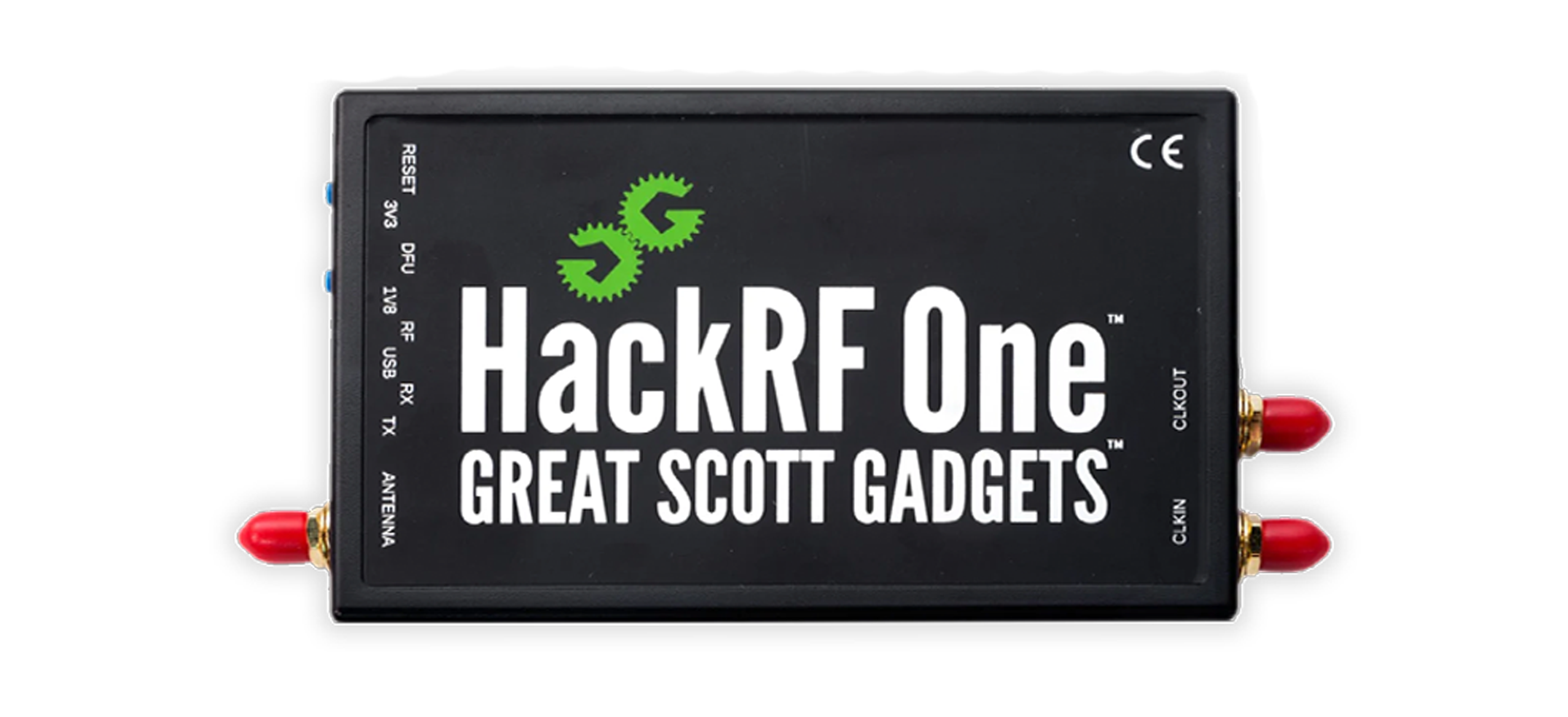
- No Transmit: Receive-only; cannot generate RF signals (unlike HackRF or USRP).
- Proprietary Drivers Required: RTL-SDR Blog drivers differ from standard RTL-SDR drivers; requires careful installation.
- Encryption Decoding: Cannot decode encrypted digital signals (P25, DMR, Tetra, etc.).
- Limited Filtering in Stock Form: Out-of-band interference possible in high-RF environments without external bandpass filters.
Comparison to Alternatives
| Device | Frequency | Bandwidth | TX Capable | Best For |
|---|---|---|---|---|
| RTL-SDR V4 | 500 kHz – 1.7 GHz | 2.4 MHz | No | Budget receiving, HF to UHF |
| HackRF One | 1 MHz – 6 GHz | 20 MHz | Yes | Full duplex testing, transmit |
| USRP B210 | 70 MHz – 6 GHz | 56 MHz | Yes | Research, prototyping, wide bandwidth |
| PlutoSDR | 325 MHz – 3.8 GHz | 20 MHz | Yes | Wireless prototyping, MIMO |
| AirSpy Mini | 24 MHz – 1.8 GHz | 6 MHz | No | Advanced receiving, wideband |
Common Projects for V4 Users
- ADS-B Flight Radar: Feed Flightradar24 or RadarBox with ADS-B data from your V4; appear on official worldwide maps with your received aircraft data.
- Weather Satellite Gateway: Automatically capture NOAA APT images every 12 hours for weather analysis and archiving.
- Software Defined Radio Scanner: Build a networked SDR receiver accessible remotely via web interface for multi-room or mobile monitoring.
- Spectrum Monitoring Dashboard: Create persistent waterfalls to visualize RF activity over time; identify interference patterns.
- Amateur Radio Repeater Monitor: Track local ham radio nets and document activity; useful for emergency preparedness.
- Maritime AIS Tracking: Monitor ship positions in your coastal region; export vessel data for analysis.
- Shortwave Listening Post: Receive international broadcasts and amateur radio on HF via built-in upconverter.
Accessories Worth Adding
- LNA (Low Noise Amplifier): Powered directly via software-activatable bias tee; improves sensitivity by 15-20 dB for VHF/UHF.
- Bandpass Filter: Eliminates out-of-band interference; crucial for crowded urban areas.
- External Antenna: Wideband discone for complete frequency coverage or band-specific antennas for focused work.
- Low-Loss Coaxial Cable: LMR-400 or similar reduces signal loss over cable runs.
- SMA Connectors: Quality adapters and cable assemblies improve overall system performance.
Why RTL-SDR V4 Dominates the Budget Tier
The RTL-SDR Blog V4 is functionally superior to every receiver in the budget category for pure signal reception. It captures 2.4 MHz bandwidth in real-time, supports HF reception down to 500 kHz with optimized filtering, includes a complete antenna kit and mounting hardware, and runs on free open-source software updated constantly. The R828D tuner and 1PPM TCXO deliver performance that rivals devices costing significantly more. For the investment level, there's literally nothing else that comes close.
Who Should Buy the V4?
- Absolute beginners to SDR (lowest barrier to entry with complete kit)
- ADS-B flight tracking enthusiasts (most popular and rewarding application)
- Weather satellite hobbyists (capture imagery directly from NOAA satellites)
- HF/Shortwave listeners (500 kHz reception unique to RTL-SDR Blog quality dongles)
- Amateur radio listeners (full VHF/UHF/HF coverage)
- Spectrum monitoring researchers (professional results at hobby budget)
- Educational institutions (teach SDR concepts without heavy investment)
- Maritime enthusiasts (AIS ship tracking capability)
Who Should Look Elsewhere?
- Professionals needing transmit capability (get HackRF One instead)
- Researchers requiring wide bandwidth (PlutoSDR or USRP for 20+ MHz)
- Engineers needing 12-16 bit ADC (AirSpy series or SDRplay)
- Users requiring simultaneous wideband reception (AirSpy or professional equipment)
Verdict: Essential Tool for Every Technician and Hobbyist
The RTL-SDR V4 is the most cost-effective gateway into software-defined radio in 2025. You're not making a significant investment, yet you gain access to professional-grade RF receiving with a 15-year-old software ecosystem, a thriving global community, and the widest frequency coverage in the budget category. Every security professional, radio enthusiast, technical person, and hobbyist should own at least one V4. It's the digital equivalent of owning a voltmeter—practically essential for anyone interested in RF signals.
Final Score
- Value for Money: 10/10
- Ease of Use: 9/10
- Performance: 8/10
- Community & Support: 10/10
- Software Selection: 9/10
- Overall Rating: 9.2/10
Get Your RTL-SDR V4 Kit Today!
Start your SDR journey with the device that powers millions of radio enthusiasts worldwide. The RTL-SDR V4 is where professional RF reception meets budget simplicity—complete kit included.
Get your RTL-SDR V4 today!
No posts found
Write a review






We support all major card and digital payment options. More local methods are available and shown during checkout.
You enter into a binding sales contract once you have received an 'order confirmation and sales receipt' email from us, in line with our Sales & Delivery conditions. Therefore, sdrstore.eu has the right to cancel your order in the event of technical problems, delivery failure, Fair use policy and other similar situations.






Your payments are protected by advanced encryption and 3-D Secure authentication for safe online shopping.