





RTL-SDR Weather Satellite Reception in 2026: What Still Works Now
RTL-SDR Weather Satellite Reception in 2026: What Still Works Now
RTL-SDR weather satellite reception has changed a lot in 2026. For many years, the easiest beginner project was receiving NOAA APT images from NOAA-15, NOAA-18, and NOAA-19 on 137 MHz. That classic workflow made weather satellite decoding popular because it worked with a simple RTL-SDR dongle, a V-dipole antenna, and free decoding software.
In 2026, the hobby is not dead, but the best path has changed. The old NOAA APT satellites are no longer the main recommendation. Instead, beginners should focus on Meteor LRPT reception on 137 MHz, while more advanced users can move toward GOES HRIT, Elektro-L, MetOp AHRPT, and other L-band weather satellite signals.
This guide explains what still works now, what no longer makes sense to focus on, and which RTL-SDR setup is best for receiving weather satellite images in 2026.
Quick Answer: Can You Still Receive Weather Satellites With RTL-SDR in 2026?
Yes, you can still receive weather satellite images with an RTL-SDR in 2026, but the easiest working target is no longer the old NOAA APT system. The best beginner target today is Meteor M2-4 LRPT on 137 MHz, received with an RTL-SDR, a suitable V-dipole or QFH antenna, and SatDump.
If you want a simple and affordable starting point, the RTL-SDR Blog V4 kit with multipurpose dipole antenna is still one of the best beginner options. The included dipole can be configured as a V-dipole for 137 MHz weather satellite reception.
What Still Works in 2026?
| Signal Type | Status in 2026 | Difficulty | RTL-SDR Suitable? |
|---|---|---|---|
| Meteor M2-4 LRPT on 137 MHz | Best beginner weather satellite target | Beginner to intermediate | Yes |
| NOAA APT from NOAA-15, NOAA-18, NOAA-19 | No longer the main recommended path | Legacy only | Not reliable as a 2026 plan |
| GOES HRIT/EMWIN | Works in the GOES coverage area | Advanced | Yes, with dish, LNA, and filter |
| Elektro-L LRIT/HRIT | Possible depending on location and satellite position | Advanced | Yes, with L-band dish setup |
| MetOp AHRPT | Still possible, but more demanding | Advanced | Sometimes, but wider SDRs are better |
The Big Change: NOAA APT Is No Longer the Best Beginner Target
For years, most RTL-SDR weather satellite guides focused on NOAA-15, NOAA-18, and NOAA-19. These satellites transmitted analog APT images around 137 MHz and were easy to receive with a basic RTL-SDR and V-dipole antenna.
In 2026, buyers should not build their entire setup around NOAA APT reception. NOAA-15, NOAA-18, and NOAA-19 are now decommissioned, so the old “receive NOAA weather satellite images with RTL-SDR” tutorial path is no longer the safest recommendation for new users.
This does not mean RTL-SDR weather satellite reception is finished. It means the beginner target has shifted from NOAA APT to Meteor LRPT, especially Meteor M2-4 when it is active and transmitting.
Best Beginner Target in 2026: Meteor M2-4 LRPT
Meteor M2-4 LRPT is currently the most important target for beginners who want to receive weather satellite images with an RTL-SDR. Like the old NOAA APT satellites, Meteor LRPT can be received around 137 MHz, which makes it practical with affordable hardware.
The main difference is that Meteor LRPT is digital, not analog APT. This means the image quality can be much better, but the signal also needs cleaner reception and correct decoding settings. SatDump is now the easiest software recommendation because it can receive, decode, and process Meteor LRPT images in one workflow.
Recommended beginner setup for Meteor LRPT
- RTL-SDR Blog V4 kit with dipole antenna
- V-dipole antenna configuration for 137 MHz
- Clear outdoor view of the sky
- SatDump installed on Windows, Linux, or Raspberry Pi
- Satellite pass prediction using SatDump, GPredict, Orbitron, Heavens-Above, or N2YO
For most beginners, the antenna placement matters more than the SDR itself. A cheap antenna placed outside with a clear view of the sky will usually perform better than an expensive receiver connected to an indoor antenna near walls, electronics, and USB noise.
Best RTL-SDR Hardware for Weather Satellites
For 137 MHz weather satellite reception, the RTL-SDR category is still the best place to start. A good RTL-SDR receiver gives enough bandwidth for Meteor LRPT and other beginner satellite projects while staying affordable.
The RTL-SDR Blog V4 dongle-only version is a good option if you already have antennas and cables. If you are starting from zero, the RTL-SDR Blog V4 kit is better because it includes the multipurpose dipole antenna set.
If you prefer a modern connector for laptops, tablets, or Android experiments, the RTL-SDR Blog V4 USB-C receiver is also worth considering. Just make sure your chosen software and drivers support your operating system before buying.
Best Antenna for RTL-SDR Weather Satellite Reception
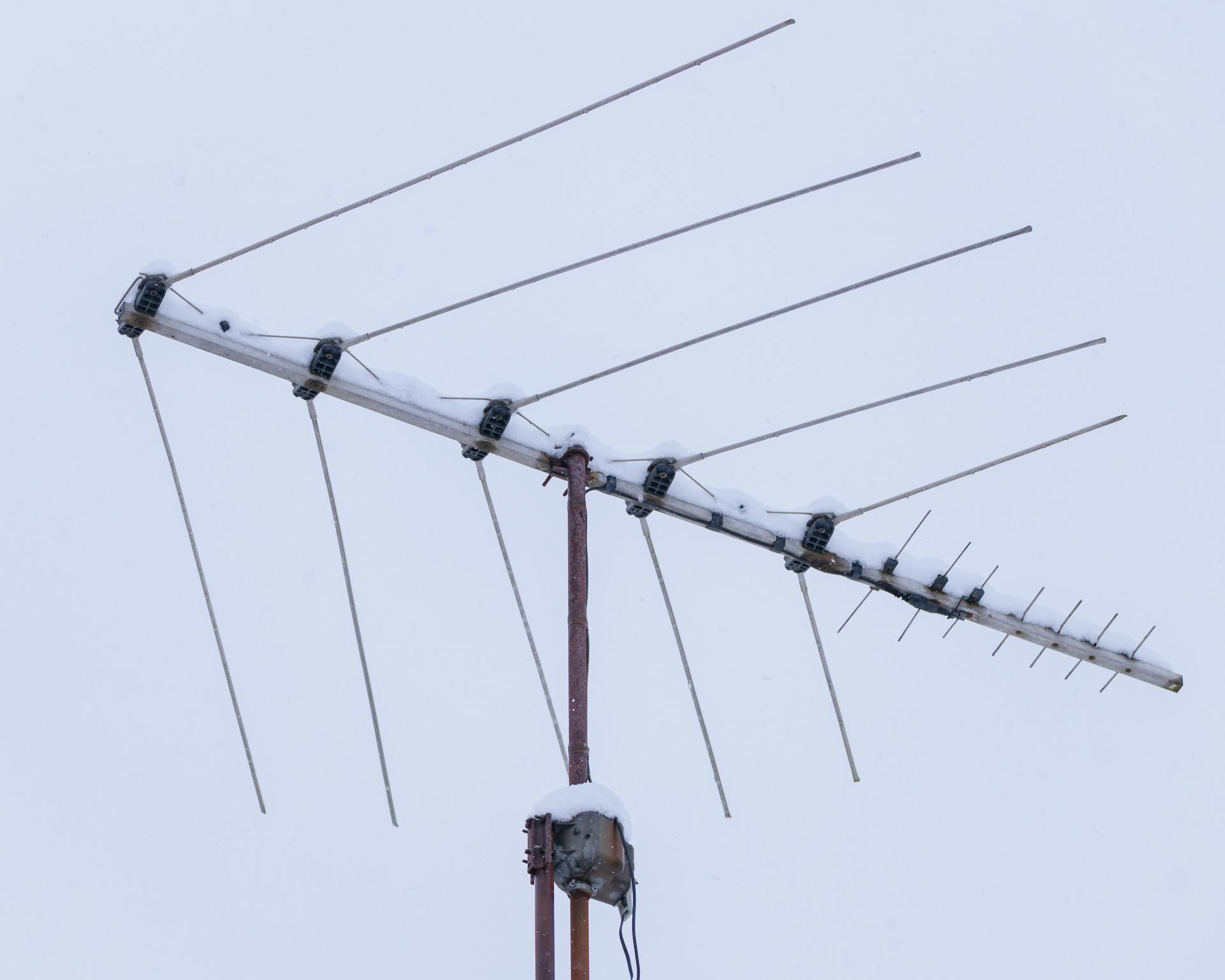
The best beginner antenna for 137 MHz weather satellites is usually a V-dipole. It is simple, affordable, easy to adjust, and works well for low Earth orbit satellites passing overhead. A QFH antenna can also perform very well, especially for a more permanent outdoor setup, but it is less convenient for beginners.
For a V-dipole, the two antenna elements are usually arranged in a wide V shape and adjusted for the 137 MHz band. The antenna should be placed outdoors or near a clear window, away from metal objects, routers, computers, solar inverters, LED power supplies, and other noise sources.
Practical antenna tips
- Use the longest telescopic elements for 137 MHz reception.
- Place the antenna outside whenever possible.
- Aim for a clear sky view, especially toward the satellite pass direction.
- Avoid long cheap coax runs because cable loss reduces signal quality.
- Record high-elevation passes first because they are easier to decode.
Software: SatDump Is the Best Choice in 2026
SatDump is currently the best all-in-one software for RTL-SDR weather satellite reception. It supports many SDR devices, including RTL-SDR, and can decode several satellite signal types such as APT, LRPT, HRPT, LRIT, and HRIT.
For beginners, this is important because older workflows often required several separate tools. With SatDump, you can select the satellite, choose the correct pipeline, record the pass, and process the image with fewer manual steps.
Basic SatDump workflow
- Install SatDump.
- Connect your RTL-SDR receiver.
- Update satellite TLE data.
- Select the satellite and correct decoding pipeline.
- Choose a high-elevation pass.
- Start recording before the satellite rises.
- Let SatDump decode and process the image after reception.
Always check current satellite status and frequency before recording. Weather satellite modes and frequencies can change, especially with Meteor satellites.
Can You Still Receive NOAA Weather Satellites With RTL-SDR?
If you are searching for “RTL-SDR NOAA weather satellite” in 2026, you will still find many older tutorials. Those guides are useful for learning the history and basic antenna setup, but they are no longer the best current buying guide.
The classic NOAA APT satellites are now decommissioned, so new buyers should not purchase an RTL-SDR only expecting the old NOAA-15, NOAA-18, and NOAA-19 APT experience. Instead, buy the hardware for 137 MHz satellite reception in general and focus on Meteor LRPT as the main beginner project.
GOES HRIT: The Advanced Weather Satellite Upgrade
GOES HRIT/EMWIN is another path that still works in 2026, especially for users in the GOES coverage area. Unlike Meteor LRPT, GOES satellites are geostationary. This means they stay in the same position in the sky and continuously transmit weather data.
GOES HRIT is much more advanced than a simple 137 MHz setup. You need a suitable L-band antenna or dish, a low-noise amplifier, filtering, correct aiming, and decoding software. An RTL-SDR can be part of this setup, but the antenna system is the real challenge.
GOES HRIT setup usually requires:
- RTL-SDR receiver
- L-band dish or suitable high-gain antenna
- GOES-compatible LNA and filter
- Clear view toward the geostationary satellite
- Raspberry Pi or computer running SatDump or similar software
For beginners, GOES HRIT is not the first step. Start with Meteor LRPT on 137 MHz, then move to GOES when you understand antenna placement, gain, signal-to-noise ratio, and satellite tracking.
What About Elektro-L and Europe?
For European users, GOES is usually not the main geostationary target because GOES coverage is focused on the Americas. Elektro-L is more relevant for parts of Europe, Africa, and Asia, depending on the satellite position and local horizon.
Elektro-L reception is an advanced L-band project. It can work with an RTL-SDR, but it requires a dish-style antenna, LNA, filtering, correct polarization, and careful aiming. It is not as beginner-friendly as Meteor LRPT, but it is an exciting upgrade path for users who want geostationary weather images.
What About MetOp AHRPT?
MetOp AHRPT is another advanced option. It can provide excellent weather satellite data, but it is much harder than 137 MHz Meteor LRPT. It usually needs a tracking dish or high-gain antenna system, L-band reception hardware, and more bandwidth than a standard RTL-SDR can reliably provide in many setups.
Some experienced users do experiment with RTL-SDR receivers for L-band work, but for consistent AHRPT performance, wider-band SDRs are often a better choice. For a beginner article focused on RTL-SDR weather satellite reception, Meteor LRPT remains the more realistic recommendation.
Best Beginner Path for 2026
If you are starting from zero, this is the most realistic path:
- Buy an RTL-SDR Blog V4 kit.
- Set up the included dipole as a 137 MHz V-dipole.
- Install SatDump.
- Start with Meteor M2-4 LRPT passes.
- Learn how elevation, antenna placement, gain, and noise affect results.
- Upgrade later to a QFH antenna or L-band dish if you want better images.
This gives the best balance between cost, difficulty, and real results. It also avoids the disappointment of following old NOAA APT tutorials that no longer reflect the current 2026 satellite situation.
Common Beginner Mistakes
- Following old NOAA APT guides without checking whether the satellites are still active.
- Using an indoor antenna and expecting clean satellite images.
- Recording low-elevation passes before learning on easier high-elevation passes.
- Using too much gain and overloading the receiver.
- Forgetting to update TLE satellite tracking data.
- Using the wrong SatDump pipeline or outdated frequency information.
- Expecting GOES HRIT to work with the same small V-dipole used for 137 MHz satellites.
Which RTL-SDR Weather Satellite Setup Should You Buy?
For most beginners, the best choice is the RTL-SDR Blog V4 kit with multipurpose dipole antenna. It gives you the receiver, antenna, mounts, and cable needed to start experimenting with 137 MHz satellite reception.
If you already own antennas, choose the RTL-SDR Blog V4 dongle-only receiver. If you want USB-C convenience, choose the RTL-SDR Blog V4 USB-C receiver.
For buyers who want to explore more SDR projects beyond satellites, browse the full RTL-SDR collection. The same receiver can also be used for ADS-B, AIS, airband, radiosondes, amateur radio monitoring, and general spectrum exploration.
Final Recommendation
RTL-SDR weather satellite reception still works in 2026, but the beginner target has changed. The classic NOAA APT workflow is no longer the best path because NOAA-15, NOAA-18, and NOAA-19 are decommissioned.
The best beginner project now is Meteor LRPT reception, especially Meteor M2-4 when active. It still uses affordable 137 MHz hardware, works well with an RTL-SDR and V-dipole antenna, and produces impressive weather satellite images with SatDump.
If you want the easiest start, choose the RTL-SDR Blog V4 kit, set up the dipole for 137 MHz, install SatDump, and focus on high-elevation Meteor passes. After that, you can upgrade to QFH antennas, GOES HRIT, Elektro-L, or other advanced weather satellite projects.
FAQ
Can you still receive weather satellites with RTL-SDR in 2026?
Yes. RTL-SDR weather satellite reception still works in 2026, but beginners should focus on Meteor LRPT rather than relying on the old NOAA APT satellites.
Does NOAA APT still work in 2026?
The classic NOAA APT satellites NOAA-15, NOAA-18, and NOAA-19 are decommissioned, so NOAA APT should not be treated as the main beginner path in 2026.
What is the best weather satellite to receive with RTL-SDR now?
Meteor M2-4 LRPT on 137 MHz is currently one of the best beginner targets for RTL-SDR weather satellite reception.
What antenna do I need for RTL-SDR weather satellites?
For 137 MHz weather satellites, a V-dipole or QFH antenna is recommended. A beginner can start with the dipole antenna included in the RTL-SDR Blog V4 kit.
Is SatDump better than old NOAA decoding software?
For 2026, SatDump is usually the better choice because it supports modern satellite workflows, including Meteor LRPT, HRPT, LRIT, HRIT, and many SDR devices.
Can RTL-SDR receive GOES weather satellites?
Yes, but GOES HRIT reception is advanced. It needs an L-band dish or high-gain antenna, LNA, filter, accurate aiming, and suitable decoding software.
What is the best RTL-SDR kit for weather satellite reception?
The RTL-SDR Blog V4 kit with multipurpose dipole antenna is the best beginner choice because it includes the receiver and antenna needed to start with 137 MHz satellite reception.
No posts found
Write a review






We support all major card and digital payment options. More local methods are available and shown during checkout.
You enter into a binding sales contract once you have received an 'order confirmation and sales receipt' email from us, in line with our Sales & Delivery conditions. Therefore, sdrstore.eu has the right to cancel your order in the event of technical problems, delivery failure, Fair use policy and other similar situations.






Your payments are protected by advanced encryption and 3-D Secure authentication for safe online shopping.