





The €80 Gadget That Lets You See Every Airplane in the Sky in Real-Time
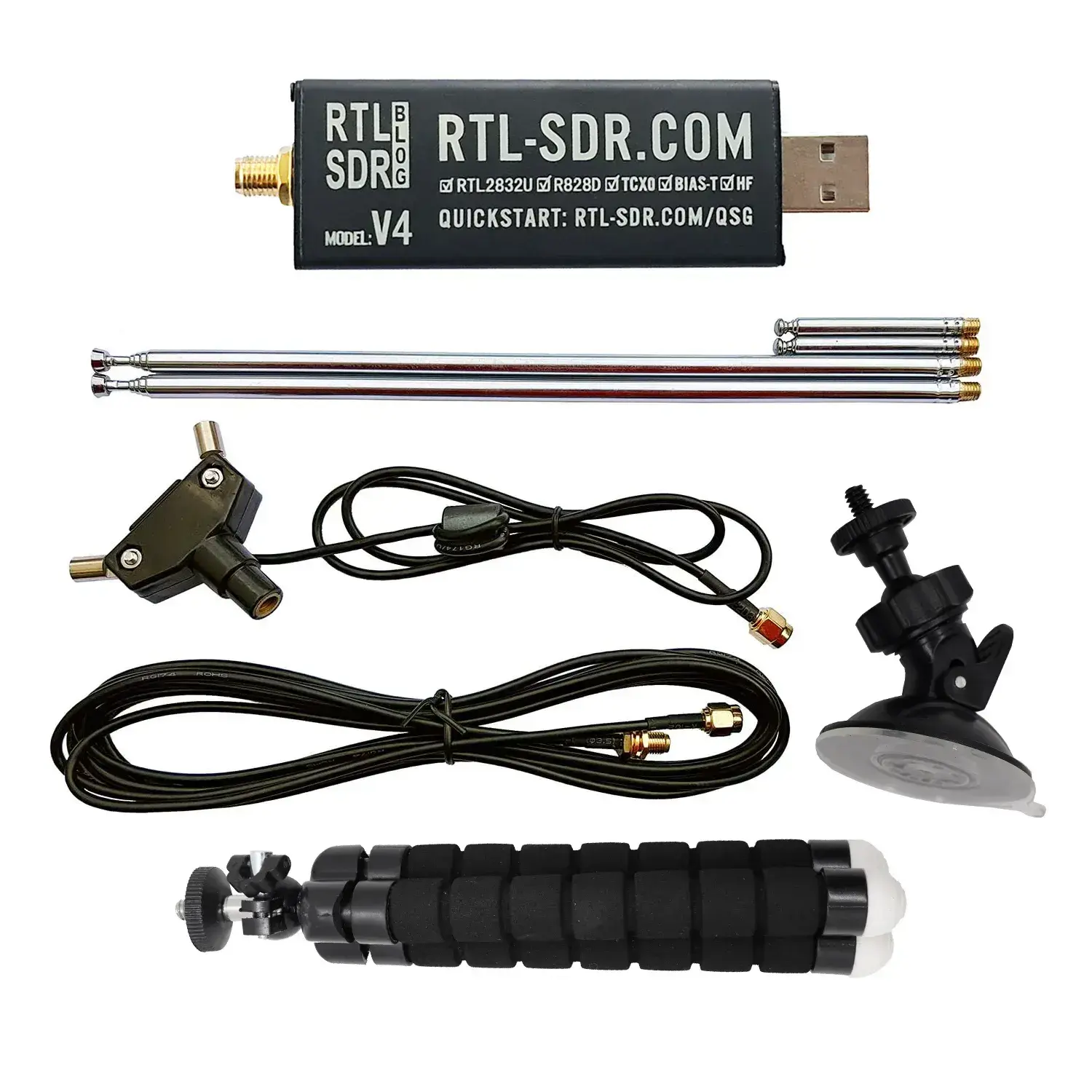
In 2026, the sky is busier than ever. While most people use apps like FlightRadar24 to see what's flying overhead, there is a hidden world of raw data that these apps don't always show. For just €81.13, you can stop being a spectator and start being the radar station. Using the RTL-SDR V4, you can intercept 1090 MHz ADS-B signals directly from the cockpit, giving you a zero-latency, private view of every aircraft within a 250-mile radius.
Why the RTL-SDR V4 is a Game-Changer for Aviation Enthusiasts
If you have used the older V3 models, the RTL-SDR V4 is a massive leap forward. Unlike generic clones, the V4 is built specifically for hobbyists who need clean signals in "noisy" RF environments. Here is why the V4 reigns supreme for flight tracking:
- The R828D Chip: Unlike the older R820T2, the V4 utilizes the R828D tuner which features three separate inputs for different frequency bands, drastically reducing interference.
- Built-in Upconverter: If you want to listen to HF (High Frequency) aviation long-range communications, the V4 handles this natively without needing extra hardware.
- Improved Filtering: The V4 includes a built-in Bias Tee and improved filtering that blocks out local FM and DAB radio interference that often "drowns out" weak airplane signals.
The Hardware: What You Need to Get Started
Setting up a home radar station doesn't require a degree in aerospace engineering. To rank among the top "feeders" in your area, you need a solid hardware foundation. The core of your kit should include:
- RTL-SDR Blog V4 Dongle: The brain of the operation.
- ADS-B Tuned Antenna: While the starter kit comes with a dipole, a dedicated 1090 MHz antenna mounted outside will quadruple your range.
- Low-Loss Coaxial Cable: At 1090 MHz, signal loss is high. Using high-quality RG6 or LMR240 cable is vital for seeing planes further away.
Software Setup: Turning Raw Data into a Visual Map
The RTL-SDR V4 receives a digital "pulse" from the aircraft. To see this on a map, you need a software stack. For Windows and Linux users, the most popular choices are:
1. dump1090 (The Decoder)
This is the industry standard. It decodes the raw 1090 MHz signals into readable data. For the V4, ensure you are using the latest RTL-SDR Blog drivers, as the V4 requires specific DLL files to function correctly compared to older models.
2. Virtual Radar Server (The Map)
If you want a professional-looking map that identifies the aircraft type, its airline, and its route, Virtual Radar Server (VRS) is the answer. It takes the data from dump1090 and plots it on a Google Maps-style interface in your browser.
3. SDR# (SDRSharp)
For those who want to "listen" to the pilots talking, SDR# is the best tool for tuning into the VHF Airband (118 - 137 MHz). You can hear Air Traffic Control (ATC) and pilots in crystal clear AM quality.
Advanced Tracking: ACARS and UAT
Ready to go beyond just dots on a map? The RTL-SDR V4 is powerful enough to decode ACARS (Aircraft Communications Addressing and Reporting System). These are short text messages sent between aircraft and ground stations, containing technical data, weather reports, and even flight plans.
Additionally, if you are in the USA or tracking specialized local traffic, you can tune into 978 MHz (UAT). This frequency is often used by smaller, general aviation aircraft that don't appear on standard commercial tracking sites.
Pro Tips for Maximum Range
To get that #1 spot in your local tracking community, follow these three rules:
- Height is Everything: Radio waves at 1090 MHz are "line-of-sight." Every foot higher you place your antenna can add miles to your tracking radius.
- Enable the Bias Tee: If you use an active LNA (Low Noise Amplifier), the V4 can power it directly through the cable—just make sure to enable the Bias Tee in your software settings.
- Stay Offline: One of the coolest parts of an RTL-SDR setup is that it works without internet. You are receiving signals directly from the sky, making it the ultimate tool for remote areas or emergency monitoring.
Start Your Journey into the Skies
There is nothing quite like the feeling of seeing a plane on your screen and then looking out the window a few seconds later to see it exactly where your computer said it would be. It is the perfect blend of physics, technology, and old-school radio hobbyism.
Ready to own the sky? You can get the authentic RTL-SDR V4 directly from us below by pressing "Add to Cart" or by clicking the product for more info.
No posts found
Write a review






We support all major card and digital payment options. More local methods are available and shown during checkout.
You enter into a binding sales contract once you have received an 'order confirmation and sales receipt' email from us, in line with our Sales & Delivery conditions. Therefore, sdrstore.eu has the right to cancel your order in the event of technical problems, delivery failure, Fair use policy and other similar situations.






Your payments are protected by advanced encryption and 3-D Secure authentication for safe online shopping.