





What Is Software Defined Radio?

A conventional radio locks much of its behavior into chips, filters, and fixed signal paths. If you want different modes, wider tuning, or new decoding features, you often need a different device. That is exactly why people ask, what is software defined radio? In simple terms, it is a radio system where functions that used to require dedicated hardware are handled largely in software, which makes the platform far more flexible for receiving, analyzing, transmitting, and experimenting with RF signals.
What is software defined radio in practical terms?
Software defined radio, usually shortened to SDR, is an architecture that shifts key radio tasks from fixed analog circuitry into digital processing. Instead of relying on a fully hardwired design for modulation, demodulation, filtering, and signal analysis, an SDR uses a combination of RF front-end hardware, data converters, and software running on a computer, embedded processor, or FPGA.
The practical result is that one piece of hardware can do many jobs. The same SDR might be used for spectrum monitoring in the morning, ADS-B aircraft reception in the afternoon, and digital voice or protocol analysis later in the day. That flexibility is the main reason SDR has become standard across hobby, lab, and professional workflows.
An SDR is not just a USB dongle, and it is not just software. It is a chain. The antenna captures RF energy, the front end conditions the signal, converters translate it into digital data, and software processes that data into something useful, whether that is audio, decoded packets, spectral information, or I/Q samples for deeper analysis.
How software defined radio works
At a high level, an SDR receives or generates radio frequency signals and moves as much processing as possible into the digital domain. The analog front end still matters because the real world is analog. Antennas, amplifiers, filters, mixers, and oscillators are still part of the system, especially at the point where the radio interacts with the air.
On receive, the SDR front end selects a portion of spectrum and feeds it to an analog-to-digital converter. Once digitized, software can apply filtering, shift frequencies, demodulate signals, measure power, decode protocols, and display waterfalls or spectrum views. On transmit-capable platforms, the reverse happens. Software creates the waveform, a digital-to-analog converter reconstructs it, and RF circuitry upconverts and conditions it for transmission.
This is where trade-offs start. Moving radio functions into software adds flexibility, but it does not remove hardware limits. Tuning range, sample rate, dynamic range, phase noise, filtering quality, shielding, clock stability, and front-end linearity still define what the device can do well.
The hardware behind an SDR setup
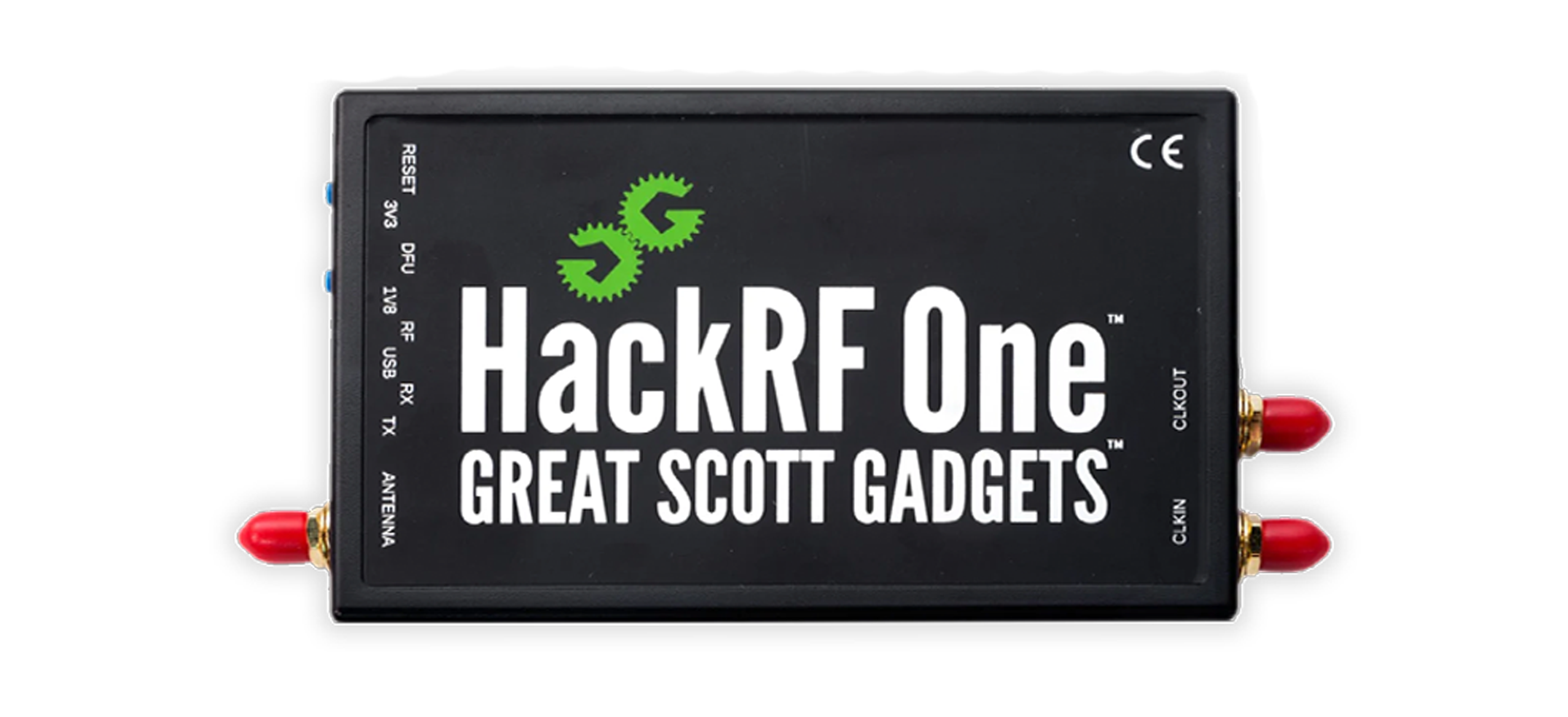
A useful way to understand SDR is to separate the system into layers. The first layer is the RF hardware itself. That includes receive-only devices such as RTL-SDR class receivers, and more capable transceivers such as HackRF, PlutoSDR, bladeRF, LimeSDR, and USRP platforms. Each class fits a different budget and performance target.
The second layer is supporting hardware. Antennas, low-noise amplifiers, band-pass filters, attenuators, splitters, coax assemblies, adapters, and clocking accessories often matter as much as the SDR unit. A good receiver connected to the wrong antenna can underperform badly. A modest receiver with the right front-end filtering and antenna can produce far better results.
The third layer is compute and software. Some SDRs rely on a host PC, while others include embedded processing or FPGA resources for lower-latency or higher-bandwidth work. Depending on the application, you may also need spectrum analysis tools, decoding software, development frameworks, or recording and playback tools.
Why SDR matters more than traditional fixed-function radios
The main advantage is flexibility. A fixed-function radio is built for a narrower purpose. An SDR can adapt to many. That matters if you work across multiple bands, protocols, or test scenarios and do not want separate hardware for every task.
SDR also lowers the barrier to signal visibility. Instead of guessing what is happening on a band, users can inspect spectrum activity directly. That is useful for hobby listening, interference hunting, protocol development, classroom learning, and wireless security research.
It also supports iteration. If you are developing a wireless device or testing a custom signal chain, software-level changes are far easier than redesigning hardware for every modification. That speed is a major reason SDR is common in research labs, prototyping environments, and RF education.
The trade-off is complexity. Traditional radios are often easier to operate for one defined task. SDR gives you more control, but it also expects you to understand gain settings, bandwidth, sample rates, filters, and signal environments.
Common uses for software defined radio
The range of applications is wide because SDR is a platform rather than a single-purpose product. Entry-level users often start with broadcast reception, weather satellite imagery, public service monitoring where permitted, aircraft tracking, marine AIS, trunked radio study, and amateur radio experimentation.
More advanced users move into protocol analysis, direction finding, passive radar, cellular research in controlled environments, GNSS experimentation, digital signal processing, remote sensing, and embedded RF prototyping. In lab settings, SDR is also used for education, validation, pre-compliance work, and waveform development.
This is why product selection matters. A user focused on receiving local VHF and UHF signals does not need the same hardware as someone working on wideband transmission experiments or phase-coherent direction finding. Asking what you want to do first is usually more useful than asking for the best SDR overall.
Receive-only vs transceiver SDRs
One of the most important distinctions is whether the device only receives or can also transmit. Receive-only SDRs are often the most accessible option for learning. They are lower cost, simpler to deploy, and suitable for a large percentage of monitoring and analysis tasks.
Transceiver SDRs add much more flexibility but also more responsibility. They are used for waveform generation, protocol testing, amateur radio development, and research workflows where transmission is required. They also bring extra considerations around output power, filtering, legal operation, shielding, and test setup quality.
If you are new to SDR, receive-only hardware is usually enough to learn signal basics, software workflows, antennas, and spectrum behavior. If your work involves bidirectional systems or custom RF development, a transceiver becomes the more sensible starting point.
What beginners usually get wrong
Many new users assume the SDR itself determines everything. In practice, the antenna and RF environment often dominate results. Indoor placement, local interference, cable loss, overload from nearby transmitters, and poor filtering can all make a capable SDR look disappointing.
Another common mistake is buying based on headline frequency range alone. A device that tunes broadly is not automatically strong across that entire range. Sensitivity, selectivity, usable bandwidth, clocking, and software support matter more than a large number on a spec sheet.
Software expectations can also be unrealistic. SDR is powerful, but it is not automatic magic. Some workflows are straightforward, while others require calibration, gain staging, reference clocks, external amplifiers, or custom decoding chains. Better hardware helps, but setup discipline still matters.
How to choose the right SDR hardware
Start with the application. For basic reception and learning, an entry-level receiver may be enough. For general-purpose experimentation with transmit capability, mid-range platforms offer more room to grow. For demanding lab, MIMO, phase-coherent, or high-bandwidth work, you may need higher-tier hardware with stronger analog performance and better synchronization options.
Then look at the full system, not just the radio. Frequency coverage, bandwidth, ADC quality, clock accuracy, software ecosystem, connector type, enclosure quality, and accessory compatibility all affect day-to-day use. So do practical purchasing concerns like stock availability, shipping reliability, and whether you can source antennas, filters, amplifiers, and adapters in the same order.
For many buyers, that is where a specialized supplier matters. A catalog built around SDR, RF accessories, and measurement tools is more useful than a general electronics storefront that only carries a few headline devices without the parts needed to make them work well.
Where software defined radio fits today
SDR now sits in an unusual but valuable position. It is accessible enough for hobbyists, yet capable enough for serious engineering work. That overlap is part of its appeal. The same category includes affordable learning tools, field-ready wireless research devices, and lab-capable platforms used for development and testing.
If you are still asking what is software defined radio, the shortest accurate answer is this: it is a flexible radio platform that replaces much of fixed-function hardware with digital processing, letting one device handle many RF tasks that once required separate equipment. The better answer is that SDR changes how you approach radio itself. You stop thinking only in terms of buying a device for one job and start thinking in terms of building a signal workflow that can evolve as your requirements change.
That is usually when SDR becomes genuinely useful - not when it looks impressive on a spec sheet, but when the hardware, software, antenna, and accessories finally line up with the work you actually want to do.
No posts found
Write a review






We support all major card and digital payment options. More local methods are available and shown during checkout.
You enter into a binding sales contract once you have received an 'order confirmation and sales receipt' email from us, in line with our Sales & Delivery conditions. Therefore, sdrstore.eu has the right to cancel your order in the event of technical problems, delivery failure, Fair use policy and other similar situations.






Your payments are protected by advanced encryption and 3-D Secure authentication for safe online shopping.