





Flipper One vs Flipper Zero: What Changed and Which One Should You Buy?
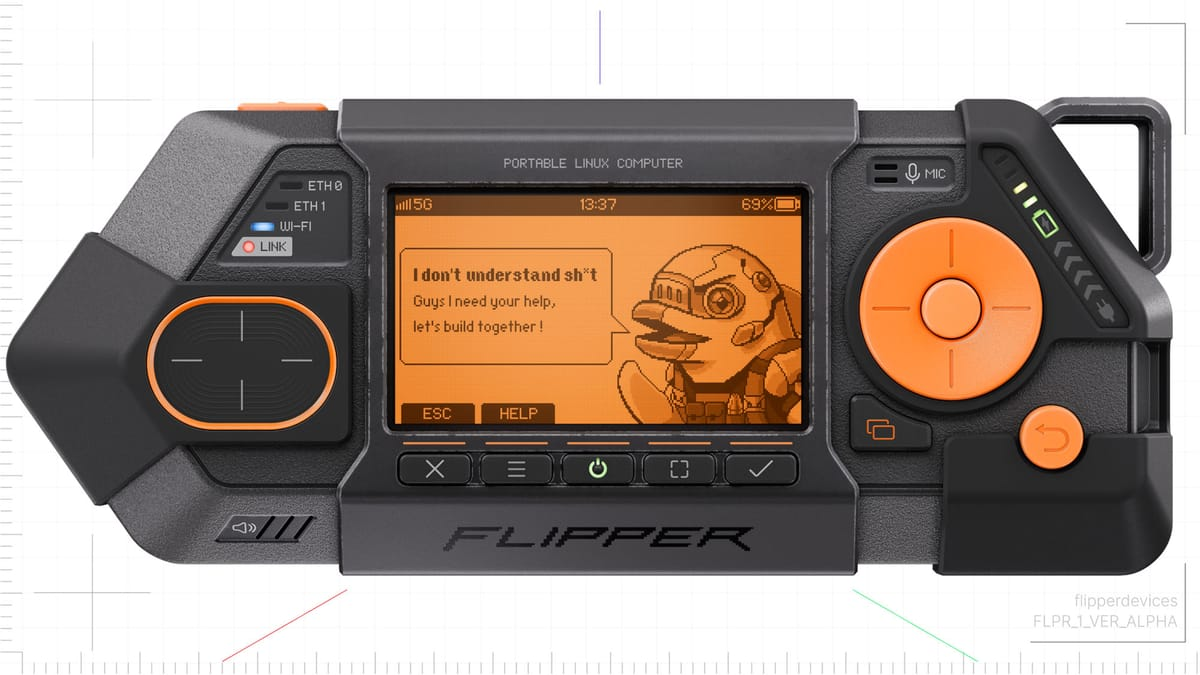
Updated: May 2026. Flipper One has been publicly revealed, but it is still in active development. A confirmed retail release date, final price, and official preorder date have not yet been announced.
Flipper One vs Flipper Zero is one of the biggest hardware comparisons of 2026. After years of speculation, Flipper Devices has finally revealed Flipper One: a much more powerful Linux-based platform designed for networking, modular expansion, SDR add-ons, local AI, and portable computing.
However, there is one important detail buyers need to understand immediately: Flipper One is not a replacement for Flipper Zero. These are different tools for different jobs.
Flipper Zero remains the compact everyday multi-tool for authorized testing of NFC, low-frequency RFID, Sub-GHz devices, infrared remotes, iButton keys, GPIO-connected hardware, and wired protocols. Flipper One is a larger and more ambitious Linux cyberdeck focused on IP-connected systems such as Wi-Fi, Ethernet, optional cellular connectivity, modular hardware, and network diagnostics.
This guide explains what changed, what Flipper One is designed to do, whether you should wait for its release, and which alternatives make sense if you need a tool today.
Quick Answer: Should You Buy Flipper One or Flipper Zero?
| Best Choice | Choose It If You Want | Availability |
|---|---|---|
| Flipper Zero | A compact tool for authorized NFC, RFID, Sub-GHz, infrared, iButton, GPIO, and hardware exploration | Available now |
| Flipper One | An open Linux platform for network analysis, Wi-Fi, Ethernet, M.2 modules, SDR expansion, local AI, and portable computing | Still in active development |
| HackRF PortaPack H4M | A portable wideband SDR with screen, spectrum tools, and Mayhem firmware | Available now |
| Chameleon Ultra | A compact RFID/NFC emulation-focused tool for authorized testing | Available now |
| iCopy XS | A guided handheld RFID/NFC badge-testing tool for authorized professional workflows | Available now |
The easiest recommendation is simple:
- Buy Flipper Zero if you want the classic portable hardware multi-tool today.
- Wait for Flipper One if you want a Linux network cyberdeck and do not mind waiting for a finished retail product.
- Choose HackRF PortaPack H4M if your real goal is wideband SDR and RF spectrum exploration.
- Choose Chameleon Ultra or iCopy XS if your main focus is authorized RFID/NFC testing.
What Is Flipper Zero?
Flipper Zero is a portable, low-power multi-tool designed for hardware exploration and authorized security testing. It is small, battery-efficient, easy to carry, and built around a simple interface with a monochrome screen and directional buttons.
Its biggest advantage is integration. Instead of carrying separate tools for several common hardware protocols, users get a single portable device with built-in support for multiple technologies.
Flipper Zero includes:
- Sub-GHz radio transceiver for supported regional bands
- 125 kHz low-frequency RFID support
- 13.56 MHz NFC support
- Infrared transmitter and receiver
- iButton and 1-Wire support
- GPIO pins for hardware projects
- USB-C connectivity
- Bluetooth Low Energy
- MicroSD card support
- Standalone operation without a computer
Flipper Zero is best understood as a practical pocket tool for interacting with physical devices and local protocols. It is useful for learning, authorized testing, development, and hardware troubleshooting.
What Is Flipper One?
Flipper One is a much more ambitious project. It is being developed as an open Linux platform rather than a direct replacement for Flipper Zero.
The goal is to create a portable Linux network multi-tool with high-performance computing, multiple network interfaces, modular M.2 expansion, GPIO modules, an optimized small-screen interface, and the ability to connect external SDR, storage, cellular, satellite, AI, and Wi-Fi modules.
Instead of focusing mainly on offline access-control protocols and physical hardware interfaces, Flipper One is designed around connected systems and IP networking.
Flipper One is being designed for:
- Wi-Fi network analysis
- Ethernet diagnostics
- Portable Linux workflows
- Network gateway and router use
- VPN gateway setups
- Modular SDR expansion
- Optional cellular and satellite modem modules
- Local AI tools
- Portable desktop and media-box use
- Custom GPIO hardware modules
The official project announcement is available here: Flipper One — We Need Your Help.
Flipper One Is Not Flipper Zero 2
The most important thing to understand is that Flipper One is not simply a faster Flipper Zero. It is not Flipper Zero 2, Flipper Zero Pro, or a direct successor designed to replace the original device.
Flipper Devices describes the difference using networking layers:
- Flipper Zero focuses on offline point-to-point protocols such as NFC, low-frequency RFID, Sub-1 GHz radio, infrared, iButton, UART, SPI, and I²C.
- Flipper One focuses on IP-connected systems such as Wi-Fi, Ethernet, optional 5G, satellite connectivity, network routing, SDR modules, and Linux-based tools.
This means many users may eventually want both devices rather than choosing only one.
Flipper One vs Flipper Zero: Main Differences
| Feature | Flipper Zero | Flipper One |
|---|---|---|
| Main purpose | Portable hardware and access-protocol multi-tool | Open Linux network multi-tool and modular cyberdeck |
| Product status | Available retail product | Active development project |
| Operating system | Embedded firmware on low-power MCU | Linux-based Flipper OS concept with low-power MCU co-processor |
| Main processor | STM32WB55 microcontroller | Rockchip RK3576 8-core Linux processor |
| Low-power processor | Integrated MCU platform | RP2350 microcontroller for display, buttons, touchpad, LEDs, and power control |
| RAM | Designed for embedded firmware | 8 GB planned onboard RAM |
| NFC / RFID | Built in | Not positioned as a direct replacement for Flipper Zero’s built-in badge tools |
| Sub-GHz radio | Built in | External SDR and radio modules planned through expansion |
| Infrared | Built in | Not the main focus |
| Ethernet | No built-in Ethernet | Two independent Gigabit Ethernet ports planned |
| Wi-Fi | Requires accessory module for Wi-Fi workflows | Integrated Wi-Fi 6E planned |
| M.2 modules | No | Yes, modular expansion is a core feature |
| HDMI | No | Full-size HDMI 2.1 planned |
| Desktop use | No | Portable Linux desktop and thin-client use planned |
| Best buyer | Users who want a compact everyday hardware tool | Users who want a modular Linux networking and computing platform |
What Changed with Flipper One?
The biggest change is the move from a focused low-power embedded tool to a Linux-based modular platform. Flipper One is designed around a co-processor architecture: a powerful Linux processor for demanding workloads and a separate low-power microcontroller for interface and power-management tasks.
This allows Flipper One to behave more like a portable Linux computer while still keeping the quick controls and small-screen experience that made Flipper Zero popular.
Major planned Flipper One upgrades include:
- Full Linux operating system
- 8-core RK3576 processor
- 8 GB RAM
- RP2350 low-power MCU
- Mali-G52 graphics
- Integrated NPU for local AI experiments
- Wi-Fi 6E on 2.4 GHz, 5 GHz, and 6 GHz bands
- Two Gigabit Ethernet ports
- USB Ethernet up to 5 Gbps
- M.2 modular expansion
- GPIO module system
- USB-C DisplayPort Alt Mode
- Full-size HDMI 2.1 output
- Portable desktop and media-box use
Flipper One Networking: The Biggest Upgrade
Flipper One is primarily a network multi-tool. Its current design includes several independent network interfaces that can be used for authorized testing, troubleshooting, routing, lab work, and development.
Planned network interfaces include:
- Two Gigabit Ethernet ports
- Wi-Fi 6E with 2.4 GHz, 5 GHz, and 6 GHz support
- USB Ethernet up to 5 Gbps
- Optional LTE or 5G modem through M.2
- Potential satellite modem expansion through M.2
This makes Flipper One more relevant for network engineers, Linux users, hardware developers, and authorized security teams than buyers who only want a simple pocket gadget.
M.2 Expansion: Why Flipper One Is More Modular
M.2 expansion is one of the most interesting parts of Flipper One. The device is designed to accept high-speed internal modules through a Key-B M.2 slot.
Planned module possibilities include:
- SDR modules
- NVMe or SATA storage
- LTE and 5G modems
- Satellite modems
- Wi-Fi adapters
- AI accelerators
- Custom community-built modules
This makes Flipper One closer to a compact modular cyberdeck than a normal consumer gadget.
Will Flipper One Have SDR Support?
Flipper One is designed to support SDR expansion modules. This does not mean it replaces a dedicated wideband SDR out of the box. Instead, users should expect to add compatible hardware modules depending on the frequencies, bandwidth, antennas, and software workflows they need.
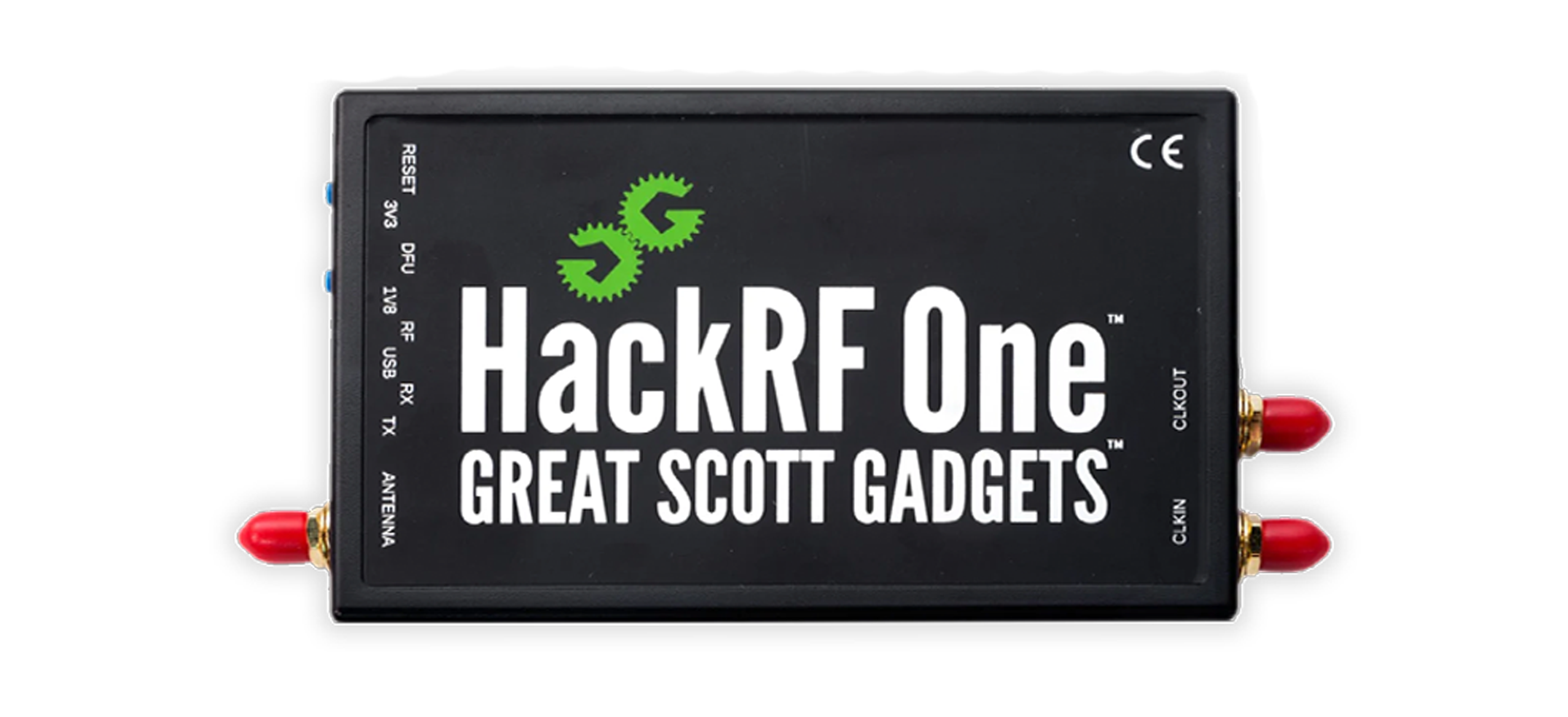
If your main goal is wideband RF exploration today, consider the HackRF PortaPack H4M Mayhem Signature Edition. It is already available and gives users a portable screen-based SDR platform for spectrum exploration and authorized RF testing.
You can also read our comparison: HackRF H4M vs Flipper Zero: Which Portable SDR Is Better?
Flipper OS and FlipCTL
Flipper One is being developed with a Linux-focused software concept called Flipper OS. The idea is to build a Debian-based platform with profiles: snapshots of packages and settings that can be changed, cloned, tested, and restored.
Flipper Devices is also working on FlipCTL, a framework for controlling Linux tools from a compact screen with buttons. Instead of squeezing a full desktop interface onto a tiny display, FlipCTL aims to create simple menus for common utilities.
The project is still evolving, so buyers should treat these ideas as active development plans rather than finished retail features.
Flipper One as a Portable Desktop
Flipper One is also being designed as a portable desktop and thin client. The planned hardware includes USB-C DisplayPort Alt Mode and a full-size HDMI 2.1 output.
The goal is to connect the device to a monitor, charge it, and connect peripherals for light desktop use. However, Flipper Devices has openly said that several parts still need work, including DisplayPort support, signal integrity, hardware video decoding, and desktop-environment selection.
What Flipper Zero Still Does Better
Flipper One may be dramatically more powerful, but Flipper Zero still has major advantages. It is available, compact, battery-efficient, easy to carry, and built specifically for quick interaction with physical devices.
Flipper Zero is still better for:
- Portable everyday carry
- Built-in NFC testing
- Built-in low-frequency RFID testing
- Supported Sub-GHz radio workflows
- Infrared remote testing
- iButton and 1-Wire devices
- GPIO hardware exploration
- Long battery life
- Buyers who want a finished product now
For many buyers, Flipper Zero will remain the better everyday tool even after Flipper One launches.
What Flipper One Should Do Better
Flipper One is designed to handle tasks that are outside the original scope of Flipper Zero.
Flipper One should be better for:
- IP networking
- Ethernet diagnostics
- Wi-Fi analysis in authorized environments
- Linux utilities
- Portable routing and VPN workflows
- Modular cellular connectivity
- SDR expansion modules
- Portable development
- Local AI tools
- Desktop and media-box use
Flipper One Release Date: When Can You Buy It?
Flipper One does not currently have a confirmed retail release date. The public project reveal took place on May 21, 2026, but the device remains in active development.
Flipper Devices is openly sharing development progress, technical challenges, documentation, and community tasks. This is useful for enthusiasts, but it also means buyers should not treat unofficial preorder listings or speculative dates as confirmed.
Until Flipper Devices announces a final retail launch, the safest advice is to follow the official project blog and developer portal for updates.
How Much Will Flipper One Cost?
A final Flipper One price has not yet been officially announced. The new device includes significantly more powerful hardware than Flipper Zero, including a Linux processor, more memory, networking interfaces, HDMI, and modular expansion.
Buyers should expect it to belong to a different product category from Flipper Zero rather than assuming it will be priced like a simple replacement.
Should You Wait for Flipper One?
Wait for Flipper One if you want a Linux-based network multi-tool and do not need a finished product immediately. It is especially interesting for developers, network engineers, Linux enthusiasts, and advanced users who want modular expansion.
Wait for Flipper One if:
- You want a portable Linux cyberdeck.
- You care about Ethernet and Wi-Fi workflows.
- You want M.2 expansion.
- You want to connect SDR, storage, or cellular modules.
- You want local AI experimentation.
- You are comfortable waiting for a confirmed release date.
Do not wait for Flipper One if:
- You need a portable tool now.
- You mainly want NFC, RFID, infrared, Sub-GHz, or iButton functions.
- You want a compact everyday-carry device.
- You want a product with an established community and mature firmware today.
- You need a wideband SDR immediately.
Should You Buy Flipper Zero Now?
Flipper Zero still makes sense in 2026 because Flipper One is not replacing it. The two devices are designed for different types of work.
Buy Flipper Zero if your priority is a portable hardware exploration tool for supported NFC, RFID, Sub-GHz, infrared, iButton, GPIO, and wired-protocol workflows.
Waiting for Flipper One only makes sense if your real goal is Linux networking and modular expansion.
Best Flipper Zero Alternatives You Can Buy Now
Flipper Zero is a broad multi-tool, but a more specialized device may be better if you already know your main use case.
Choose HackRF PortaPack H4M for wideband SDR
If your main interest is RF spectrum exploration, a HackRF PortaPack H4M is a stronger fit than Flipper Zero. The HackRF PortaPack H4M Mayhem Signature Edition is designed as a portable wideband SDR with screen-based operation.
Choose Chameleon Ultra for compact RFID/NFC emulation
If your main interest is authorized RFID/NFC emulation and lab testing, consider the Chameleon Ultra. It is more specialized than Flipper Zero and designed around portable RFID/NFC workflows.
Choose iCopy XS for guided badge testing
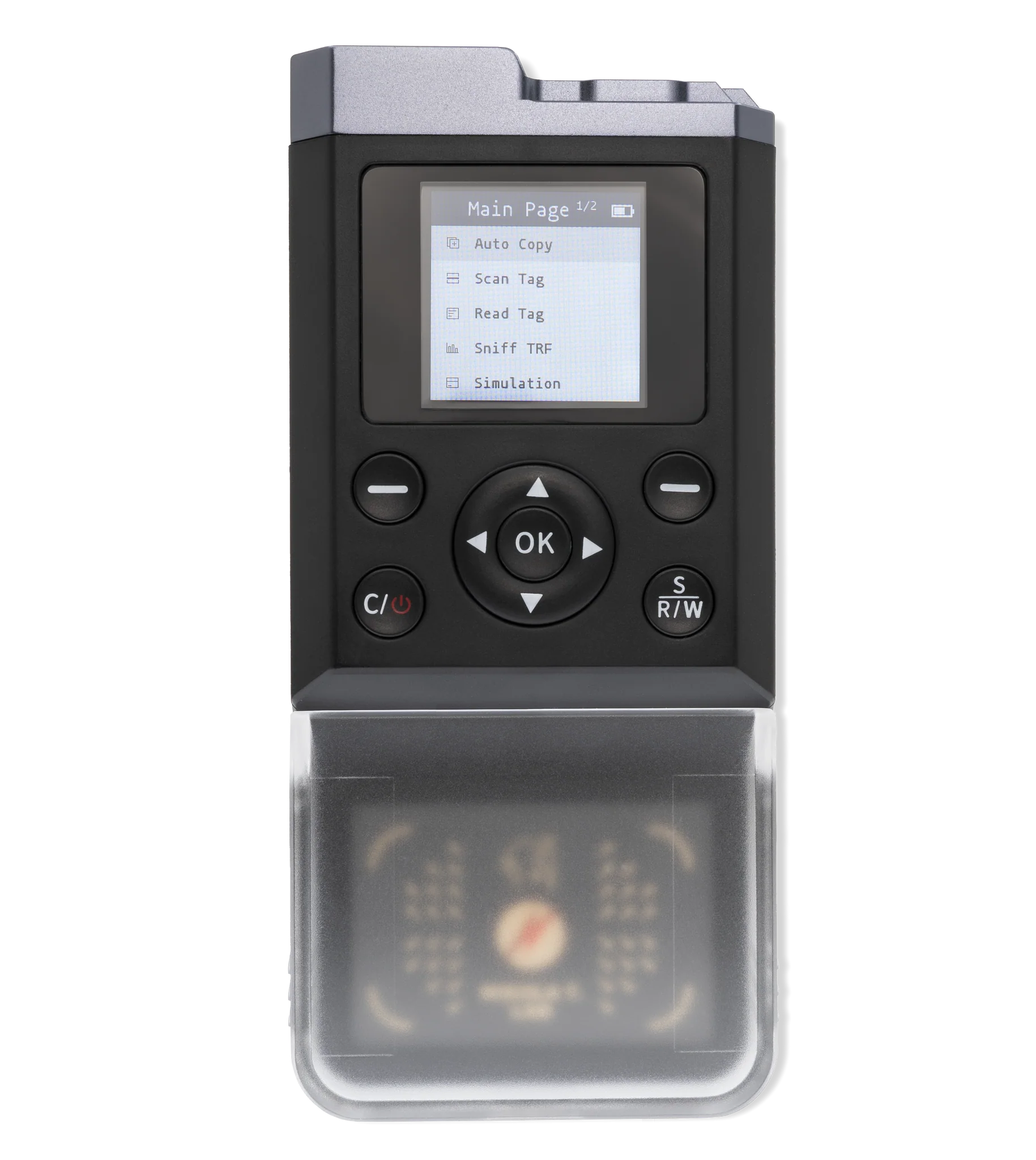
If you need a professional handheld device for authorized badge identification and access-control audits, consider the iCopy XS RFID/NFC Tool.
Browse RFID/NFC tools
For access-control testing, badge auditing, and RFID/NFC research equipment, browse the RFID/NFC tools category at SDRstore.eu.
Which Device Is Best for Beginners?
Flipper Zero is still the better beginner choice because it is available, compact, mature, and designed around an accessible standalone interface.
Flipper One will be more powerful, but it is also likely to be more complex. A Linux cyberdeck with network interfaces, modules, and custom software is exciting, but it is not necessarily the easiest first tool.
| Beginner Goal | Best Choice |
|---|---|
| I want a general pocket multi-tool | Flipper Zero |
| I want to learn NFC and RFID basics | Flipper Zero, Chameleon Ultra, or iCopy XS depending on depth needed |
| I want wideband SDR spectrum exploration | HackRF PortaPack H4M |
| I want Linux networking and Ethernet tools | Wait for Flipper One |
| I want a portable Linux cyberdeck | Wait for Flipper One |
Important Legal and Ethical Note
Flipper Zero, Flipper One, HackRF, RFID/NFC tools, and network-analysis devices should only be used on systems that you own, manage, or have explicit permission to test.
These tools are valuable for learning, troubleshooting, development, security audits, and improving weak systems. They should not be used to access networks, badges, remotes, devices, or communications without authorization.
Final Verdict: Flipper One vs Flipper Zero
Flipper One is one of the most exciting hardware projects announced in 2026, but it is not Flipper Zero 2. It is a different product category: an open Linux network multi-tool and modular cyberdeck.
Flipper Zero remains the better choice for users who want a compact everyday device with built-in NFC, RFID, Sub-GHz, infrared, iButton, and GPIO tools.
Flipper One is the device to watch if you want Wi-Fi 6E, Ethernet, optional cellular connectivity, modular SDR support, M.2 expansion, Linux utilities, HDMI output, and local AI experiments.
For most buyers today, the recommendation is straightforward: buy Flipper Zero if you need its physical-protocol tools now, choose a specialized available alternative if your use case is clear, and wait for an official Flipper One release announcement before making a purchase decision.
FAQ
Is Flipper One a replacement for Flipper Zero?
No. Flipper Devices says Flipper One and Flipper Zero are different projects built for different tasks. Flipper Zero focuses on offline physical protocols, while Flipper One focuses on Linux, IP networking, and modular expansion.
What is the Flipper One release date?
Flipper One does not currently have a confirmed retail release date. The project was publicly revealed on May 21, 2026 and remains in active development.
Can I preorder Flipper One?
An official retail preorder date has not yet been announced. Buyers should follow official Flipper Devices updates before relying on any preorder listing.
How much will Flipper One cost?
Flipper Devices has not yet announced a final retail price for Flipper One.
Does Flipper One have Linux?
Yes. Flipper One is being developed as an open Linux platform with an RK3576 processor, RP2350 low-power MCU, and a Debian-based Flipper OS concept.
Does Flipper One have Wi-Fi?
The current Flipper One design includes Wi-Fi 6E support covering 2.4 GHz, 5 GHz, and 6 GHz bands.
Does Flipper One support SDR?
Flipper One is designed to support SDR modules through its expansion system. The exact SDR capabilities will depend on the compatible module used.
Should I wait for Flipper One or buy Flipper Zero?
Buy Flipper Zero if you want NFC, RFID, Sub-GHz, infrared, iButton, and GPIO tools now. Wait for Flipper One if you want a Linux network cyberdeck and are comfortable waiting for the official retail launch.
What is the best Flipper Zero alternative for wideband SDR?
HackRF PortaPack H4M is a stronger choice if your main goal is portable wideband SDR spectrum exploration and authorized RF testing.
What is the best Flipper Zero alternative for RFID/NFC testing?
Chameleon Ultra is a strong compact RFID/NFC emulation-focused option, while iCopy XS is better for guided professional badge-testing workflows.
No posts found
Write a review






We support all major card and digital payment options. More local methods are available and shown during checkout.
You enter into a binding sales contract once you have received an 'order confirmation and sales receipt' email from us, in line with our Sales & Delivery conditions. Therefore, sdrstore.eu has the right to cancel your order in the event of technical problems, delivery failure, Fair use policy and other similar situations.






Your payments are protected by advanced encryption and 3-D Secure authentication for safe online shopping.