





Is the RTL-SDR Blog V4 Reaching End of Life? What the New V4 Lite Means for Buyers
Is the RTL-SDR Blog V4 Reaching End of Life? V4 Lite Explained
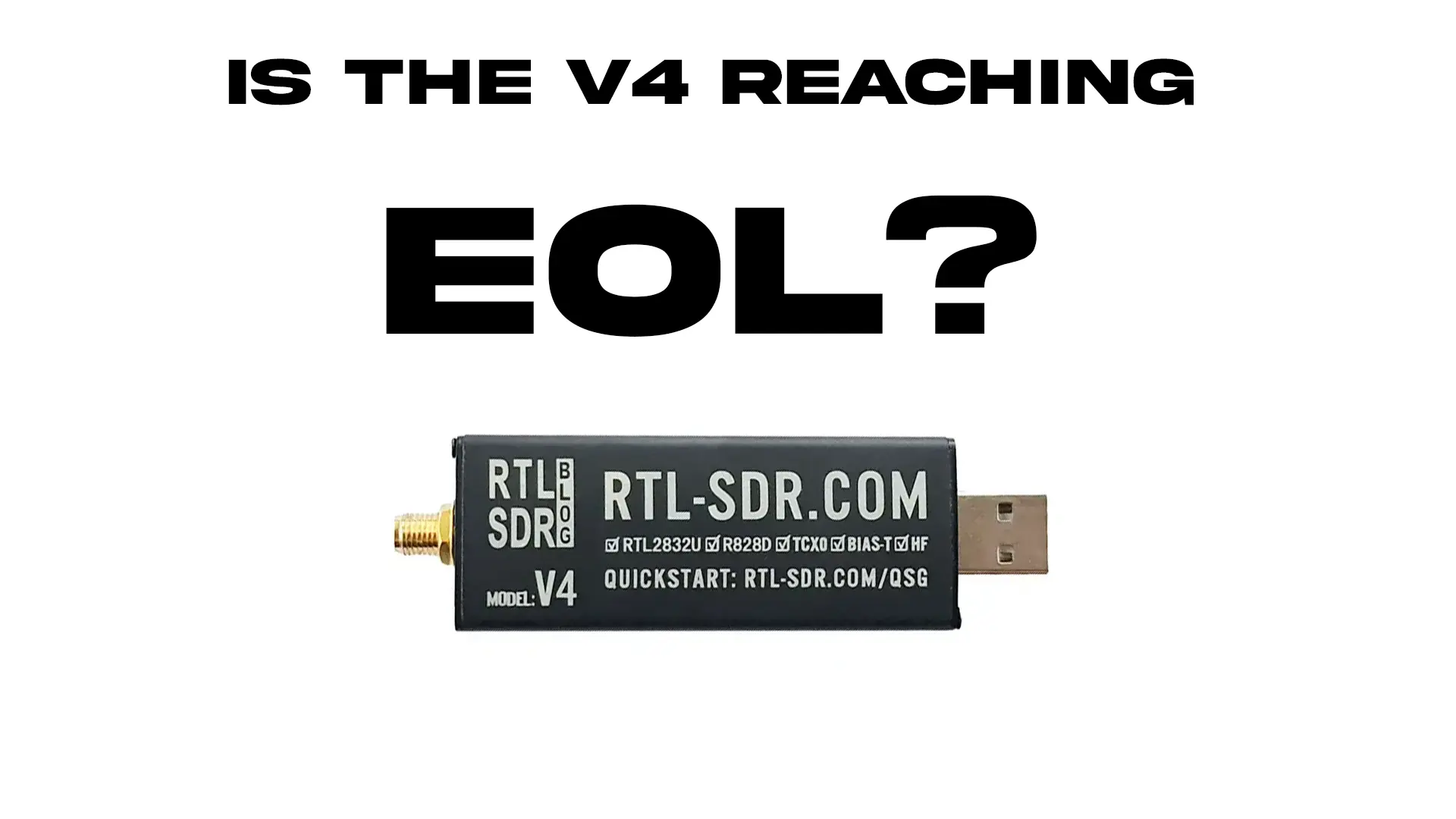
The RTL-SDR Blog V4 has become one of the most popular entry-level SDR receivers for beginners, hobbyists, radio listeners, ADS-B users, and experimenters. But recently, many buyers have started asking an important question: is the RTL-SDR Blog V4 reaching end of life?
The short answer is that the RTL-SDR Blog V4 has not simply disappeared, but it appears to be approaching the end of its current production cycle. The main reason is the R828D tuner chip used inside the V4. This chip is no longer in production, and the remaining stock used for manufacturing is running low.
This is where the upcoming RTL-SDR Blog V4 Lite becomes important. The V4 Lite is expected to continue the V4-style design using a different tuner chip, helping keep a similar RTL-SDR option available for buyers once regular V4 stock becomes harder to find.
Is the RTL-SDR Blog V4 officially discontinued?
At the moment, it is better not to say that the RTL-SDR Blog V4 has officially reached end of life. A more accurate way to describe the situation is that the RTL-SDR Blog V4 appears to be approaching the end of its current production cycle because the R828D tuner chip is no longer in production and remaining stock is running low.
For buyers, this means the V4 may become harder to find over time, especially from reliable sellers. If you specifically want the original RTL-SDR Blog V4 with the R828D tuner, it may be better to buy while stock is still available instead of waiting too long.
You can check current availability on SDRstore through the RTL-SDR receivers and accessories category, including the RTL-SDR Blog V4 dongle-only version and other RTL-SDR kits when available.
Why is the RTL-SDR Blog V4 production limited?
The RTL-SDR Blog V4 is built around the R828D tuner chip. This tuner allowed the V4 to use a more advanced RF front-end design compared with many older RTL-SDR models. The V4 introduced improved HF reception through a built-in upconverter, better filtering, a triplexed input design, improved power supply design, lower heat, a 1 PPM TCXO, SMA connector, bias tee support, and an aluminum enclosure.
The problem is not demand. The issue is component availability. Since the R828D chip is no longer being produced, the number of original V4 units that can be manufactured depends on the remaining chip stock. Once that stock is gone, the original R828D-based V4 cannot continue in the same form.
What is the RTL-SDR Blog V4 Lite?
The RTL-SDR Blog V4 Lite, also referred to as V4L in driver discussions, is expected to be a replacement-style model that keeps a similar V4-like architecture alive. Instead of using the R828D tuner chip, the V4 Lite is expected to use the R828S tuner chip.
This should allow a similar RTL-SDR Blog receiver to continue being sold after the original R828D-based V4 becomes difficult to produce. For most buyers, the V4 Lite will likely be seen as the practical successor or replacement for the standard V4.
However, the V4 Lite is not expected to be completely identical to the original V4. The R828S chip has fewer inputs than the R828D, which means the V4 Lite may not have the same VHF and UHF split filtering design as the original V4.
RTL-SDR V4 vs V4 Lite: what is expected to change?
| Feature | RTL-SDR Blog V4 | RTL-SDR Blog V4 Lite |
|---|---|---|
| Main tuner chip | R828D | Expected R828S |
| Production status | Limited by remaining R828D stock | Expected to continue the V4-style design |
| HF reception | Built-in upconverter design | Expected to keep a similar V4-style approach |
| Filtering | Advanced filtering using R828D capabilities | Likely simplified compared with the original V4 |
| Best for | Buyers who want the original V4 design | Buyers who want the newer replacement model once available |
The biggest expected difference between RTL-SDR V4 and V4 Lite is the tuner and filtering arrangement. The original V4 uses the R828D tuner with three inputs, which allowed a more advanced split filtering design. The V4 Lite is expected to use the R828S, which has fewer inputs, so the filtering design may be simplified.
This does not automatically mean the V4 Lite will be a bad receiver. It simply means buyers should understand that “Lite” may refer to a more simplified RF front-end compared with the full V4 design.
Should you buy the RTL-SDR Blog V4 now or wait for V4 Lite?
If you want the original RTL-SDR Blog V4 design, it makes sense to buy while stock is available. The V4 is already well known, widely discussed, and supported by modern SDR software. It is a strong choice for ADS-B, airband, FM listening, weather satellite reception, general scanning, HF experimentation, and beginner SDR projects.
The RTL-SDR Blog V4 USB-C receiver is also worth checking if you prefer a newer connector style and want a convenient dongle-only setup.
If you are not in a rush and want the latest replacement model, waiting for the V4 Lite may also make sense. The V4 Lite is expected to keep a similar V4-style receiver available, potentially with a lower price and improved long-term availability.
Who should buy the RTL-SDR Blog V4 now?
The RTL-SDR Blog V4 is still a good buy for users who want a proven receiver with strong community support. It is especially suitable for beginners who want to start with an affordable SDR that works with popular software such as SDR#, SDR++, GQRX, CubicSDR, HDSDR, and other RTL-SDR-compatible tools.
The RTL-SDR Blog V4 is a good choice if you want to:
- Buy the original R828D-based V4 before stock becomes harder to find
- Use a proven RTL-SDR receiver for beginner radio projects
- Receive HF, VHF, and UHF signals with one compact SDR dongle
- Use popular SDR software with a widely supported receiver
- Build an SDR starter kit for scanning, ADS-B, airband, or weather satellite reception
If you are new to SDR and want a simple starting point, you can browse RTL-SDR receivers, starter kits, antennas, and accessories on SDRstore.
Who should wait for RTL-SDR Blog V4 Lite?
The RTL-SDR Blog V4 Lite may be the better option for buyers who are not in a hurry and simply want the next available RTL-SDR Blog model. If the V4 Lite becomes easier to source than the original V4, it may become the default beginner recommendation once the regular V4 stock becomes limited.
Buyers who mainly care about availability, price, and basic SDR use may not need to chase the original V4. For many common projects, such as local radio listening, ADS-B tracking, airband monitoring, and basic scanning, the V4 Lite may be more than enough once it is available.
Will the RTL-SDR Blog V4 become more valuable?
It is possible that the original RTL-SDR Blog V4 becomes more desirable among some users because of its R828D-based design and filtering arrangement. However, buyers should avoid panic buying. The V4 is a useful SDR receiver, but it is still an entry-level SDR dongle, not a rare laboratory instrument.
The practical advice is simple: if you need an RTL-SDR now, buy the V4 or another suitable RTL-SDR kit while available. If you are simply curious about the next model, wait for the V4 Lite and compare real-world user feedback after launch.
Best buyer advice
If your goal is to start learning SDR right now, the RTL-SDR Blog V4 is still one of the best beginner receivers. It is affordable, compact, well documented, and suitable for a wide range of radio projects.
If you specifically want the original V4 design, do not wait too long. The V4 appears to be approaching the end of its current production cycle because the R828D tuner chip is no longer in production and remaining stock is running low.
If you are comfortable waiting, the RTL-SDR Blog V4 Lite may become the natural replacement. It should help keep a V4-style RTL-SDR receiver available for buyers, although it may use a simplified tuner and filtering design compared with the original V4.
Final recommendation
The RTL-SDR Blog V4 has not officially reached end of life, but it appears to be moving toward the end of its current production cycle. The upcoming V4 Lite is expected to act as the replacement-style model using the R828S tuner chip.
For buyers, the decision is straightforward. Buy the RTL-SDR Blog V4 now if you want the proven R828D-based version while stock is available. Wait for the V4 Lite if you prefer the upcoming replacement model and do not mind a potentially simplified design.
Either way, RTL-SDR remains one of the best ways to enter the world of software-defined radio, especially for beginners looking for an affordable SDR starter kit.
FAQ
Is the RTL-SDR Blog V4 end of life?
The RTL-SDR Blog V4 has not simply been declared officially end of life, but it appears to be approaching the end of its current production cycle because the R828D tuner chip is no longer in production and remaining stock is running low.
Is the RTL-SDR Blog V4 discontinued?
It is better to say that the RTL-SDR Blog V4 is becoming limited by component availability rather than simply saying it is discontinued. The R828D tuner chip is no longer in production, which limits future V4 manufacturing.
What is the RTL-SDR Blog V4 Lite?
The RTL-SDR Blog V4 Lite is an expected replacement-style model that uses the R828S tuner chip to continue a similar V4-like RTL-SDR design after regular V4 stock becomes harder to produce.
What is the difference between RTL-SDR V4 and V4 Lite?
The original RTL-SDR Blog V4 uses the R828D tuner chip, while the V4 Lite is expected to use the R828S tuner chip. The V4 Lite may have a simplified filtering design compared with the original V4.
Should I buy RTL-SDR V4 now or wait for V4 Lite?
Buy the RTL-SDR Blog V4 now if you want the original R828D-based version while stock is available. Wait for the V4 Lite if you prefer the upcoming replacement model and are not in a hurry.
Is RTL-SDR V4 still good for beginners?
Yes. The RTL-SDR Blog V4 is still a very good beginner SDR receiver for scanning, ADS-B, airband, weather satellite reception, HF experimentation, and general radio learning.
No posts found
Write a review






We support all major card and digital payment options. More local methods are available and shown during checkout.
You enter into a binding sales contract once you have received an 'order confirmation and sales receipt' email from us, in line with our Sales & Delivery conditions. Therefore, sdrstore.eu has the right to cancel your order in the event of technical problems, delivery failure, Fair use policy and other similar situations.






Your payments are protected by advanced encryption and 3-D Secure authentication for safe online shopping.