





What Is Flipper One? Linux, SDR Modules, 5G, AI, Price, and Release Date Explained
Updated: May 2026. Flipper One has been publicly revealed, but it is still in active development. A confirmed retail price, release date, and official preorder date have not yet been announced.
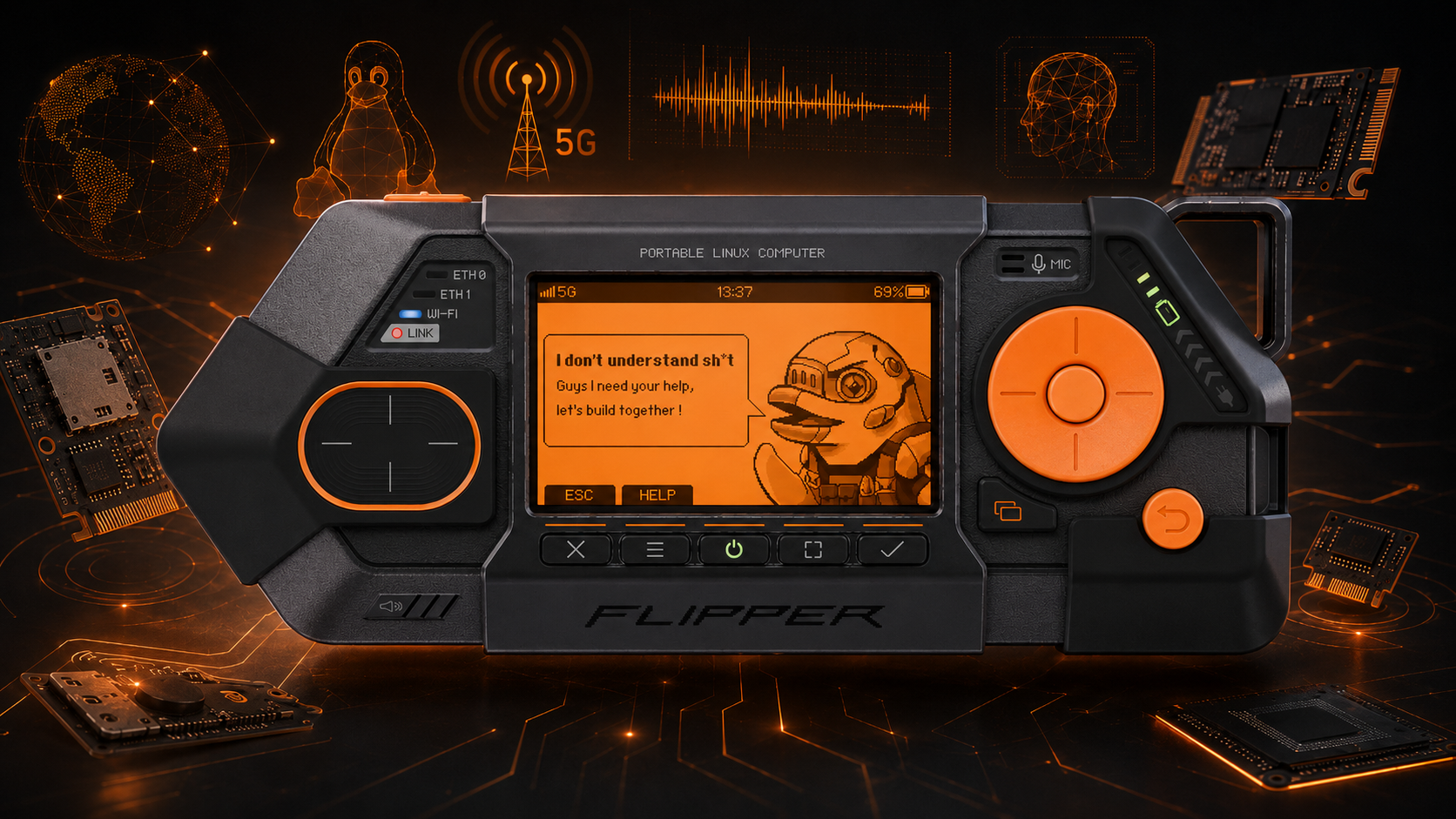
Flipper One is a new open Linux hardware platform from the team behind Flipper Zero. It is designed to be much more than a simple upgrade. Instead of replacing Flipper Zero, it aims to become a modular portable cyberdeck for networking, Linux tools, SDR modules, 5G connectivity, AI acceleration, storage expansion, and hardware development.
That difference is important. Flipper Zero remains the compact pocket multi-tool for supported NFC, low-frequency RFID, Sub-GHz radio, infrared, iButton, and GPIO workflows. Flipper One moves into a different category: a higher-performance portable Linux system with Wi-Fi 6E, two Gigabit Ethernet ports, M.2 expansion, HDMI, USB-C DisplayPort, and a much more powerful processor.
This guide explains what Flipper One is, what hardware has been announced, how SDR modules and 5G expansion are expected to work, whether AI features are realistic, and what buyers should know about the Flipper One price and release date.
Quick Answer: What Is Flipper One?
Flipper One is an open Linux-based portable multi-tool currently being developed by Flipper Devices. It is designed for network diagnostics, Wi-Fi workflows, Ethernet testing, modular expansion, portable computing, authorized security testing, Linux utilities, and optional M.2 add-ons such as SDR radios, cellular modems, storage, GNSS receivers, and AI accelerators.
It is not Flipper Zero 2. It is not a direct replacement for Flipper Zero. It is a separate product concept aimed at more demanding Linux, networking, and modular-hardware workflows.
| Question | Current Answer |
|---|---|
| Is Flipper One officially announced? | Yes, it was publicly revealed in May 2026. |
| Is Flipper One available to buy? | No confirmed retail availability has been announced yet. |
| Does Flipper One run Linux? | Yes, Linux is a central part of the design. |
| Does Flipper One have Wi-Fi? | Yes, the current design includes Wi-Fi 6E on 2.4 GHz, 5 GHz, and 6 GHz bands. |
| Does Flipper One support Ethernet? | Yes, two independent Gigabit Ethernet ports are planned. |
| Does Flipper One have SDR? | SDR support is planned through compatible expansion modules rather than a built-in wideband SDR. |
| Does Flipper One support 5G? | Optional 4G and 5G connectivity is planned through compatible M.2 cellular modems. |
| Does Flipper One include AI hardware? | Yes, the announced processor includes an NPU for local AI workloads. |
| What is the Flipper One price? | No final official retail price has been announced. |
| What is the Flipper One release date? | No confirmed retail launch date has been announced. |
Flipper One Release Date: When Can You Buy It?
Flipper One does not currently have a confirmed retail release date. The project was publicly revealed in May 2026, but it remains under active development.
Flipper Devices is taking an unusually open approach. The company is publishing documentation, development tasks, hardware details, software progress, and areas where community contributions are welcome. This gives enthusiasts a clear view of the project, but it also means the final retail version is not ready yet.
Buyers should be careful with unofficial release-date claims. Until Flipper Devices announces a production plan, final preorder schedule, and launch date, speculative dates should not be treated as confirmed.
What to expect next
- More hardware revisions and testing
- Linux software development
- Power-management improvements
- Display and interface refinement
- M.2 module compatibility testing
- More information about production and retail availability
Flipper One Price: How Much Will It Cost?
Flipper Devices has not announced a final Flipper One price. Any exact price circulating before an official announcement should be treated as speculation.
It is reasonable to expect Flipper One to belong to a higher product category than Flipper Zero. The announced design includes a Linux-capable processor, 8 GB RAM, internal storage, multiple network interfaces, HDMI, USB-C video output, a larger battery system, and an internal M.2 expansion slot.
However, the final price will depend on the production design, included accessories, manufacturing cost, software maturity, and whether modules are bundled or sold separately.
Do not assume that the base model includes every module
Flipper One is designed as a modular platform. Features such as wideband SDR, extra storage, cellular connectivity, and certain AI accelerators may depend on optional M.2 modules. Buyers should wait for the final retail configuration before comparing prices.
Flipper One Key Specifications
Flipper One is still under development, so specifications may change before launch. Based on the current official documentation, the planned hardware is much more powerful than Flipper Zero.
| Feature | Flipper One Current Development Specification |
|---|---|
| Main processor | Rockchip RK3576 |
| CPU cores | 8 cores: 4 × Cortex-A72 and 4 × Cortex-A53, up to 2.2 GHz |
| Low-power microcontroller | Raspberry Pi RP2350B |
| RAM | 8 GB LPDDR5 |
| Internal storage | 64 GB UFS 2.2 |
| Expandable storage | MicroSD and M.2 storage options |
| AI hardware | Integrated NPU rated up to 6 TOPS INT8 |
| Wi-Fi | Wi-Fi 6E on 2.4 GHz, 5 GHz, and 6 GHz bands |
| Bluetooth | Bluetooth and BLE through the integrated wireless module |
| Ethernet | 2 × Gigabit Ethernet ports |
| USB-C | USB 3.1, charging, and DisplayPort Alt Mode depending on port |
| USB-A | USB 3.1 host port |
| HDMI | Full-size HDMI 2.1 output |
| Audio | 3.5 mm audio jack and planned speaker support |
| M.2 expansion | Internal Key-B M.2 port |
| GPIO | Expansion header for hardware projects |
| Battery | Current documentation lists a development-stage battery design that may still change |
Linux Is the Biggest Difference
Linux is the core reason Flipper One is a different product from Flipper Zero. Flipper Zero uses a lightweight embedded platform designed for fast, low-power interaction with physical protocols. Flipper One uses a much more powerful processor capable of running Linux applications, network tools, storage workflows, graphics output, and more demanding software.
The current design uses two processors:
- The Rockchip RK3576 runs Linux, user applications, networking, high-speed USB, PCIe, graphics, and AI acceleration.
- The RP2350 low-power microcontroller manages the display, buttons, touchpad, power system, and power-bank mode.
This dual-processor design aims to combine a responsive portable interface with the flexibility of a Linux computer.
What Can Flipper One Do with Linux?
Flipper One is being developed as a general-purpose portable Linux platform. That means the final use cases should depend heavily on the software installed by the user and the hardware modules connected to the device.
Potential Linux use cases include:
- Network diagnostics
- Portable router and VPN gateway workflows
- Linux terminal tools
- Hardware testing and development
- USB host workflows
- Storage and logging
- Authorized Wi-Fi analysis
- SDR software with a compatible radio module
- Local AI experiments
- Portable desktop use through HDMI or USB-C DisplayPort
Final software support will depend on development progress. Buyers should not assume that every Linux package or hardware peripheral will work perfectly at launch.
Does Flipper One Have SDR?
Flipper One is designed to support SDR modules through its M.2 expansion system. This is one of the most interesting features for radio enthusiasts.
However, Flipper One should not be confused with a dedicated SDR receiver or transceiver. The base device is a Linux platform. Its exact SDR capabilities will depend on the compatible module installed, the supported drivers, antennas, frequency range, bandwidth, RF front end, and software configuration.
What SDR modules could add
- Portable spectrum viewing
- Signal reception across supported frequency ranges
- Transmit capability when supported by the module and legally authorized
- RF logging
- GNU Radio or Linux SDR workflows
- Custom radio-development projects
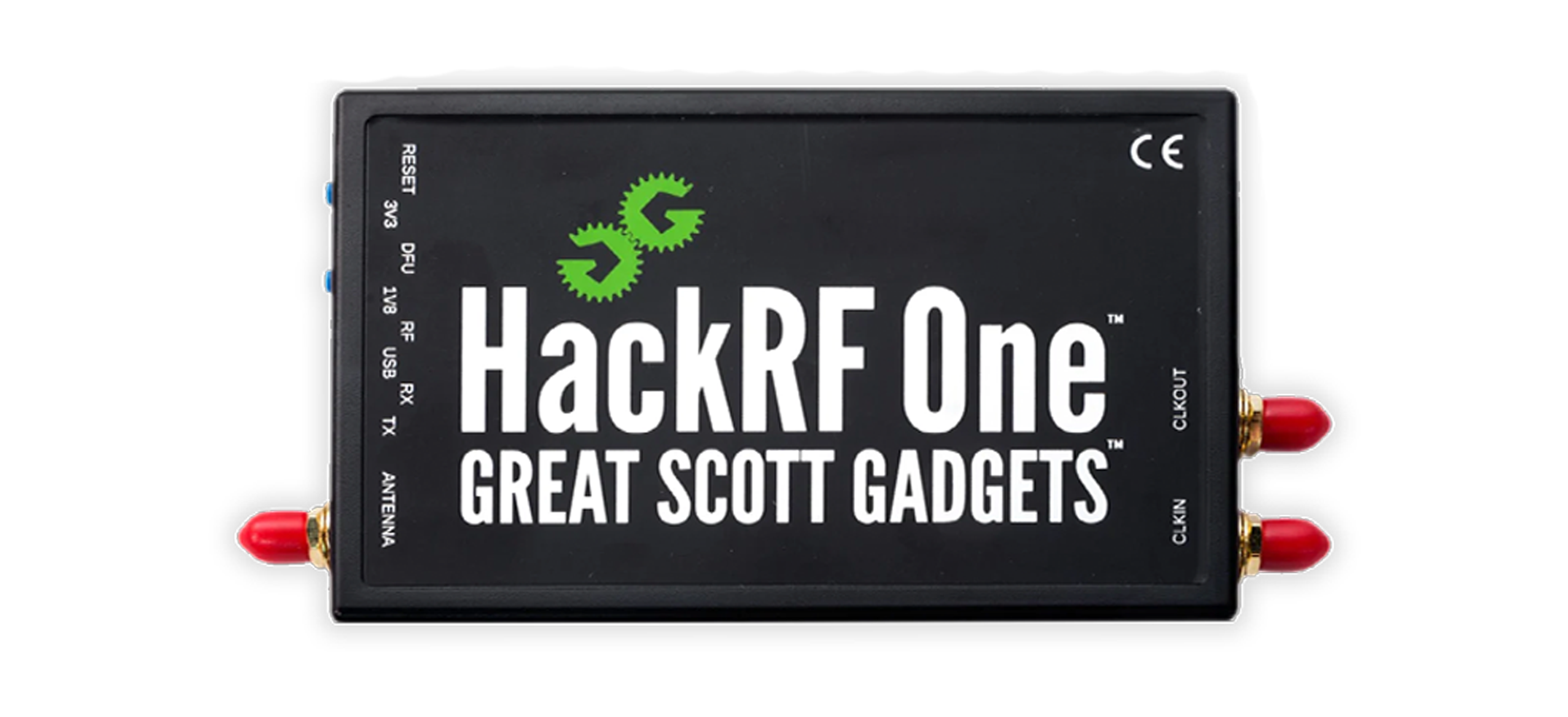
If your main goal is portable wideband SDR today, you do not need to wait for Flipper One. The HackRF PortaPack H4M Mayhem Signature Edition is an available portable SDR option with a built-in screen and Mayhem firmware support.
Buyers who want the newer hardware platform can also consider the HackRF Pro R1.2.1 with PortaPack H4M Pro.
Flipper One vs HackRF PortaPack H4M
Flipper One and HackRF PortaPack H4M are not direct competitors. They overlap in portable RF interest, but they are built for different purposes.
| Feature | Flipper One | HackRF PortaPack H4M |
|---|---|---|
| Main purpose | Linux networking platform with modular expansion | Portable wideband SDR platform |
| SDR radio | Depends on expansion module | Included HackRF-based radio hardware |
| Portable spectrum tools | Expected through compatible SDR modules and software | Available now through PortaPack and Mayhem firmware |
| Linux | Core feature | Not the main design goal |
| Ethernet | Two Gigabit Ethernet ports planned | Not the main focus |
| Availability | Still in development | Available now |
Choose HackRF PortaPack H4M if you need a portable wideband SDR today. Wait for Flipper One if you want a Linux cyberdeck with networking and future SDR expansion.
Does Flipper One Support 5G?
Flipper One is designed to support 4G and 5G connectivity through optional M.2 cellular modem modules. The internal M.2 port includes the interfaces and SIM-related connections needed for supported cellular modules.
A compatible modem could turn Flipper One into a portable mobile-connected device for routing, VPN gateway use, remote access, logging, and other Linux network workflows.
Important 5G limitation
5G is not the same as a built-in cellular radio included in every Flipper One. Cellular connectivity depends on a compatible M.2 modem, software drivers, antennas, SIM or eSIM support, carrier compatibility, and regional network bands.
Final supported modem models and retail bundles will need to be confirmed closer to launch.
What About Satellite Connectivity?
Flipper One documentation also discusses non-terrestrial network modules, often shortened to NTN. These are cellular-style modules designed for connectivity through satellites and high-altitude platforms.
This area is still emerging. Satellite-modem support should be treated as a future expansion possibility rather than a guaranteed launch feature.
Does Flipper One Have AI?
The announced RK3576 processor includes a neural processing unit, also called an NPU. The current specification lists up to 6 TOPS of INT8 AI acceleration.
This could support local AI experiments for vision, audio, classification, signal processing, and offline tools. The M.2 slot may also support separate AI accelerators for more demanding workloads.
Potential AI use cases include:
- Local classification tasks
- Audio processing
- Image and camera workflows with compatible hardware
- Signal-processing experiments
- Offline assistants
- Hardware-development projects
Buyers should keep expectations realistic. The final AI experience will depend on driver support, optimized software, power limits, cooling, and community development.
M.2 Expansion: The Most Important Flipper One Feature
The internal M.2 slot is one of the main reasons Flipper One is interesting. It gives the device a modular upgrade path that is much closer to a laptop or industrial computer than a typical pocket gadget.
Officially discussed M.2 module categories include:
- 4G and 5G cellular modems
- Wi-Fi adapters
- SDR radios
- Satellite NTN modems
- GNSS receivers
- NVMe storage
- AI accelerators
This modular design allows buyers to build different Flipper One configurations for networking, radio, storage, positioning, AI, and portable computing.
Wi-Fi 6E and Ethernet
Networking is one of the biggest Flipper One priorities. The current design includes integrated Wi-Fi 6E for 2.4 GHz, 5 GHz, and 6 GHz networks, plus two Gigabit Ethernet ports.
This gives Flipper One much more network flexibility than Flipper Zero. It could be used as a portable router, VPN gateway, network bridge, diagnostic tool, lab device, or Linux test platform in authorized environments.
Current networking features include:
- Wi-Fi 6E
- 2 × 2 MIMO wireless design
- Two Gigabit Ethernet ports
- USB Ethernet up to 5 Gbps
- Optional M.2 cellular modem support
- Optional additional Wi-Fi adapters
Can Flipper One Replace a Laptop?
Flipper One is not designed to replace every laptop, but it is being developed with portable desktop workflows in mind.
The announced hardware includes a full-size HDMI 2.1 output, USB-C DisplayPort Alt Mode, USB host ports, internal storage, expandable storage, and enough processing power for lightweight Linux desktop use.
This could make it useful as a portable terminal, thin client, network tool, media box, or compact development system when connected to a monitor and peripherals.
Flipper One vs Flipper Zero
Flipper One and Flipper Zero are designed for different buyers. The right choice depends on what you actually need.
| Feature | Flipper Zero | Flipper One |
|---|---|---|
| Main goal | Compact physical-protocol multi-tool | Linux networking and modular hardware platform |
| Availability | Available now | Still in development |
| Linux | No full Linux environment | Core part of the design |
| NFC and low-frequency RFID | Built in | Not positioned as a replacement for Flipper Zero’s built-in badge tools |
| Sub-GHz radio | Built in | Radio features depend on expansion modules |
| Ethernet | No built-in Ethernet | Two Gigabit Ethernet ports planned |
| Wi-Fi | Accessory-based workflows | Wi-Fi 6E planned as a built-in feature |
| M.2 expansion | No | Yes |
| AI acceleration | No dedicated NPU | Integrated NPU planned |
| Best buyer | Users who want a pocket hardware tool today | Users who want a modular Linux cyberdeck in the future |
Read the full comparison: Flipper One vs Flipper Zero: What Changed and Which One Should You Buy?
Should You Wait for Flipper One?
Wait for Flipper One if you want a Linux-based network multi-tool with modular SDR, 5G, storage, and AI expansion. It is especially interesting for Linux users, developers, networking enthusiasts, and authorized security teams.
Wait for Flipper One if:
- You want Linux in a portable cyberdeck format.
- You need Ethernet and Wi-Fi network tools.
- You want to add M.2 modules.
- You are interested in SDR expansion.
- You want optional 4G or 5G connectivity.
- You want local AI experimentation.
- You are comfortable waiting for a confirmed retail launch.
Do not wait for Flipper One if:
- You need a device immediately.
- You mainly want built-in NFC, RFID, Sub-GHz, infrared, or iButton tools.
- You want a portable SDR radio today.
- You need a proven retail product with an established workflow.
- You are only interested in simple beginner experiments.
Best Available Alternatives While You Wait
Flipper One is not available yet, but several specialized tools already cover parts of its planned use cases.
HackRF PortaPack H4M for portable SDR
Choose the HackRF PortaPack H4M Mayhem Signature Edition if your main goal is portable wideband RF spectrum exploration and Mayhem firmware.
HackRF Pro with PortaPack H4M Pro for newer SDR hardware
Consider the HackRF Pro R1.2.1 with PortaPack H4M Pro if you want a newer portable SDR platform.
PLUTO+ SDR for Ethernet and GNU Radio development
Choose the PLUTO+ SDR AD9363 2T2R Transceiver if you want Ethernet, SDRangel, GNU Radio, and AD9363-based transmit-and-receive workflows.
Chameleon Ultra for compact RFID/NFC emulation
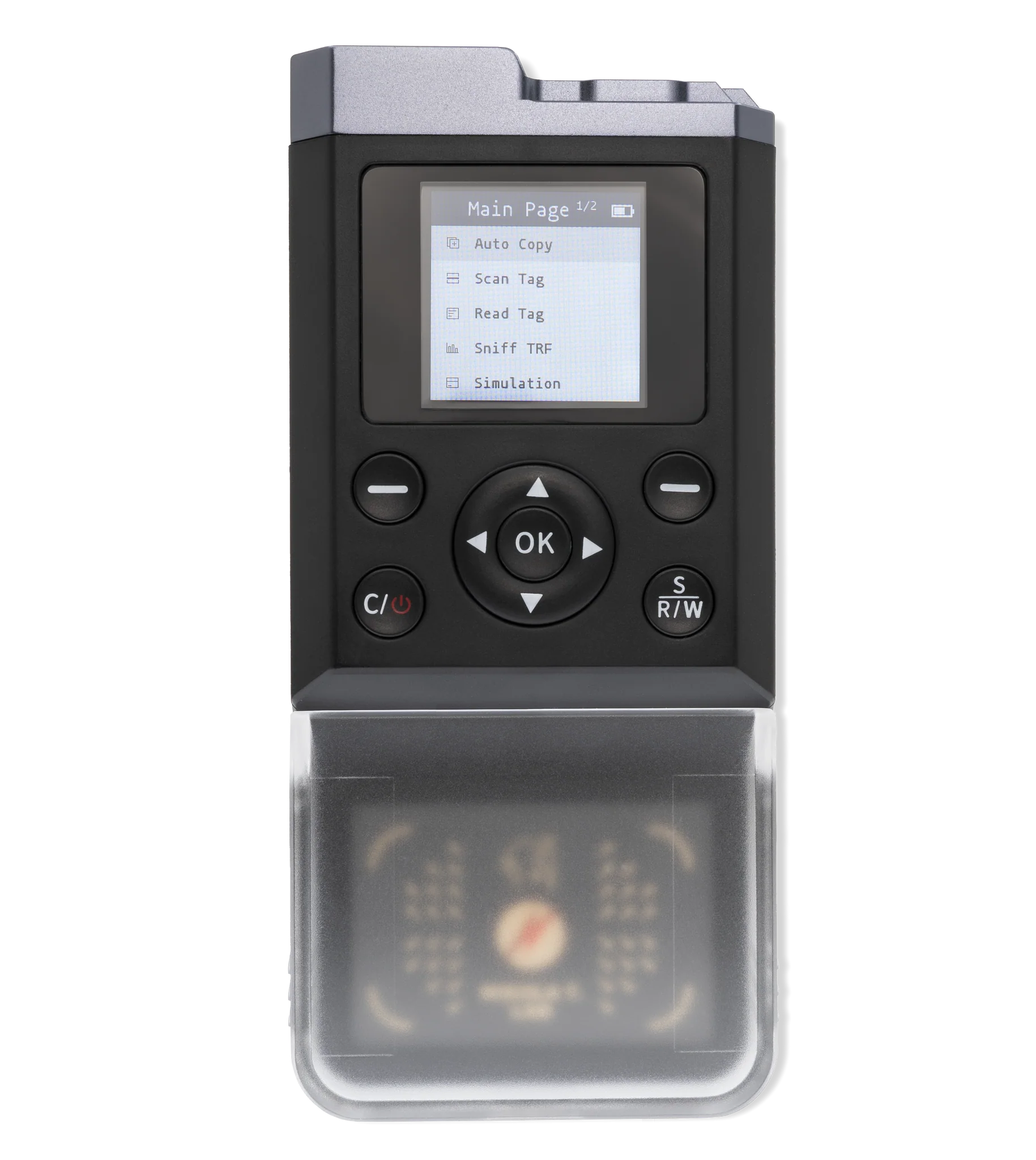
Choose the Chameleon Ultra if your main focus is portable RFID/NFC emulation and authorized lab testing.
iCopy XS for guided badge testing
Choose the iCopy XS if you need a guided handheld RFID/NFC tool for authorized badge identification and access-control audits.
Important Legal and Ethical Note
Flipper One, SDR modules, network tools, HackRF, PlutoSDR, and RFID/NFC equipment should only be used on systems that you own, manage, or have explicit permission to test.
These tools are useful for education, troubleshooting, security audits, research, development, and improving weak systems. They should not be used to access networks, badges, devices, radio systems, or communications without authorization.
Final Verdict: Is Flipper One Worth Waiting For?
Flipper One is one of the most interesting open-hardware projects announced in 2026. It is not a simple Flipper Zero replacement. It is a modular Linux cyberdeck designed for Wi-Fi, Ethernet, M.2 expansion, optional 5G connectivity, SDR modules, storage, AI acceleration, GPIO hardware, and portable computing.
The project has major potential, but buyers need to remain realistic. The product is still in active development. The final price, retail release date, preorder date, module lineup, and some technical details have not yet been announced.
Wait for Flipper One if you specifically want Linux networking and modular expansion. Buy a specialized available tool now if your main need is already clear: HackRF PortaPack H4M for portable SDR, PLUTO+ for Ethernet SDR development, Chameleon Ultra for compact RFID/NFC emulation, or iCopy XS for guided authorized badge testing.
FAQ
What is Flipper One?
Flipper One is an open Linux-based portable multi-tool currently under development by Flipper Devices. It is designed for networking, modular expansion, SDR modules, optional cellular connectivity, AI acceleration, and portable computing.
What is the Flipper One release date?
Flipper Devices has not announced a confirmed retail release date for Flipper One. The project was publicly revealed in May 2026 and remains in active development.
How much will Flipper One cost?
A final official Flipper One retail price has not been announced. Buyers should avoid treating unofficial prices as confirmed.
Can I preorder Flipper One?
Flipper Devices has not announced an official retail preorder date. Follow official Flipper One updates before relying on any preorder listing.
Does Flipper One run Linux?
Yes. Flipper One is being developed as a Linux-based platform using a Rockchip RK3576 processor and a separate RP2350 low-power microcontroller.
Does Flipper One have SDR?
Flipper One is designed to support SDR modules through its internal M.2 expansion slot. Its exact SDR capabilities will depend on the compatible radio module installed.
Does Flipper One support 5G?
Flipper One is designed to support optional 4G and 5G M.2 cellular modems. Cellular support depends on the compatible module, drivers, antennas, SIM or eSIM, carrier, and regional bands.
Does Flipper One have AI?
Yes. The announced RK3576 processor includes an NPU for local AI acceleration, and the M.2 expansion slot may also support additional AI accelerators.
Is Flipper One a replacement for Flipper Zero?
No. Flipper One is a Linux networking and modular-hardware platform. Flipper Zero remains the compact pocket tool for supported NFC, RFID, Sub-GHz, infrared, iButton, and GPIO workflows.
What should I buy while waiting for Flipper One?
Choose HackRF PortaPack H4M for portable wideband SDR, PLUTO+ SDR for Ethernet and GNU Radio development, Chameleon Ultra for compact RFID/NFC emulation, or iCopy XS for guided authorized badge testing.
No posts found
Write a review





We support all major card and digital payment options. More local methods are available and shown during checkout.
You enter into a binding sales contract once you have received an 'order confirmation and sales receipt' email from us, in line with our Sales & Delivery conditions. Therefore, sdrstore.eu has the right to cancel your order in the event of technical problems, delivery failure, Fair use policy and other similar situations.






Your payments are protected by advanced encryption and 3-D Secure authentication for safe online shopping.