





SDR for Cybersecurity Research: Hardware for Authorized Wireless Security Testing
Software-defined radio has become an important part of modern cybersecurity research because many security assessments now extend beyond traditional Ethernet and Wi-Fi networks. Organizations increasingly depend on wireless sensors, access-control systems, remote controls, industrial devices, IoT products, telemetry links, private cellular networks, and embedded radio systems.
An SDR allows an authorized security team to observe radio activity, characterize signals, build controlled test environments, validate wireless products, investigate interference, and reproduce approved laboratory scenarios. However, the best SDR for cybersecurity research depends heavily on the task. A low-cost receive-only dongle can be ideal for spectrum monitoring, while a professional laboratory may need a full-duplex 2×2 MIMO platform with stable timing, USB 3.0 connectivity, and a mature development ecosystem.
This guide compares SDR hardware for authorized wireless security testing, university cybersecurity labs, enterprise RF teams, product-security departments, and defensive research projects. It focuses on legitimate purchasing decisions and safe laboratory use.
Browse current equipment in the software-defined radio category, the SDR instruments and RF tools category, and the RFID and NFC tools category.
Quick Answer: Which SDR Is Best for Cybersecurity Research?
There is no single best SDR for every wireless-security project. The right choice depends on whether the team needs passive reception, portable wideband analysis, full-duplex testing, MIMO development, coherent direction finding, or a dedicated RFID/NFC platform.
| Hardware | Best cybersecurity use | Transmit capability | Main strength | Important limitation |
|---|---|---|---|---|
| RTL-SDR Blog V4 USB-C | Affordable passive spectrum monitoring and RF asset discovery | No | Low-cost receive-only starting point | Not suitable for transmit testing or wide instantaneous bandwidth |
| HackRF Pro | Portable wideband research, field surveys, and controlled half-duplex experiments | Yes, half-duplex | Broad official 100 kHz–6 GHz operating range | Cannot transmit and receive simultaneously |
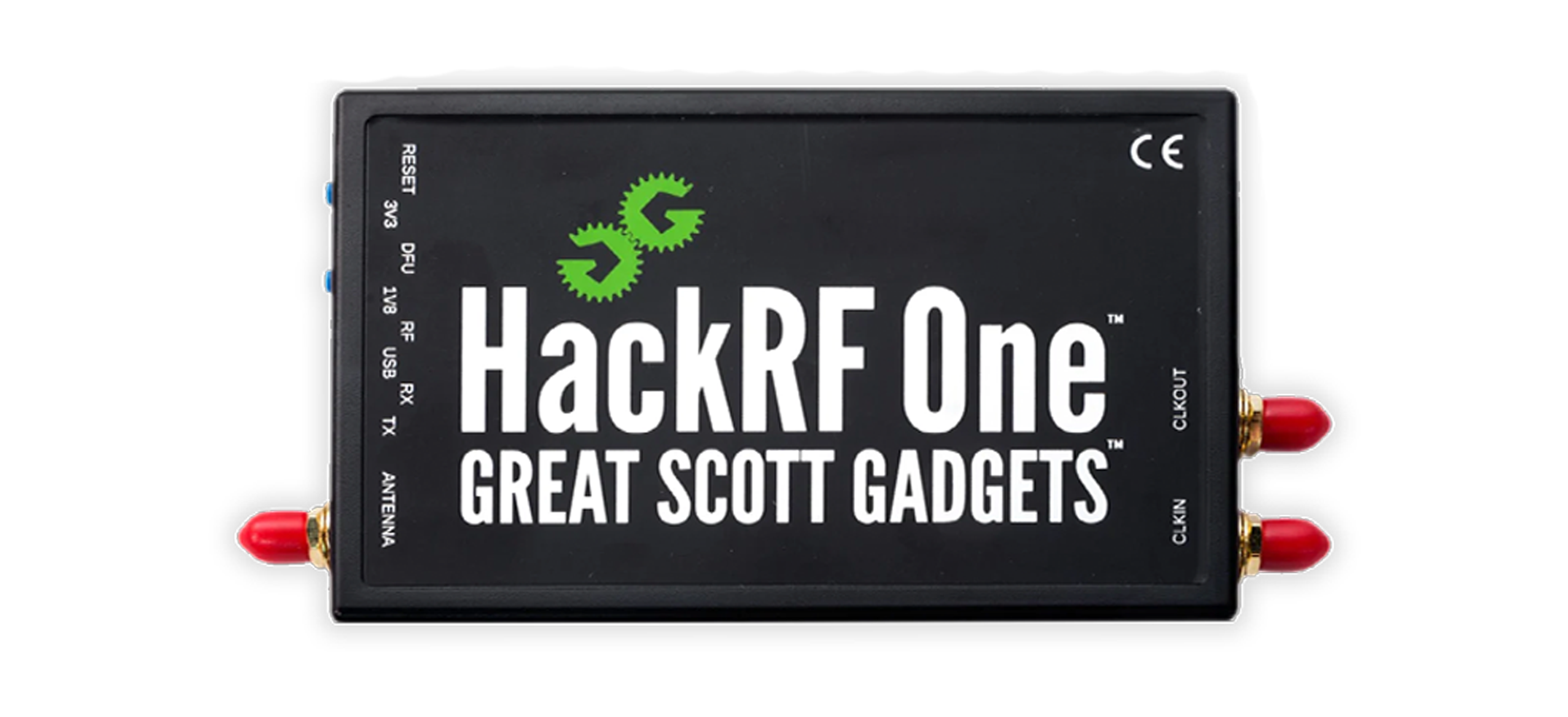
| HackRF One | Accessible wideband SDR education and authorized RF experimentation | Yes, half-duplex | Established ecosystem and broad 1 MHz–6 GHz range | Half-duplex architecture and 8-bit sampling |
| PLUTO+ SDR | Affordable network-connected transceiver lab | Yes | Board-listed 2TX, 2RX, Gigabit Ethernet, and MicroSD support | Expanded capabilities are board-specific and should not be confused with standard ADALM-PLUTO specifications |
| bladeRF 2.0 micro xA4 | Protocol research, waveform development, FPGA experimentation, and 2×2 MIMO testing | Yes | USB 3.0, 2×2 MIMO, and a strong development ecosystem | Uses the Nuand ecosystem rather than standard UHD workflows |
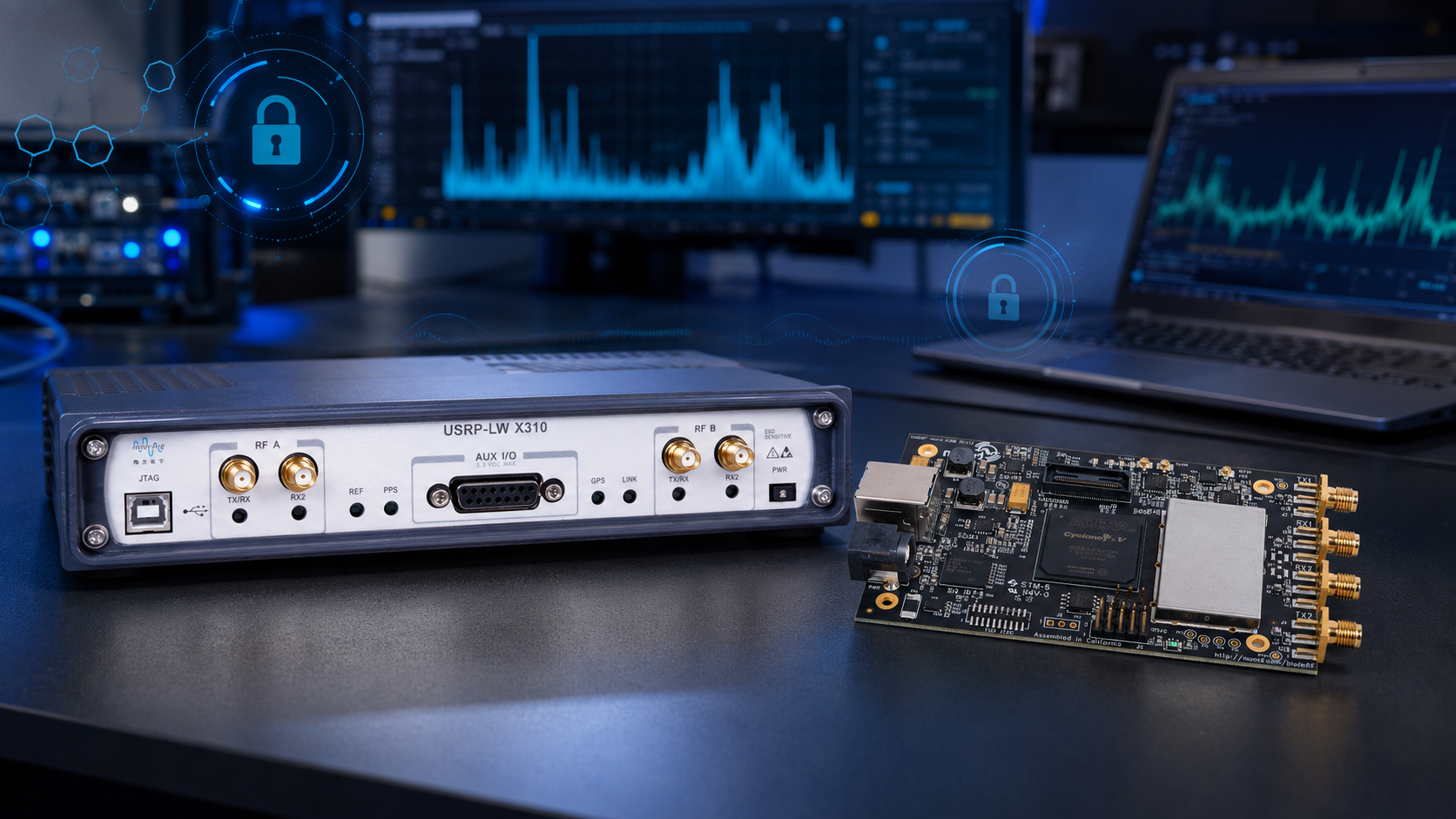
| USRP B210 | Repeatable enterprise, university, and advanced wireless-security labs | Yes | Official 2×2 MIMO USRP platform with UHD support | Higher cost than entry-level boards |
| KrakenSDR | Passive direction finding and locating unauthorized or interfering transmitters | No | Five coherent receive channels | Specialized receive-only platform |
| Dedicated RFID/NFC tools | Authorized access-control, badge, tag, and reader assessments | Tool-dependent | Designed for RFID and NFC workflows | Not a replacement for a general-purpose wideband SDR |
What Can SDR Hardware Be Used for in Cybersecurity Research?
Software-defined radio is most useful when a security team needs visibility below the normal application layer. It can help researchers understand what is happening over the air instead of relying only on device logs, packet captures, or vendor software.
Common authorized and defensive use cases include:
- Mapping wireless activity in a controlled site or laboratory
- Identifying unexpected transmissions from owned equipment
- Comparing normal and abnormal RF behavior
- Investigating interference affecting business systems
- Characterizing the spectrum used by IoT devices
- Validating a company’s own wireless products
- Building repeatable regression tests for firmware changes
- Teaching modulation, filtering, timing, and protocol fundamentals
- Testing private cellular systems in authorized environments
- Researching RFID and NFC systems owned by the organization
- Locating rogue, misconfigured, or interfering transmitters
SDR is not automatically the correct tool for every wireless assessment. Conventional Wi-Fi adapters, managed access points, protocol analyzers, RF test instruments, and dedicated RFID/NFC tools may be better for specific tasks. SDR becomes especially valuable when the team needs spectrum-level visibility, custom signal processing, unusual frequency coverage, or a reproducible research platform.
Start with the Assessment Scope, Not the Most Expensive SDR
A cybersecurity laboratory should define the intended workflow before purchasing hardware. A team that only needs passive monitoring should not begin with a complex 2×2 MIMO platform. A product-security team developing custom wireless protocols should not rely only on a narrow-band receive-only dongle.
| Requirement | What to check |
|---|---|
| Frequency range | Identify the actual bands used by the devices under test. Avoid buying only for the widest advertised range. |
| Receive-only or transceiver | Passive monitoring is safer and cheaper. Controlled transmit testing requires additional legal, RF-safety, and laboratory controls. |
| Half-duplex or full-duplex | Half-duplex is sufficient for many surveys and controlled experiments. Full-duplex is useful for interactive protocol research and repeatable test benches. |
| Channel count | Single-channel hardware is suitable for many projects. 2×2 MIMO or coherent multi-channel reception is required only for specific research goals. |
| Instantaneous bandwidth | Confirm how much spectrum must be observed or processed at once. |
| Software ecosystem | Check whether the team needs GNU Radio, UHD, libbladeRF, libiio, SDR++, SDR#, Python integration, FPGA access, or board-specific tools. |
| Timing and synchronization | External clocking, PPS input, GPS synchronization, and coherent channels matter for selected research projects. |
| Deployment style | Choose between USB-connected bench hardware, portable field tools, Ethernet-connected boards, and embedded platforms. |
Best Budget Option for Passive Monitoring: RTL-SDR Blog V4 USB-C
For many cybersecurity teams, the first useful SDR is a receive-only RTL-SDR device. It is affordable, simple to deploy, and suitable for spectrum monitoring, RF asset discovery, signal identification, training, and basic interference investigation.
The RTL-SDR Blog V4 USB-C receiver uses an RTL2832U ADC, an R828D tuner, a 1PPM TCXO, an SMA connector, and an aluminum enclosure with passive cooling. The SDRstore.eu listing states a tuning range from 500 kHz to 1.7 GHz with up to 3.2 MHz bandwidth and approximately 2.4 MHz stable bandwidth.
Where RTL-SDR fits well
- Passive spectrum surveys
- RF inventory projects
- Monitoring owned devices for unexpected emissions
- Training students and junior analysts
- Building low-cost monitoring stations
- Learning GNU Radio and waterfall interpretation
Where RTL-SDR is not enough
RTL-SDR is receive-only. It cannot validate transmit behavior, perform bidirectional protocol experiments, or replace a full-duplex transceiver. Its relatively narrow instantaneous bandwidth also limits wideband analysis.
Browse RTL-SDR receivers, antennas, and filters.
Best Portable Wideband SDR: HackRF Pro
HackRF Pro is a strong choice for cybersecurity firms that need a flexible portable SDR for wideband RF surveys, authorized wireless research, product testing, and field investigation.
Great Scott Gadgets officially lists:
- 100 kHz–6 GHz operating frequency
- Tuning from 0 Hz to 7.1 GHz
- Half-duplex transceiver operation
- Up to 20 million samples per second
- 8-bit quadrature samples
- GNU Radio, SDR#, and related software compatibility
- Software-configurable RX and TX gain
- Clock input and output for synchronization and triggering
- USB-C connectivity
View the HackRF Pro Development Board.
Why HackRF Pro is useful for security teams
Its frequency coverage makes HackRF Pro suitable for teams that investigate a variety of wireless technologies rather than a single fixed band. It can be used for controlled laboratory experiments, spectrum surveys, training, signal characterization, and product-security testing.
Important limitation: HackRF Pro is half-duplex
HackRF Pro can transmit or receive, but not at the same time. That is acceptable for many research tasks, but it is not the correct choice when simultaneous transmit-and-receive operation or coherent 2×2 MIMO is required.
Best Established Lower-Cost Portable Platform: HackRF One
HackRF One remains relevant because it has a large ecosystem, extensive community documentation, and broad software support. Great Scott Gadgets officially lists a 1 MHz–6 GHz operating range, half-duplex operation, up to 20 million samples per second, and 8-bit quadrature samples.
HackRF One is a practical choice for:
- Wireless-security education
- Portable RF experimentation
- Controlled laboratory research
- Signal discovery and characterization
- GNU Radio training
- Testing a company’s own wireless devices
Browse HackRF One, HackRF Pro, PortaPack, and accessory options.
HackRF One, PortaPack, and firmware claims
HackRF One specifications should be separated from PortaPack hardware and firmware behavior. A PortaPack can make a HackRF-based setup more portable and convenient for field work, but supported functions vary by hardware bundle and installed firmware. Confirm the exact board revision and firmware before standardizing devices for a professional workflow.
Best Affordable Network-Connected Lab Board: PLUTO+ SDR
PLUTO+ SDR is a useful option for security teams that want an affordable transceiver board with Ethernet connectivity and Pluto-style development workflows.
The PLUTO+ SDR product page lists:
- Two transmit channels and two receive channels
- Gigabit Ethernet
- MicroSD card support
- AD9363 RF transceiver
- PlutoSDR-style development direction
- A board-advertised expanded tuning profile
PLUTO+ is not the same as standard ADALM-PLUTO
Analog Devices officially specifies standard ADALM-PLUTO with one transmitter, one receiver, 325 MHz–3.8 GHz RF coverage, and up to 20 MHz instantaneous bandwidth. PLUTO+ is an expanded third-party Pluto-style design. Its 2TX, 2RX, Gigabit Ethernet, MicroSD, and expanded tuning claims should be treated as board-specific features.
Best PLUTO+ use cases
- Network-connected wireless-security benches
- Controlled digital-communications experiments
- IoT product-security research
- Remote SDR access inside a laboratory network
- GNU Radio and libiio development
- Affordable shared student stations
Browse PlutoSDR, PLUTO+, and compatible SDR boards.
Best Compact 2×2 MIMO Development Platform: bladeRF 2.0 micro xA4
bladeRF 2.0 micro xA4 is a strong choice for cybersecurity teams that need more bandwidth, full-duplex development, FPGA access, and 2×2 MIMO capability in a compact USB-connected platform.
Nuand officially describes bladeRF 2.0 micro as a USB 3.0 software-defined radio with:
- 2×2 MIMO capability
- 47 MHz–6 GHz frequency range
- 61.44 MSPS sampling rate direction
- 56 MHz filtered bandwidth direction
- USB 3.0 connectivity
- GNU Radio and SoapySDR integration direction
- libbladeRF software ecosystem
- FPGA development potential
View the bladeRF 2.0 micro xA4 or browse bladeRF SDR devices and accessories.
Where bladeRF is especially valuable
- Custom waveform development
- Wireless-protocol implementation research
- 2×2 MIMO testing
- FPGA and HDL education
- Automated regression test benches
- Controlled private-network research
- Advanced GNU Radio projects
bladeRF is not a drop-in USRP replacement
bladeRF uses its own libbladeRF ecosystem. It is a capable research platform, but a laboratory should select it because its architecture matches the project, not because it is expected to run every UHD-based workflow without adaptation.
Best Official Reference Platform for Advanced Labs: USRP B210
USRP B210 remains one of the strongest reference platforms for universities, cybersecurity firms, telecom laboratories, and product-security teams that need repeatable results and a mature UHD workflow.
Ettus Research officially specifies:
- Single-board 2×2 MIMO architecture
- Continuous 70 MHz–6 GHz coverage
- Analog Devices AD9361 RFIC
- Up to 56 MHz real-time bandwidth
- USB 3.0 SuperSpeed connectivity
- USB bus power
- External timing-reference options
- UHD driver ecosystem
View the USRP B210 USB SDR with 2×2 MIMO, AD9361, UHD, and GNU Radio support.
Choose USRP B210 when
- The laboratory needs a documented reference platform.
- UHD support is important.
- Repeatability matters more than the lowest purchase price.
- The project requires coherent 2×2 MIMO.
- The team is building long-term university course material.
- The hardware will support formal product-security or telecom research.
Read our 2×2 MIMO SDR guide and AD9361 vs AD9363 comparison for more detail.
Best Defensive Direction-Finding Platform: KrakenSDR
Not every cybersecurity project requires transmission. Some teams need to locate the physical source of an unexpected or interfering signal.
KrakenRF officially describes KrakenSDR as a coherent five-receive-channel SDR for applications such as radio direction finding and passive radar. Its channels are clocked from a shared source, which makes it suitable for coherent-reception workflows that a normal single-channel receiver cannot perform.
View the KrakenSDR five-channel coherent receiver.
Cybersecurity and defensive uses for KrakenSDR
- Locating an interfering transmitter
- Investigating unauthorized emissions on a controlled site
- RF mapping for facility-security projects
- Training teams in direction-finding concepts
- Building defensive monitoring workflows
KrakenSDR is specialized hardware
KrakenSDR is receive-only. It should be selected for coherent reception and direction finding, not as a replacement for HackRF, PLUTO+, bladeRF, or USRP transceiver platforms.
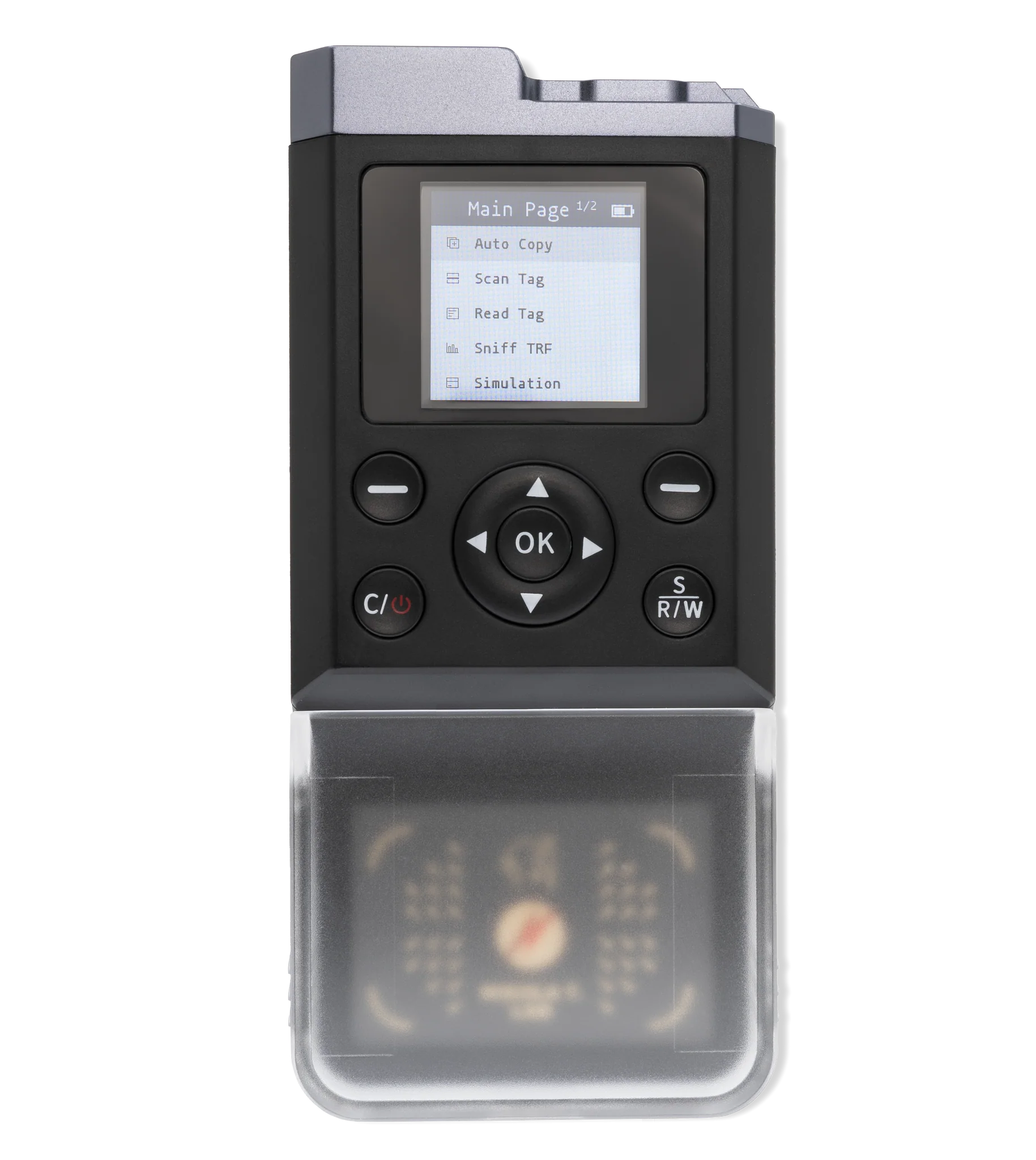
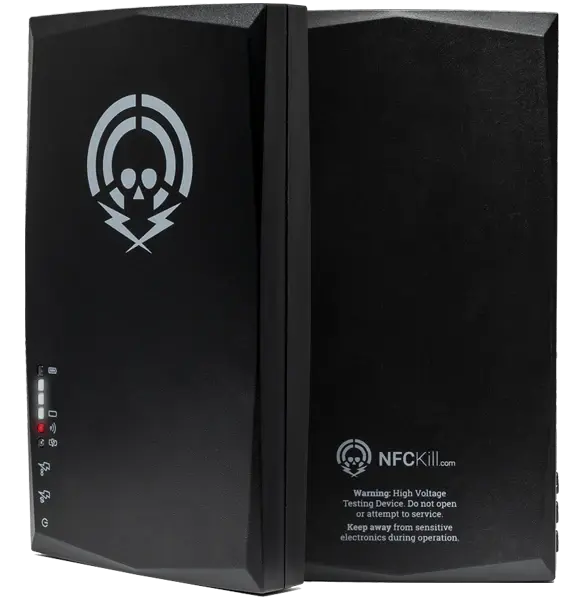
RFID and NFC Security Testing Needs Dedicated Tools
General-purpose SDR platforms are valuable for spectrum-level visibility, but RFID and NFC assessments often benefit from dedicated instruments. These tools are designed for tag, reader, credential, and access-control testing in approved environments.
Browse RFID instruments and NFC tools.
When dedicated RFID and NFC tools make sense
- Assessing access-control systems owned by your organization
- Testing badge enrollment and lifecycle procedures
- Evaluating reader configuration
- Training authorized physical-security teams
- Validating migration from legacy credentials
- Documenting the RF technologies used across a facility
Only test credentials, tags, readers, and access-control systems that your organization owns or that are explicitly included in a written assessment scope.
Which SDR Should a Cybersecurity Firm Buy?
| Team profile | Recommended starting hardware | Reason |
|---|---|---|
| Small security consultancy | RTL-SDR Blog V4 USB-C and HackRF Pro | Covers passive surveys and flexible portable wideband research without overbuilding the lab |
| Enterprise security operations team | RTL-SDR monitoring stations, HackRF Pro, and KrakenSDR where direction finding is required | Supports passive monitoring, field investigation, and rogue-transmitter location |
| IoT product-security team | HackRF Pro, PLUTO+ SDR, and bladeRF 2.0 micro xA4 | Combines portable analysis, Ethernet-connected test benches, and full-duplex development |
| University cybersecurity lab | RTL-SDR receivers for students, HackRF-based portable tools, PLUTO+ shared benches, and one or more USRP B210 or bladeRF units | Balances affordability, teaching value, and advanced research capability |
| Telecom or private-network research team | USRP B210, bladeRF 2.0 micro, and higher-end USRP platforms where required | Supports documented workflows, MIMO research, and repeatable experiments |
| Physical-security assessment team | Dedicated RFID/NFC tools plus a general-purpose SDR | Combines credential-system testing with broader RF visibility |
Recommended Cybersecurity Lab Hardware Tiers
A balanced wireless-security lab should mix affordable receivers with a smaller number of advanced transceivers.
| Lab tier | Suggested hardware | Main purpose |
|---|---|---|
| Entry-level monitoring stations | RTL-SDR receivers, suitable antennas, and receive-side filters | Passive discovery, training, and RF inventory |
| Portable investigation kit | HackRF Pro or HackRF One, antennas, attenuators, cables, and protected accessories | Field surveys and controlled portable experiments |
| Controlled transceiver benches | PLUTO+ SDR and shielded or cabled test setups | Affordable repeatable transmit-and-receive exercises |
| Advanced research benches | bladeRF 2.0 micro xA4 and USRP B210 | Full-duplex development, MIMO, protocol research, and automated testing |
| Direction-finding bench | KrakenSDR with the appropriate antenna setup | Defensive investigation of unexpected or interfering transmitters |
| RFID and NFC assessment kit | Dedicated authorized-testing instruments | Badge, tag, reader, and access-control evaluation |
Accessories Matter as Much as the SDR Board
A reliable cybersecurity lab needs more than SDR hardware. Plan the complete RF path before beginning active tests.
- 50-ohm dummy loads
- Fixed attenuators
- Variable attenuators where appropriate
- RF cables with known characteristics
- SMA adapters
- DC blocks
- Receive-side filters
- Shielded enclosures or suitable RF test boxes
- USB 3.0 cables
- Ethernet cables for network-connected SDRs
- External clocking accessories where required
- Documented antenna sets for passive surveys
Do not add an LNA automatically. An amplifier can improve reception in some cases, but it can also overload the receiver and make signal quality worse. Read our guide: Do You Need an LNA for SDR?
Legal, Privacy, and RF-Safety Checklist
Transmit-capable SDR hardware must be used responsibly. Cybersecurity research should be performed only with written authorization, a clearly defined scope, and suitable RF controls.
NIST SP 800-115 provides guidance for planning and conducting technical information-security assessments and includes a Rules of Engagement template. For wireless testing, define the systems, locations, frequencies, time windows, test personnel, data-handling rules, permitted actions, and emergency stop procedure before active work begins.
- Test only systems your organization owns or is explicitly authorized to assess.
- Start with passive monitoring whenever possible.
- Use cabled connections, attenuators, dummy loads, and shielding for active laboratory tests.
- Do not radiate signals into regulated spectrum without the required authorization.
- Avoid collecting unrelated third-party communications or personal data.
- Define retention rules for RF recordings and test artifacts.
- Protect sensitive captures as security-assessment data.
- Stop testing immediately if unexpected interference is detected.
- Verify RF power levels before connecting sensitive receivers or test instruments.
- Follow the applicable national spectrum regulations and internal security policies.
Request a Formal Quote for a Cybersecurity or Wireless-Security Lab
Cybersecurity firms, universities, telecom companies, engineering departments, laboratories, integrators, and enterprise security teams can request a formal quotation directly from SDRstore.eu.
Use the Add to Quote button on product pages or the document icon on product cards. This makes it easier to request a complete setup containing SDR receivers, transceivers, antennas, filters, attenuators, RF cables, adapters, timing accessories, and test tools.
A quote request is useful when you need:
- Custom pricing for multiple SDR devices
- A formal offer for purchasing approval
- A mixed cybersecurity-lab equipment package
- Bulk quantities for university stations
- Advice on balancing low-cost receivers with advanced transceivers
- Accessories included in the same quotation
- Equipment for a phased laboratory rollout
Read the SDRstore.eu online quote-request guide.
Related SDRstore.eu Guides
- Best SDR Receivers in 2026: RTL-SDR, SDRplay, Airspy, HackRF, PlutoSDR, and More
- How to Build a University SDR Lab: Hardware Checklist for Teaching and Research
- 2×2 MIMO SDR Explained: USRP B210, PLUTO+, bladeRF, LimeSDR, and Research Use Cases
- AD9361 vs AD9363 SDR Boards: Bandwidth, MIMO, Use Cases, and Buyer Advice
Official Resources
- Great Scott Gadgets HackRF Pro official product page
- Great Scott Gadgets HackRF One official product page
- Nuand bladeRF 2.0 micro official product page
- Ettus Research USRP B210 official product page
- Analog Devices ADALM-PLUTO official product page
- KrakenRF KrakenSDR official product page
- NIST SP 800-115: Technical Guide to Information Security Testing and Assessment
- GNU Radio official website
Final Recommendation
For passive monitoring and training, start with RTL-SDR Blog V4 USB-C receivers. For portable wideband investigation and controlled half-duplex research, choose HackRF Pro or HackRF One. For an affordable network-connected transceiver bench, consider PLUTO+ SDR while treating its expanded capabilities as board-specific. For full-duplex 2×2 MIMO, protocol development, and FPGA-oriented research, choose bladeRF 2.0 micro xA4. For a mature official UHD reference platform, choose USRP B210. For defensive direction finding, use KrakenSDR. For RFID and NFC assessments, add dedicated tools designed for those technologies.
The strongest wireless-security laboratory is not built around one device. It combines passive receivers, carefully controlled transceivers, suitable RF accessories, documented software environments, written authorization, and clear operational procedures.
FAQ
What is the best SDR for cybersecurity research?
The best SDR depends on the project. RTL-SDR Blog V4 USB-C is a strong low-cost receive-only option for monitoring. HackRF Pro is useful for portable wideband research. bladeRF 2.0 micro xA4 and USRP B210 are better for advanced full-duplex and 2×2 MIMO laboratory work. KrakenSDR is designed for coherent receive-only direction finding.
Can HackRF Pro be used for authorized wireless security testing?
Yes. HackRF Pro is a flexible half-duplex SDR for authorized laboratory research, RF surveys, product-security testing, and controlled wireless experiments. Great Scott Gadgets officially lists a 100 kHz–6 GHz operating range and up to 20 million samples per second.
Is HackRF One still useful for cybersecurity research?
Yes. HackRF One remains useful for education, spectrum exploration, controlled testing, GNU Radio projects, and portable RF research. It is a half-duplex platform, so it is not suitable when simultaneous transmit-and-receive operation is required.
Is USRP B210 better than bladeRF 2.0 micro for security research?
Neither platform is universally better. USRP B210 is a strong official reference platform for UHD-based laboratories and repeatable research. bladeRF 2.0 micro is a strong compact option for libbladeRF development, FPGA experimentation, GNU Radio, waveform research, and 2×2 MIMO projects.
Is PLUTO+ SDR the same as standard ADALM-PLUTO?
No. Standard ADALM-PLUTO is officially specified by Analog Devices with one transmitter, one receiver, 325 MHz–3.8 GHz coverage, and up to 20 MHz instantaneous bandwidth. PLUTO+ is an expanded third-party Pluto-style board with board-listed 2TX, 2RX, Gigabit Ethernet, MicroSD support, and an expanded tuning profile.
Can RTL-SDR transmit signals?
No. RTL-SDR receivers are receive-only. This makes them affordable and useful for passive spectrum monitoring, training, RF inventory, and signal discovery, but they cannot be used for transmit testing.
What is KrakenSDR used for in cybersecurity?
KrakenSDR is a coherent five-channel receive-only SDR that can support defensive radio direction finding. It is useful when a security team needs to locate an interfering, unexpected, or unauthorized transmitter on a controlled site.
Do RFID and NFC security assessments require a general-purpose SDR?
Not always. General-purpose SDR hardware can provide spectrum-level visibility, but dedicated RFID and NFC instruments are often more practical for authorized testing of badges, tags, readers, and access-control systems.
What accessories are required for an SDR cybersecurity lab?
Plan for antennas, RF cables, SMA adapters, dummy loads, fixed attenuators, variable attenuators where useful, DC blocks, filters, shielded test enclosures, USB or Ethernet cables, and timing accessories where required.
How can a cybersecurity firm request a formal SDR equipment quote?
Use the Add to Quote button on SDRstore.eu product pages or the document icon on product cards. Add the required SDR devices, accessories, quantities, and project notes so the complete setup can be reviewed as one quote request.
No posts found
Write a review






We support all major card and digital payment options. More local methods are available and shown during checkout.
You enter into a binding sales contract once you have received an 'order confirmation and sales receipt' email from us, in line with our Sales & Delivery conditions. Therefore, sdrstore.eu has the right to cancel your order in the event of technical problems, delivery failure, Fair use policy and other similar situations.






Your payments are protected by advanced encryption and 3-D Secure authentication for safe online shopping.