





Best SDR for ADS-B: RTL-SDR Kits, Antennas, Filters, and LNAs Compared
Updated: June 2026. This guide compares the best SDR receivers, RTL-SDR kits, 1090 MHz antennas, filters, low-noise amplifiers, cables, Raspberry Pi setups, and software for ADS-B aircraft tracking.
Building an ADS-B aircraft-tracking station is one of the most rewarding software-defined radio projects for beginners. Connect an SDR receiver to a suitable antenna, install decoding software, and you can display aircraft positions on a live local map using radio messages received directly from airplanes.
The receiver matters, but it is only one part of the system.
An inexpensive RTL-SDR dongle with a well-positioned 1090 MHz antenna can outperform a more expensive receiver connected to a poor indoor antenna. A carefully placed low-noise amplifier can reduce cable-loss problems. A suitable filter can help in a noisy city but may reduce performance unnecessarily in a quiet rural location.
This guide explains which ADS-B SDR receiver to buy, whether you need a kit or a dongle only, when to upgrade the antenna, how filters and LNAs differ, where to install an LNA, which cable to use, how far reception can reach, and how to build a Raspberry Pi PiAware station.
To browse compatible equipment directly, visit the RTL-SDR receivers, antennas, filters, LNAs, and accessories category at SDRstore.eu.
Quick Answer: What Is the Best SDR for ADS-B?
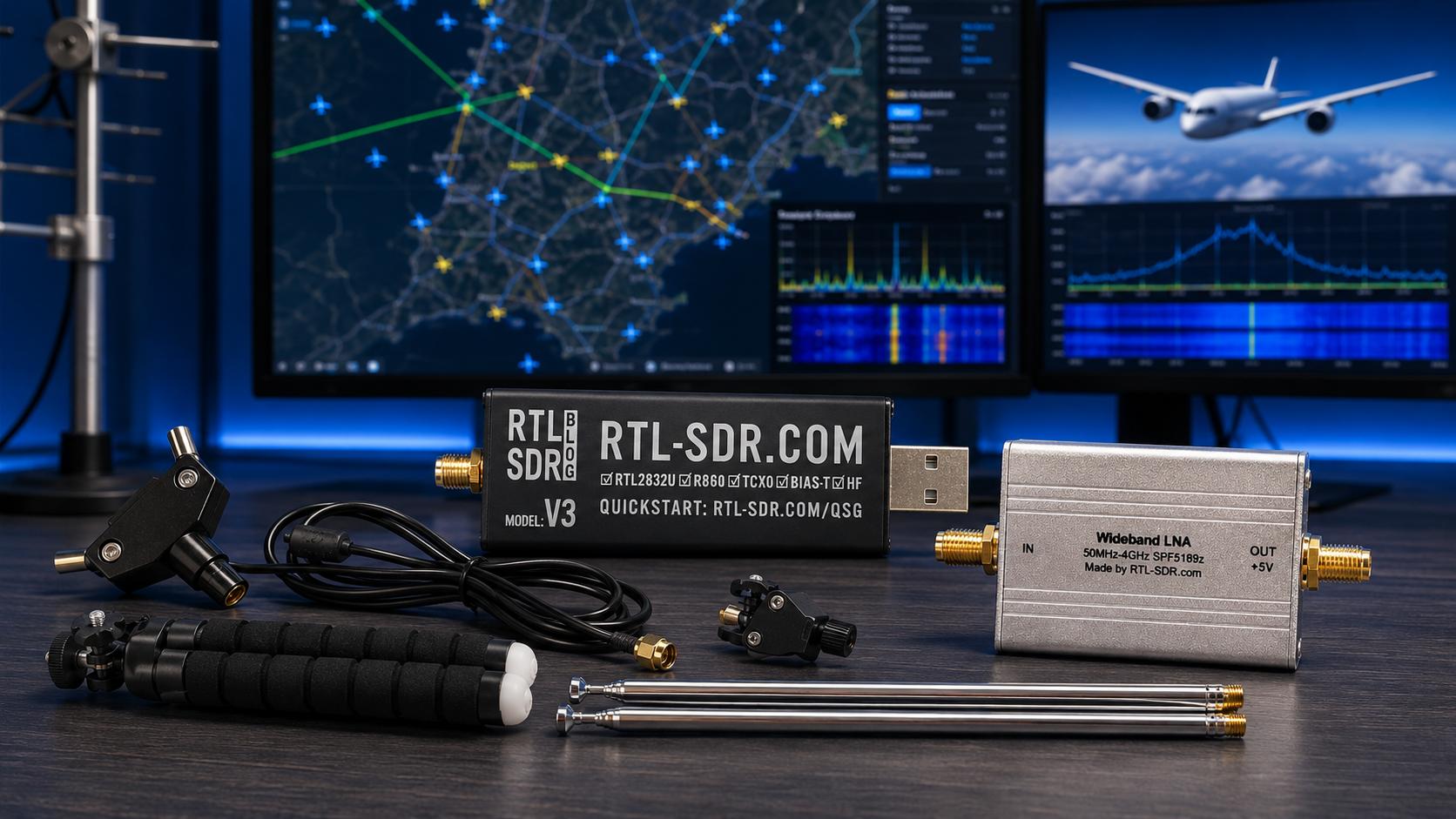
For most beginners, the RTL-SDR Blog V3 Kit is the best SDR for ADS-B aircraft tracking.
It is affordable, mature, compatible with Raspberry Pi and popular ADS-B software, and bundled with a multipurpose dipole antenna set that can be used for initial 1090 MHz testing.
For a permanent station, upgrade the antenna before replacing the receiver. Use an outdoor omnidirectional 1090 MHz antenna with a clear view of the sky, a short low-loss 50-ohm coaxial cable, and a filtered ADS-B LNA close to the antenna when the installation requires it.
| Your Goal | Best Starting Setup | Why |
|---|---|---|
| Try ADS-B for the first time | RTL-SDR Blog V3 Kit with the included short dipole elements | Affordable and ready for basic experiments |
| Build a permanent home aircraft tracker | RTL-SDR Blog V3 dongle, dedicated outdoor 1090 MHz antenna, short low-loss cable, and Raspberry Pi | Better range and reliable 24/7 operation |
| Improve a long-coax installation | Dedicated filtered ADS-B LNA mounted close to the antenna | Helps overcome cable losses while reducing out-of-band overload |
| Improve reception in a noisy urban location | 1090 MHz band-pass filter or filtered ADS-B LNA | Reduces unwanted signals from nearby transmitters |
| Track both 1090ES and UAT 978 in the United States | Two SDR dongles and two band-appropriate antennas | The frequencies are too far apart for one RTL-SDR dongle to receive simultaneously |
What Is ADS-B?
ADS-B means Automatic Dependent Surveillance-Broadcast. Aircraft broadcast digital information that can include their position, altitude, speed, heading, identification, and other flight-related data.
A ground-based SDR station can receive these broadcasts and display nearby aircraft on a map without relying only on a public flight-tracking website.
1090ES and UAT 978 explained
| ADS-B Link | Frequency | Where It Matters |
|---|---|---|
| 1090ES | 1090 MHz | The main international ADS-B path and the correct starting point for most users worldwide |
| UAT | 978 MHz | Relevant primarily in the United States, especially for some general-aviation traffic below higher-altitude airspace |
Outside the United States, focus on 1090 MHz first. In the United States, add a separate 978 MHz receiver only when your location and project justify it.
Best ADS-B SDR Receiver Comparison
| Receiver | Best For | Main Advantage | Main Limitation |
|---|---|---|---|
| RTL-SDR Blog V3 Kit | Beginners and flexible first SDR purchases | Includes a useful multipurpose dipole set and software-switchable bias tee | Included antenna is best for learning rather than maximum permanent-station range |
| RTL-SDR Blog V3 dongle only | Users building a dedicated 1090 MHz station with their own antenna | Proven receiver without paying for accessories you already own | Requires separate antenna, cable, and mounting hardware |
| RTL-SDR Blog V4 | Users who already own one or find trusted remaining stock | Improved filtering and a newer front-end design | Original R828D-based production has reached end of line |
| RTL-SDR Blog V4 Lite | Future buyers interested in the planned V4-style replacement | Expected continuation of the V4 concept using the R828S tuner | Driver support and real-world performance should be checked after release |
| FlightAware Pro Stick Plus | Dedicated PiAware users in noisy RF locations | Integrated LNA and 1090 MHz filtering | Less flexible than a general-purpose RTL-SDR for unrelated SDR projects |
| Airspy Mini or another premium receive-only SDR | Advanced users testing specialist higher-performance receiving setups | Can provide a stronger receiver platform for specific workflows | Usually unnecessary for a first ADS-B station |
Best Overall ADS-B SDR for Beginners: RTL-SDR Blog V3 Kit
The RTL-SDR Blog V3 Kit is the best overall starting recommendation for ADS-B beginners.
It includes:
- RTL-SDR Blog V3 USB receiver
- RTL2832U ADC chipset
- R820T2 tuner
- 1 PPM TCXO for frequency stability
- SMA female antenna connector
- Aluminium enclosure with passive cooling
- Software-switchable bias tee for compatible LNAs and active antennas
- Multipurpose dipole antenna base
- Short telescopic antenna elements for higher-frequency signals such as ADS-B
- Long telescopic antenna elements for lower-frequency experiments
- Extension cable
- Tripod mount
- Suction-cup mount
This kit is valuable because it lets you start receiving aircraft without designing the final outdoor station immediately.
Who should buy the kit?
- Complete SDR beginners
- Users who want to test ADS-B before building an outdoor installation
- Users who also want to explore airband, AIS, FM, satellites, and other signals
- Students and makers learning radio fundamentals
- Users who need a flexible portable antenna kit
Read our detailed review: RTL-SDR Blog V3 Kit Review: Is It Still Worth Buying in 2026?
RTL-SDR Blog V3 Kit vs Dongle Only
Choose the kit when you are new. Choose the dongle-only version when you already know that the receiver will be attached permanently to a dedicated ADS-B antenna.
| Option | Best For | Recommendation |
|---|---|---|
| RTL-SDR Blog V3 Kit | Beginners and users exploring several SDR projects | Best first purchase |
| RTL-SDR Blog V3 Dongle Only | Permanent ADS-B stations with a dedicated 1090 MHz antenna, cable, mount, and optional LNA already selected | Best dedicated-station value |
Can the Included RTL-SDR Dipole Receive ADS-B?
Yes. The short telescopic elements in the multipurpose dipole kit are useful for basic 1090 MHz ADS-B tests.
Place the antenna vertically, preferably near a window or outdoors, and experiment with the telescopic element length.
For a simple 1090 MHz dipole, start with each dipole element extended to approximately 6.9 cm. This is close to one quarter wavelength at 1090 MHz.
The included antenna is good for:
- Learning how ADS-B decoding works
- Checking whether aircraft are visible from your location
- Testing software before installing a rooftop antenna
- Portable aircraft-tracking experiments
- Window-mounted temporary setups
Upgrade the antenna when:
- You want a permanent 24/7 station.
- You want to track more aircraft at longer distances.
- You have access to a rooftop, mast, balcony, or higher outdoor mounting point.
- You want a weather-resistant installation.
- You are adding a longer coaxial-cable run.
Users who already own an RTL-SDR dongle can purchase the RTL-SDR Multipurpose Dipole Antenna Kit separately.
Best Antenna for ADS-B: Dedicated Outdoor 1090 MHz Omnidirectional Antenna
A dedicated outdoor 1090 MHz omnidirectional antenna is the best upgrade for most permanent ADS-B stations.
Aircraft may approach from any direction, so a general-purpose home feeder normally benefits from 360-degree coverage.
| Antenna Type | Best Use | Main Advantage | Main Trade-Off |
|---|---|---|---|
| Included multipurpose dipole | Beginner testing | Already included with the kit and easy to reposition | Not optimized as a permanent maximum-range antenna |
| Compact indoor 1090 MHz antenna | Apartment or window-based setups | Simple installation | Walls and limited sky view reduce coverage |
| Outdoor omnidirectional 1090 MHz antenna | Permanent home ADS-B station | Best general recommendation for broad aircraft coverage | Needs secure mounting, weather protection, and a suitable cable |
| Directional 1090 MHz antenna | Specialist experiments targeting a particular corridor or direction | Can focus reception toward a chosen area | Misses aircraft outside the selected direction |
| DIY quarter-wave ground-plane antenna | Low-cost learning and experiments | Simple design and useful educational project | Performance depends heavily on construction and placement |
Antenna Height Matters More Than Most Receiver Upgrades
ADS-B reception at 1090 MHz is strongly dependent on line of sight.
Moving the antenna from a desk to a clear rooftop position can make a larger difference than replacing a capable RTL-SDR dongle with a more expensive receiver.
Good ADS-B antenna locations
- Rooftop mast with an unobstructed view
- High balcony
- Upper-floor window
- Outdoor wall away from major obstructions
- Weather-resistant enclosure near the antenna
Poor ADS-B antenna locations
- Basement
- Behind reinforced concrete
- Under a metal roof
- Inside a metal cabinet
- Next to routers, computers, monitors, chargers, and noisy electronics
- At ground level when a higher location is available
How Far Can an ADS-B Receiver Reach?
A realistic ADS-B range depends on antenna height, terrain, line of sight, cable loss, local interference, aircraft altitude, and installation quality.
| Setup | Realistic Expectation |
|---|---|
| Small indoor antenna near a window | Useful local aircraft reception, but coverage varies greatly by building and direction |
| RTL-SDR kit dipole positioned carefully | Good beginner results and enough range to validate the project |
| Dedicated outdoor 1090 MHz antenna | Substantially better coverage when mounted high with a clear sky view |
| Optimized outdoor antenna, low-loss cable, suitable LNA, and filtering where required | Long-distance reception may exceed 250 nautical miles under suitable conditions |
Do not treat a quoted maximum as a guarantee. A lower-altitude aircraft behind terrain or buildings may disappear from the map even when high-altitude aircraft are visible much farther away.
Why Cable Quality Matters at 1090 MHz
At 1090 MHz, coaxial-cable losses matter.
The longer the cable, the more signal is lost before it reaches the receiver. This is why antenna height and cable planning should be considered together.
Choose a cable that is:
- As short as practical
- Low loss at 1090 MHz
- 50 ohms where possible across the RF chain
- Weather resistant for outdoor use
- Shielded properly
- Connected with as few unnecessary adapters as possible
Two practical installation approaches
| Approach | Best For | Benefit |
|---|---|---|
| Keep the Raspberry Pi and RTL-SDR close to the antenna | Users who can provide power and Ethernet or Wi-Fi near the antenna | Reduces coaxial-cable loss |
| Use a longer cable with an LNA near the antenna | Users who need the computer indoors | The LNA helps overcome losses introduced after the antenna |
What Is an ADS-B Filter?
An ADS-B filter is designed to pass the target signal around 1090 MHz while reducing unwanted out-of-band signals.
Filters can help when strong local transmitters overload the receiver or LNA.
A 1090 MHz filter may help near:
- Mobile-network towers
- FM radio transmitters
- Television broadcast towers
- Airports with strong radio activity
- Industrial areas
- Dense urban RF environments
A filter may be unnecessary when:
- You live in a quieter rural location.
- Your receiver is not overloaded.
- Your message rate is already strong.
- The filter adds insertion loss without solving a real problem.
Test before and after adding a filter. Do not assume that every installation improves automatically.
What Is an ADS-B LNA?
An LNA is a low-noise amplifier. It increases weak signals while adding as little additional noise as possible.
For ADS-B, an LNA is especially useful when:
- The coaxial cable is long.
- The antenna is installed outdoors while the receiver remains indoors.
- Distant aircraft signals are weak.
- Connectors, switches, or cable runs introduce loss.
- You want to improve message decoding after optimizing the antenna position.
Where Should You Install an ADS-B LNA?
Install the LNA as close to the antenna as practical.
The goal is to amplify the weak aircraft signal before it travels through a lossy cable.
Preferred basic layout
Antenna → filtered ADS-B LNA near antenna → coaxial cable → RTL-SDR receiver → Raspberry PiAlternative layout for severe out-of-band interference
Antenna → 1090 MHz filter → LNA → coaxial cable → RTL-SDR receiver → Raspberry PiThe best order depends on the local RF environment. A filter before the LNA can reduce overload from strong unwanted transmitters, but it also introduces some loss before amplification. A combined filtered ADS-B LNA solves this problem elegantly for many installations.
Filtered ADS-B LNA vs Wideband LNA
| LNA Type | Best For | Main Advantage | Main Limitation |
|---|---|---|---|
| Dedicated filtered 1090 MHz ADS-B LNA | Permanent aircraft-tracking stations | Amplifies the desired band while suppressing unwanted out-of-band signals | Specialized for ADS-B rather than general SDR use |
| RTL-SDR Blog Wideband LNA | General-purpose SDR experiments across several bands | Works from 50 MHz to 4 GHz and can be powered through the RTL-SDR V3 bias tee | A dedicated filtered ADS-B LNA is the better choice for a specialist 1090 MHz station |
| Receiver with integrated LNA and filtering | Simple dedicated feeders | Fewer external components | Less flexible when troubleshooting or upgrading individual stages |
Browse the RTL-SDR category for current receiver, filter, LNA, and antenna availability.
Does RTL-SDR Blog V3 Power an LNA?
Yes. RTL-SDR Blog V3 includes a software-switchable bias tee for compatible accessories.
A bias tee sends DC power through the same coaxial cable used for the RF signal.
Before enabling the bias tee:
- Confirm that the accessory supports bias-tee power.
- Check the required voltage and current.
- Do not enable bias-tee power into an accessory that is not designed to accept it.
- Confirm the software procedure for your operating system.
- Remember that some PiAware installations require additional configuration to enable the bias tee automatically after boot.
RTL-SDR V3 vs V4 vs V4 Lite for ADS-B
RTL-SDR Blog V3 remains the safest ADS-B recommendation for new buyers who want mature software compatibility.
RTL-SDR Blog V4 is also capable of ADS-B reception and includes a newer front-end design. However, original R828D-based V4 production has reached end of line.
RTL-SDR Blog V4 Lite is the planned R828S-based continuation of the V4 concept. It will require updated drivers and should be evaluated after real-world availability and testing.
| Receiver | ADS-B Recommendation | Why |
|---|---|---|
| RTL-SDR Blog V3 | Best safe current recommendation | Mature driver support, bias tee, aluminium enclosure, and useful kit option |
| RTL-SDR Blog V4 | Good when trusted remaining stock is available | Improved filtering and capable general SDR design |
| RTL-SDR Blog V4 Lite | Wait for confirmed availability and software support | New R828S-based option requiring updated drivers |
Read the full comparison: RTL-SDR V3 vs V4 vs V4 Lite: Which Budget SDR Should You Buy?
Do You Need HackRF, PlutoSDR, or USRP for ADS-B?
Normally, no.
HackRF, PlutoSDR, PLUTO+ SDR, and USRP devices can receive frequencies used by ADS-B when configured appropriately, but their additional capabilities are unnecessary for a basic aircraft-tracking station.
| Device | Can It Receive 1090 MHz? | Should You Buy It Only for ADS-B? |
|---|---|---|
| RTL-SDR Blog V3 | Yes | Yes, this is the practical starting recommendation |
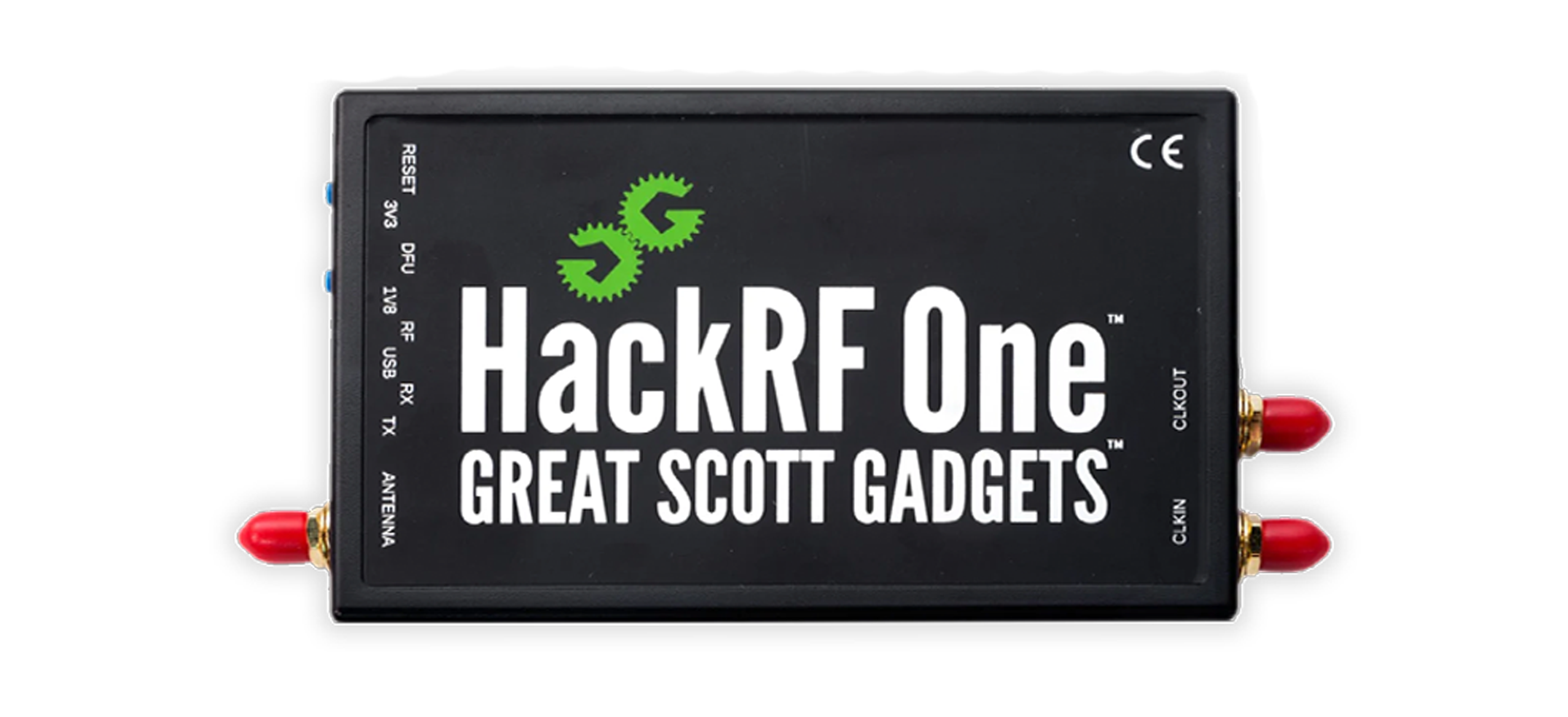
| HackRF One | Yes | No, unless you also need wideband experimentation or authorized transmit capability |
| PlutoSDR or PLUTO+ SDR | Yes | No, unless you also need advanced SDR development features |
| USRP | Depends on model | No, unless your research project requires a higher-end platform |
Read our general guide: Best SDR Receivers in 2026: RTL-SDR, SDRplay, Airspy, HackRF, PlutoSDR, and More
Best Raspberry Pi ADS-B Setup
A Raspberry Pi is ideal for a permanent ADS-B station because it can run quietly around the clock while remaining close to the antenna.
Basic Raspberry Pi PiAware station
- Raspberry Pi 4 or Raspberry Pi 5
- Reliable power supply
- MicroSD card
- RTL-SDR Blog V3 receiver
- 1090 MHz antenna
- Short low-loss 50-ohm coaxial cable
- Optional filtered ADS-B LNA close to the antenna
- Optional external 1090 MHz filter for strong-signal locations
- Ethernet connection where possible
- PiAware and dump1090
What does dump1090 do?
dump1090 decodes 1090 MHz Mode S and ADS-B messages received by the SDR.
What does PiAware do?
PiAware connects a Raspberry Pi ADS-B receiver to FlightAware. It can forward received data while allowing local access to aircraft activity and station statistics.
What does SkyAware do?
SkyAware provides a browser-based local aircraft map for compatible PiAware setups.
Read our Raspberry Pi guide: Best SDR for Raspberry Pi: RTL-SDR, ADS-B, AIS, Satellites, and Remote Monitoring
Can ADS-B Work Without Internet?
Yes. Your SDR receives aircraft radio broadcasts directly.
A local map can work on your own network without forwarding data to a public service. Internet access is still useful for software updates, remote access, statistics, and contributing data to networks such as FlightAware.
Should You Use Ethernet or Wi-Fi?
Ethernet is the better choice for a permanent ADS-B station when practical.
Use Ethernet when:
- The Raspberry Pi runs 24/7.
- You want stable data forwarding.
- The station is installed near a rooftop or remote antenna location.
- You want fewer interruptions.
- The Raspberry Pi also runs dashboards or additional services.
Wi-Fi is still suitable when cabling is impractical and the connection is stable.
How to Track 1090 MHz and 978 MHz at the Same Time
Users in the United States may want to receive both 1090ES and UAT 978.
Use two separate SDR dongles and two suitable antennas.
| Receiver | Frequency | Purpose |
|---|---|---|
| SDR dongle 1 | 1090 MHz | 1090ES aircraft tracking |
| SDR dongle 2 | 978 MHz | UAT reception in the United States |
Assign each RTL-SDR dongle a unique serial number so the software opens the correct device after rebooting.
ADS-B Aircraft Data vs Airband Voice
ADS-B messages and pilot or air-traffic-control voice communications are different signals.
| Goal | Typical Frequency Area | Recommended Setup |
|---|---|---|
| Track aircraft positions | 1090 MHz ADS-B for most users | RTL-SDR with dump1090 and a 1090 MHz antenna |
| Listen to civil airband voice where legal | Approximately 118–137 MHz AM airband | Separate SDR receiver or retune the dongle when not running ADS-B |
One RTL-SDR cannot continuously decode 1090 MHz ADS-B and receive VHF airband voice simultaneously because the frequencies are too far apart. Use a second dongle when you want both services running continuously.
How to Improve an Existing ADS-B Receiver
- Move the antenna higher.
- Improve the sky view.
- Move the antenna away from metal, concrete, and noisy electronics.
- Use an outdoor omnidirectional 1090 MHz antenna.
- Shorten the coaxial-cable run where possible.
- Use a lower-loss cable.
- Add a filtered ADS-B LNA close to the antenna if cable loss or weak signals justify it.
- Add a 1090 MHz filter when strong nearby transmitters cause overload.
- Test filter-before-LNA and LNA-before-filter arrangements if you use separate components.
- Check Raspberry Pi power stability.
- Use Ethernet for a permanent feeder when possible.
- Compare message rates and range statistics before and after each change.
How to Know Whether an Upgrade Worked
Do not judge an ADS-B upgrade only by the maximum distance of one aircraft.
Compare:
- Aircraft positions reported per hour
- Total messages decoded
- Maximum range by direction
- Coverage consistency
- Number of aircraft tracked
- Receiver uptime
- Performance at different times of day
- Performance before and after changing one component
Change one variable at a time. This makes it easier to understand whether the antenna, cable, filter, LNA, gain setting, or receiver actually improved the station.
Common ADS-B Setup Mistakes
Buying a more expensive SDR before upgrading the antenna
Improve the antenna location first. A rooftop 1090 MHz antenna often matters more than replacing a capable RTL-SDR receiver.
Using a long low-quality coaxial cable
Cable loss at 1090 MHz can erase the benefit of a better antenna. Keep the cable short or place a suitable LNA close to the antenna.
Installing the LNA beside the Raspberry Pi instead of beside the antenna
Amplify the signal before it travels through the lossy cable whenever practical.
Adding an LNA without considering overload
An LNA also amplifies unwanted signals. Use a filtered ADS-B LNA or add a suitable filter when strong out-of-band transmitters cause saturation.
Adding a filter automatically
A filter can help in an urban RF environment but may reduce performance unnecessarily in a quiet area. Test the results.
Using one SDR dongle for 1090 MHz ADS-B and VHF airband voice simultaneously
Use two separate dongles because the frequencies are too far apart for one RTL-SDR spectrum slice.
Using one SDR dongle for 1090ES and UAT 978 simultaneously
Use two separate dongles and antennas for dual-band United States coverage.
Forgetting bias-tee power
A bias-tee-powered LNA will not work properly unless compatible power is enabled.
Placing the antenna under a metal roof
Metal and reinforced structures can block or weaken aircraft signals. Move the antenna outdoors or closer to a clear window.
Using weak Raspberry Pi power
Power instability can cause receiver disconnects, reboots, and inconsistent station performance. Use a reliable supply.
Best ADS-B Setup by Budget
| Budget Level | Recommended Setup | Best For |
|---|---|---|
| Starter | RTL-SDR Blog V3 Kit with included dipole near a window | Learning how ADS-B works |
| Improved indoor | RTL-SDR Blog V3 with a dedicated compact 1090 MHz antenna near a clear window | Apartment users |
| Permanent home station | RTL-SDR Blog V3 dongle, outdoor omnidirectional 1090 MHz antenna, short low-loss cable, Raspberry Pi, and PiAware | Reliable 24/7 aircraft tracking |
| Long-cable outdoor station | Outdoor 1090 MHz antenna, filtered ADS-B LNA near the antenna, suitable low-loss cable, RTL-SDR receiver, and Raspberry Pi | Users who cannot place the computer close to the antenna |
| Noisy urban station | Outdoor antenna, 1090 MHz filtering, filtered LNA where appropriate, and careful performance testing | Locations near strong transmitters |
| United States dual-band station | Two SDR dongles, separate 1090 MHz and 978 MHz antennas, Raspberry Pi, dump1090, and dump978 | Users who want both 1090ES and UAT 978 reception |
Best SDRstore.eu Products for ADS-B Projects
- RTL-SDR Blog V3 Kit with multipurpose dipole antenna set
- RTL-SDR Blog V3 Dongle Only
- RTL-SDR Multipurpose Dipole Antenna Kit
- RTL-SDR Blog Wideband LNA
- RTL-SDR receivers, antennas, filters, LNAs, and accessories
- Antennas and RF accessories
Related SDRstore.eu Guides
- Best SDR for Raspberry Pi: RTL-SDR, ADS-B, AIS, Satellites, and Remote Monitoring
- RTL-SDR Blog V3 Kit Review: Is It Still Worth Buying in 2026?
- RTL-SDR V3 vs V4 vs V4 Lite: Which Budget SDR Should You Buy?
- RTL-SDR Not Working? Fix Driver, Zadig, USB, Gain, and No Signal Problems
- Best SDR Receivers in 2026: RTL-SDR, SDRplay, Airspy, HackRF, PlutoSDR, and More
- How to Test Antenna SWR with a NanoVNA
Official Resources
- FlightAware PiAware ground-station build guide
- FlightAware PiAware installation for systems running dump1090
- FlightAware ADS-B receiver optimization guide
- FlightAware dual-band 1090 MHz and 978 MHz Raspberry Pi installation guide
- RTL-SDR Blog ADS-B triple-filtered LNA information
- RTL-SDR Blog V3 bias-tee activation on PiAware guide
- FAA ADS-B installation overview
Final Verdict: Best SDR for ADS-B
The RTL-SDR Blog V3 Kit is the best SDR for most ADS-B beginners in 2026.
It is affordable, proven, compatible with Raspberry Pi and popular ADS-B software, and includes short telescopic antenna elements suitable for initial 1090 MHz experiments.
Start with the included dipole near a clear window or outdoors. Once the software works, improve the antenna before replacing the receiver.
For a permanent station, use a dedicated outdoor omnidirectional 1090 MHz antenna, mount it as high as practical with a clear sky view, keep the 50-ohm coaxial cable short, and add a filtered ADS-B LNA close to the antenna when cable loss or local interference justifies it.
Add a separate filter when strong nearby transmitters overload the receiver. Test every change using message rate, aircraft count, coverage direction, and maximum reliable range.
Users in the United States who want both 1090ES and UAT 978 should use two SDR dongles and two suitable antennas.
The best ADS-B station is not the station with the most accessories. It is the station with the right antenna, a clear view of the sky, low cable loss, stable power, and carefully selected upgrades that solve real problems.
FAQ
What is the best SDR for ADS-B?
RTL-SDR Blog V3 Kit is the best starting recommendation for most ADS-B users. It is affordable, Raspberry Pi compatible, widely supported, and includes short dipole antenna elements suitable for initial 1090 MHz experiments.
What frequency does ADS-B use?
Most ADS-B aircraft tracking worldwide uses 1090ES at 1090 MHz. UAT operates at 978 MHz and is relevant primarily in the United States.
Can RTL-SDR receive ADS-B?
Yes. RTL-SDR receivers can receive ADS-B aircraft messages around 1090 MHz when paired with a suitable antenna and decoding software such as dump1090.
Is RTL-SDR Blog V3 good for ADS-B?
Yes. RTL-SDR Blog V3 is a strong ADS-B receiver because it has mature software support, an SMA connector, a stable TCXO, aluminium enclosure, Raspberry Pi compatibility, and a software-switchable bias tee for compatible LNAs.
Should I buy an RTL-SDR kit or dongle only for ADS-B?
Buy the RTL-SDR Blog V3 Kit if you are a beginner and want to start testing immediately. Buy the dongle-only version if you already plan to install a dedicated outdoor 1090 MHz antenna and suitable cable.
Can the included RTL-SDR dipole antenna receive ADS-B?
Yes. The short telescopic elements included with the RTL-SDR multipurpose dipole kit can be used for basic 1090 MHz ADS-B tests. A dedicated outdoor antenna is better for a permanent station.
What is the best antenna for ADS-B?
A dedicated outdoor omnidirectional 1090 MHz antenna mounted high with a clear view of the sky is the best general recommendation for a permanent ADS-B aircraft-tracking station.
How long should an ADS-B dipole antenna be?
For a simple 1090 MHz dipole, start with each element extended to approximately 6.9 cm. This is close to one quarter wavelength at 1090 MHz.
How far can an RTL-SDR ADS-B receiver reach?
Range varies greatly with antenna height, line of sight, cable loss, terrain, and aircraft altitude. A well-installed station with a high-quality outdoor antenna and clear sky view may receive aircraft more than 250 nautical miles away.
Do I need a 1090 MHz filter for ADS-B?
Use a 1090 MHz filter when strong nearby signals overload the receiver or LNA. A filter may not help in a quiet rural area and can reduce performance if it adds unnecessary insertion loss.
Do I need an LNA for ADS-B?
Not always. An LNA is useful when the antenna cable is long, distant aircraft signals are weak, or system losses reduce performance. Install it close to the antenna when practical.
Where should I install an ADS-B LNA?
Install the LNA as close to the antenna as possible so the weak aircraft signal is amplified before travelling through the coaxial cable.
Should the ADS-B filter go before or after the LNA?
The best order depends on the RF environment. A filter before the LNA can reduce overload from strong unwanted signals, while a filtered ADS-B LNA combines amplification and filtering in one component. Test the arrangement that performs best at your location.
Can RTL-SDR Blog V3 power an LNA?
Yes. RTL-SDR Blog V3 has a software-switchable bias tee for compatible accessories. Confirm the LNA voltage and current requirements before enabling it.
Can one RTL-SDR receive ADS-B and airband voice simultaneously?
No. ADS-B around 1090 MHz and VHF airband voice around 118–137 MHz are too far apart for one RTL-SDR dongle to receive continuously at the same time. Use a second dongle.
Can one RTL-SDR receive 1090 MHz and 978 MHz simultaneously?
No. Use two separate SDR dongles and two suitable antennas for simultaneous 1090ES and UAT 978 reception.
Is 978 MHz ADS-B used in Europe?
UAT 978 is primarily relevant in the United States. Most ADS-B systems outside the United States operate on 1090 MHz.
What software should I use for ADS-B?
Use dump1090 to decode 1090 MHz ADS-B and Mode S messages. Raspberry Pi users can add PiAware and view aircraft through a local SkyAware map.
Can ADS-B work without internet?
Yes. The SDR receives radio messages directly from aircraft. Internet access is useful for updates, remote access, statistics, and forwarding data to flight-tracking networks.
Should I use Ethernet or Wi-Fi for PiAware?
Ethernet is the better option for a permanent 24/7 PiAware station because it is generally more stable. Wi-Fi remains suitable when cabling is impractical and the wireless connection is reliable.
Do I need HackRF or PlutoSDR for ADS-B?
No. RTL-SDR is the practical and affordable choice for a dedicated ADS-B receiver. HackRF and PlutoSDR platforms make sense only when you also need their advanced development capabilities.
Does a better antenna matter more than a better SDR for ADS-B?
Often, yes. Antenna height, clear sky view, low cable loss, and a suitable 1090 MHz antenna usually improve ADS-B reception more than replacing a capable RTL-SDR receiver.
No posts found
Write a review






We support all major card and digital payment options. More local methods are available and shown during checkout.
You enter into a binding sales contract once you have received an 'order confirmation and sales receipt' email from us, in line with our Sales & Delivery conditions. Therefore, sdrstore.eu has the right to cancel your order in the event of technical problems, delivery failure, Fair use policy and other similar situations.






Your payments are protected by advanced encryption and 3-D Secure authentication for safe online shopping.