





Best SDR for Ham Radio in 2026: HF, VHF, UHF, Digital Modes, and Portable Use
Updated: June 2026. This guide compares the best SDR receivers and development platforms for amateur-radio listening, HF, VHF, UHF, digital modes, portable use, panadapters, and advanced RF experiments.
Software-defined radio has changed amateur radio dramatically. Instead of tuning one narrow slice of spectrum at a time, an SDR can display a live waterfall, record signals, decode digital modes, monitor multiple channels, act as a panadapter, and help users understand what is happening across an entire band.
The best SDR for ham radio depends on the project. A beginner interested in listening to amateur bands does not need an expensive laboratory transceiver. A shortwave listener may benefit from an SDRplay or Airspy receiver with stronger HF performance. A portable user may prefer an RTL-SDR dongle with a phone or a HackRF PortaPack H4M with its own display. A university lab may need a USRP B210 or bladeRF platform for full-duplex MIMO experiments.
It is also important to separate receive-only SDRs from transmit-capable development platforms. RTL-SDR, SDRplay, and Airspy receivers are suitable for listening and decoding. HackRF, PlutoSDR, PLUTO+ SDR, USRP, and bladeRF can also transmit, but they are not automatically plug-and-play amateur-radio transceivers.
This guide explains which SDR to buy for HF, VHF, UHF, FT8, WSPR, portable listening, spectrum exploration, panadapter use, and advanced RF development.
To browse available equipment, visit the software-defined radio category at SDRstore.eu.
Quick Answer: What Is the Best SDR for Ham Radio?
| SDR Device | Best Ham-Radio Use | Receive or Transmit? | Buyer Recommendation |
|---|---|---|---|
| RTL-SDR Blog V3 Kit | Beginners, amateur-band listening, panadapter experiments, VHF, UHF, satellites, and portable use | Receive only | Best first SDR for most beginners |
| SDRplay RSP1B | General HF, VHF, and UHF listening with wider spectrum visibility | Receive only | Best all-purpose receive-only upgrade |
| SDRplay RSPdx-R2 | Serious HF, medium-wave, long-wave, and multi-antenna listening stations | Receive only | Best receive-only option for HF-focused users |
| Airspy HF+ Discovery | Weak-signal HF, shortwave, CW, SSB, broadcast listening, and VHF airband | Receive only | Best compact weak-signal HF receiver |
| Airspy R2 or Airspy Mini | VHF and UHF monitoring, satellites, scanners, and portable receiving | Receive only | Best VHF and UHF-focused receiver upgrade |
| HackRF PortaPack H4M | Portable spectrum exploration, field monitoring, and wideband RF experimentation | Half-duplex transceiver | Best portable wideband experimental SDR |
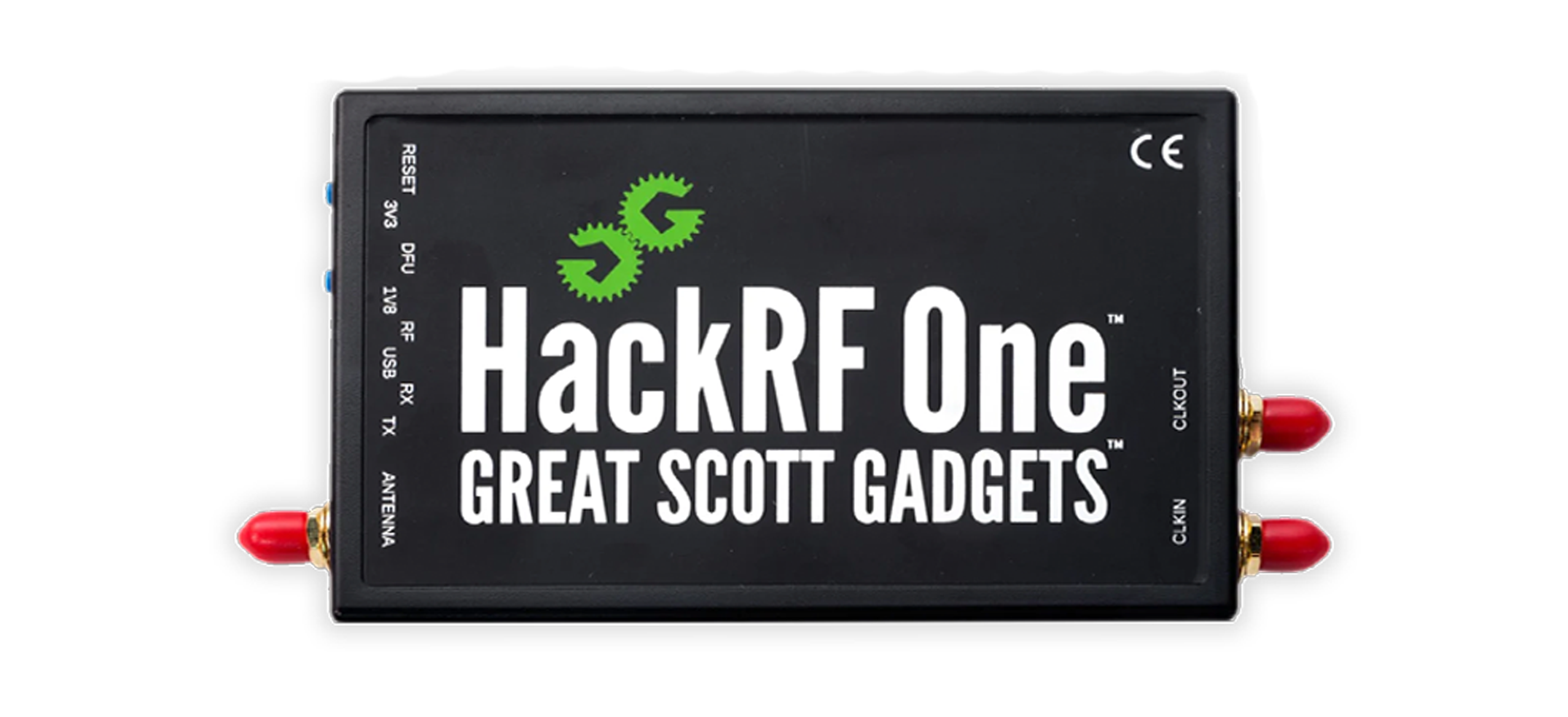
| HackRF Pro | Wideband desktop development from long wave through microwave frequencies | Half-duplex transceiver | Best newer HackRF development board |
| ADALM-PLUTO | Learning digital communications, GNU Radio, and UHF or microwave experiments | 1TX and 1RX transceiver | Best official learning platform |
| PLUTO+ SDR | Ethernet SDR, 2TX/2RX development, digital communications, and SDRangel projects | 2TX and 2RX transceiver | Best value expanded Pluto-style platform |
| USRP B210 | University labs, GNU Radio, full-duplex experiments, satellites, MIMO, and research | 2TX and 2RX full-duplex transceiver | Best advanced research SDR |
| bladeRF 2.0 micro | FPGA development, custom modems, advanced digital communications, and MIMO | 2TX and 2RX transceiver | Best FPGA-heavy development platform |
The simplest recommendations are:
- Choose RTL-SDR Blog V3 Kit if you are buying your first SDR for amateur-radio listening.
- Choose SDRplay RSP1B if you want a stronger general-coverage desktop receiver.
- Choose SDRplay RSPdx-R2 or Airspy HF+ Discovery if HF and weak-signal listening matter most.
- Choose Airspy R2 or Airspy Mini if your focus is VHF and UHF receiving.
- Choose HackRF PortaPack H4M if you want a portable screen-based spectrum-exploration tool.
- Choose PLUTO+ SDR if you want Ethernet, 2TX/2RX, SDRangel, and GNU Radio development.
- Choose USRP B210 or bladeRF 2.0 micro only when your project requires advanced full-duplex, MIMO, or FPGA capabilities.
First Decide: Do You Need to Receive or Transmit?
This is the most important buying decision.
Many amateur-radio users only need an SDR receiver. A receive-only SDR can add a waterfall display, monitor amateur bands, decode signals, record IQ data, act as a panadapter, and improve the listening experience.
A receive-only device is suitable for:
- Listening to SSB, AM, FM, and CW activity
- Monitoring HF, VHF, and UHF amateur bands
- Decoding FT8, FT4, WSPR, and other digital modes
- Receiving amateur-radio satellites
- Using an SDR as a panadapter beside a traditional transceiver
- Finding local signals and interference
- Recording spectrum for later analysis
- Learning how antennas and propagation affect reception
A transmit-capable SDR is appropriate when you want to develop waveforms, experiment with digital communications, research modulation, build controlled laboratory setups, or integrate custom RF systems.
Transmission adds responsibility. Always use the frequencies, modes, bandwidths, and power levels permitted by your license and local regulations. Use proper filtering, amplification, dummy loads, attenuators, and RF test equipment where required.
Important: A Development SDR Is Not Automatically a Ham Transceiver
HackRF, ADALM-PLUTO, PLUTO+ SDR, USRP, and bladeRF are flexible development platforms. They can transmit, but they are not the same as a ready-to-use amateur-radio transceiver with band filtering, power amplification, protection, controls, and a complete operating interface.
A finished amateur-radio SDR transceiver is a different product class. For example, current FlexRadio models are designed as complete amateur-radio stations with dedicated SmartSDR software and operating workflows.
Choose a development SDR when you want flexibility and experimentation. Choose a dedicated amateur transceiver when your priority is making normal voice, CW, or digital contacts easily and reliably.
Best Beginner SDR for Ham Radio: RTL-SDR Blog V3 Kit
The RTL-SDR Blog V3 Kit remains the easiest recommendation for beginners.
It is affordable, compact, widely supported, and useful across a large number of receiving projects. The kit includes a multipurpose dipole antenna set, allowing a new user to start experimenting without immediately choosing a specialist antenna.
RTL-SDR Blog V3 key features
- RTL2832U ADC chipset
- R820T2 tuner family
- Approximately 500 kHz–1.7 GHz tuning range depending on mode and setup
- Up to 3.2 MHz bandwidth, with approximately 2.4 MHz commonly treated as stable
- HF reception through direct-sampling mode
- 1 PPM TCXO for frequency stability
- SMA female antenna connector
- Aluminium enclosure with passive cooling
- Software-switchable bias tee for compatible accessories
- Windows, Linux, macOS, Android, and Raspberry Pi compatibility
Good first amateur-radio projects with RTL-SDR
- Listen to local VHF and UHF repeaters.
- Monitor amateur SSB and CW activity.
- Explore HF through direct sampling.
- Use the SDR as a low-cost panadapter.
- Decode FT8 and WSPR reception.
- Receive APRS packets where legal.
- Track amateur-radio satellites.
- Receive Meteor weather satellites with SatDump.
- Learn gain control, bandwidth, filters, and antenna basics.
RTL-SDR Blog V3 is a receiver only. It cannot transmit.
Read our review: RTL-SDR Blog V3 Kit Review: Is It Still Worth Buying in 2026?
Follow the setup guide: RTL-SDR Setup Guide for Windows: SDRSharp, SDR++, Zadig, Drivers, and First Signal
RTL-SDR Blog V4 and V4 Lite in 2026
RTL-SDR Blog V4 became popular because it added improved filtering and HF handling through an HF upconverter architecture.
However, RTL-SDR Blog announced in May 2026 that V4 is reaching the end of its production cycle because the R828D tuner is no longer manufactured.
A limited RTL-SDR Blog V4 Lite, also called V4L, has been announced using the R828S tuner. Buyers should confirm software-driver compatibility before ordering.
Buyer advice
- Choose V3 if you want a stable, well-documented beginner receiver.
- Choose remaining V4 stock only when available and suitable for your setup.
- Check updated driver support before buying V4 Lite.
- Do not delay your first amateur-radio receiving project only because a newer variant may appear.
Read our guide: Is the RTL-SDR Blog V4 Reaching End of Life? V4 Lite Explained
Best General-Coverage Ham-Radio Receiver: SDRplay RSP1B
SDRplay RSP1B is one of the best receive-only upgrades for amateur-radio users who have outgrown a budget dongle.
It covers 1 kHz to 2 GHz with up to 10 MHz of visible spectrum. SDRplay software includes familiar demodulator options and presets for amateur-radio bands and shortwave broadcast bands.
Choose SDRplay RSP1B if you want:
- A general-coverage receiver from VLF to 2 GHz
- HF, VHF, and UHF listening in one device
- Up to 10 MHz of visible spectrum
- A receive-only desktop SDR
- AM, FM, CW, USB, and LSB demodulation workflows
- A stronger receiver than a basic RTL-SDR dongle
- SDRconnect or SDRuno software
- A practical radio for a returning amateur operator
RTL-SDR vs SDRplay RSP1B
| Feature | RTL-SDR Blog V3 | SDRplay RSP1B |
|---|---|---|
| Best use | Low-cost learning and portable experiments | More capable desktop general-coverage receiving |
| Frequency coverage | Approximately 500 kHz–1.7 GHz depending on mode | 1 kHz–2 GHz |
| Visible bandwidth | Approximately 2.4 MHz commonly treated as stable | Up to 10 MHz |
| HF experience | Useful for basic experiments | Better suited to broad desktop listening |
| Price tier | Entry level | Receive-only upgrade |
Best HF-Focused SDR Receiver: SDRplay RSPdx-R2
SDRplay RSPdx-R2 is a strong choice for amateur-radio operators focused on HF, medium wave, long wave, and multiple antenna systems.
It covers 1 kHz to 2 GHz with up to 10 MHz of spectrum visibility. It includes three software-selectable antenna inputs: two SMA ports operating across the full range and one BNC input operating up to 200 MHz.
Its HDR mode is optimized for demanding reception conditions below 2 MHz.
Choose RSPdx-R2 if you want:
- A serious HF listening station
- Long-wave and medium-wave experiments
- Multiple connected antennas
- Software-selectable antenna switching
- HF and VHF listening from the same receiver
- A desktop setup with fewer adapter changes
- Improved handling of difficult low-frequency conditions
Best Dual-Tuner Ham-Radio Receiver: SDRplay RSPduo
SDRplay RSPduo contains two independent tuners. Each tuner can operate individually from 1 kHz to 2 GHz with up to 10 MHz bandwidth, or both tuners can operate simultaneously with up to 2 MHz bandwidth per tuner.
Choose RSPduo if you want:
- Two receivers in one enclosure
- Simultaneous monitoring of separate frequencies
- Two antenna inputs for comparison
- Diversity reception experiments
- Noise-reduction experiments
- More advanced amateur-radio monitoring
Best Compact Weak-Signal HF Receiver: Airspy HF+ Discovery
Airspy HF+ Discovery is an excellent receive-only SDR for users interested in weak signals, shortwave, HF amateur radio, CW, SSB, broadcast listening, and VHF airband.
It covers approximately 0.5 kHz–31 MHz and 64–260 MHz. Its design prioritizes sensitivity, dynamic range, and filtering rather than very wide spectrum visibility.
Choose Airspy HF+ Discovery if you want:
- HF amateur-radio listening
- Weak-signal CW and SSB reception
- Shortwave broadcast listening
- A compact receive-only radio
- Low-noise antenna experiments
- VHF airband reception
- A refined receiver rather than a transmit-capable platform
Airspy HF+ Discovery works especially well with suitable low-noise antennas. SDRstore.eu offers the YouLoop portable passive HF and VHF magnetic loop antenna for compatible listening setups.
Best VHF and UHF SDR Receiver: Airspy R2 or Airspy Mini
Airspy R2 and Airspy Mini are suitable receive-only upgrades for VHF and UHF amateur-radio monitoring.
They are useful when your focus is local repeaters, satellites, scanning, airband, and wider VHF or UHF spectrum visibility.
Choose Airspy R2 if you want:
- A desktop VHF and UHF receiver
- Wider spectrum visibility
- Local repeater monitoring
- Satellite reception
- A stronger receive-only setup than a basic dongle
Choose Airspy Mini if you want:
- A smaller portable form factor
- A lightweight field receiver
- VHF and UHF monitoring
- A compact laptop or tablet setup
Best Budget SDR for Portable Ham-Radio Listening: RTL-SDR with a Phone
RTL-SDR remains one of the easiest portable receiving options.
Connect an RTL-SDR Blog V3 to an Android phone or tablet with a suitable USB OTG adapter, install compatible SDR software, and attach an antenna appropriate for the target band.
Portable RTL-SDR use cases
- Monitor local repeaters.
- Receive satellite passes outdoors.
- Explore amateur bands while travelling.
- Investigate interference.
- Test portable antennas.
- Use a laptop or Raspberry Pi for field experiments.
Choose a receive-only RTL-SDR portable setup when price, battery life, and simplicity matter more than standalone controls.
Best Portable Wideband SDR: HackRF PortaPack H4M
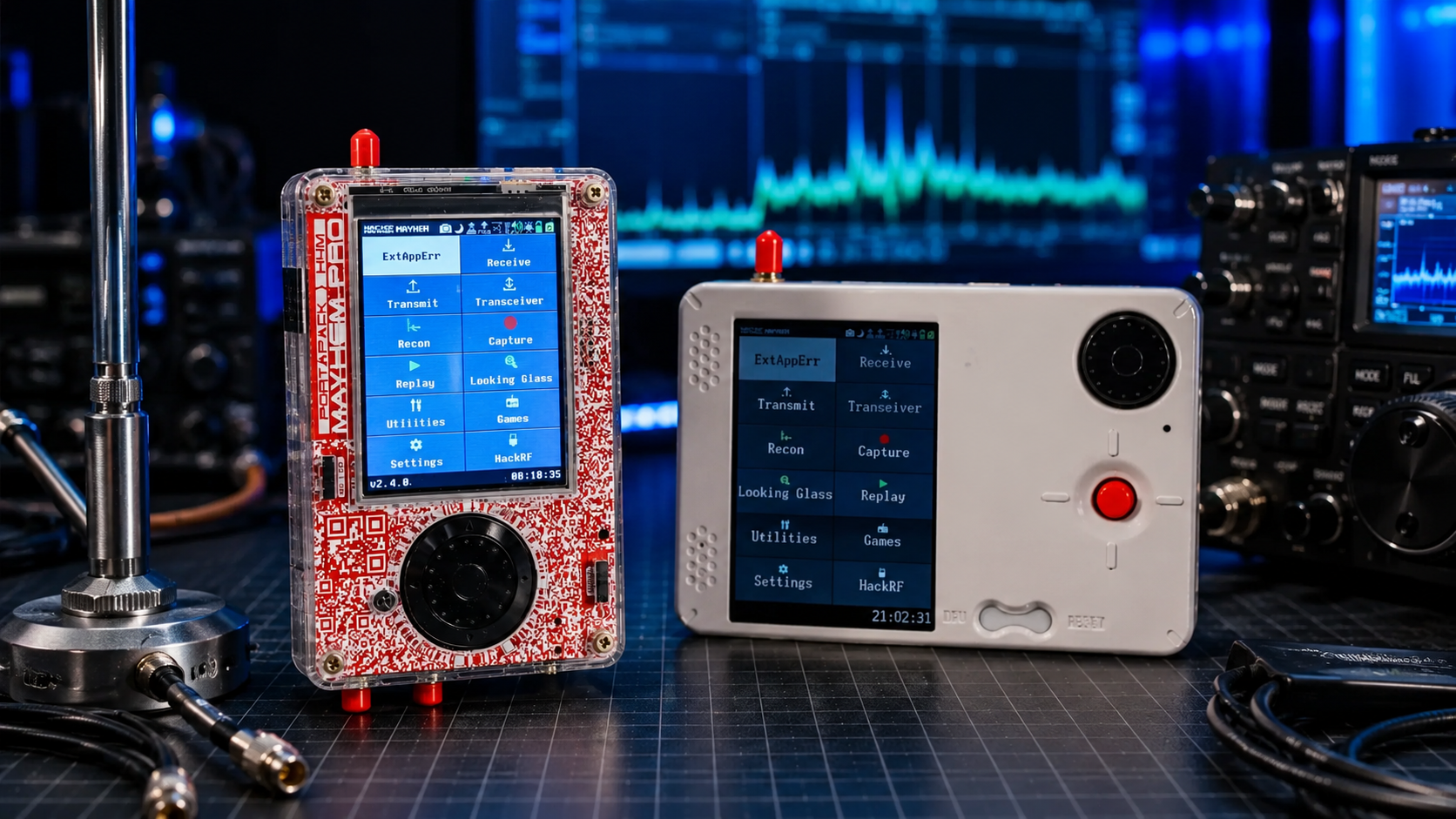
The HackRF PortaPack H4M Mayhem Signature Edition is one of the most flexible portable SDR platforms for field exploration.
It combines HackRF wideband radio hardware with a screen, controls, portable power features, and Mayhem firmware workflows.
Choose HackRF PortaPack H4M if you want:
- A portable spectrum-exploration tool
- A screen-based SDR without carrying a laptop for every workflow
- Wideband RF monitoring
- Field signal investigation
- Portable antenna comparisons
- Mayhem firmware features
- A radio that can also connect to a computer
HackRF PortaPack H4M is not a normal handheld amateur transceiver. It does not replace a dedicated VHF/UHF handheld radio or an HF transceiver for making everyday contacts.
Best Newer Wideband Development Board: HackRF Pro
The HackRF Pro Development Board is the newer official Great Scott Gadgets platform.
It covers 100 kHz–6 GHz, supports half-duplex transmitting and receiving, uses USB-C, and provides up to 20 million samples per second.
Choose HackRF Pro if you want:
- A newer official HackRF platform
- 100 kHz–6 GHz operating coverage
- Wideband amateur-radio experiments
- Long-wave through microwave exploration
- GNU Radio workflows
- Software-defined modulation experiments
- Clock input and output for synchronization
- An open-source hardware development platform
Read our comparison: HackRF Pro vs PortaPack H4M: Which One Should You Buy?
Best Official Learning SDR Transceiver: ADALM-PLUTO
Standard ADALM-PLUTO is an official Analog Devices RF learning module based on the AD9363 transceiver and Zynq-7010 FPGA.
Its official specification includes 325 MHz–3.8 GHz coverage, up to 20 MHz instantaneous bandwidth, flexible-rate 12-bit ADC and DAC, and one transmit plus one receive channel.
Choose ADALM-PLUTO if you want:
- An official RF learning platform
- GNU Radio sink and source blocks
- MATLAB or Simulink experiments
- Digital-communications education
- UHF and microwave experiments
- Half-duplex or full-duplex learning projects
- A portable USB-powered development module
Standard ADALM-PLUTO is not designed as a plug-and-play HF amateur transceiver. Its official coverage begins at 325 MHz.
Best Value Expanded Pluto-Style SDR: PLUTO+ SDR
The PLUTO+ SDR AD9363 2T2R Transceiver expands the Pluto-style platform for users who need additional flexibility.
It is listed with 70 MHz–6 GHz coverage, two transmit channels, two receive channels, Gigabit Ethernet, MicroSD boot support, a 40 MHz 0.5 PPM VCTCXO, and USB connectivity.
Choose PLUTO+ SDR if you want:
- 2TX and 2RX operation
- Gigabit Ethernet
- MicroSD boot support
- SDRangel projects
- GNU Radio experiments
- Digital communications development
- Remote SDR placement over a network
- A flexible VHF, UHF, and microwave development platform
PLUTO+ SDR is suitable for experienced hobbyists, students, developers, and laboratory projects. It is not a complete ready-to-use amateur-radio station.
Read our review: PLUTO+ SDR Review: AD9363 2T2R SDR Transceiver with Ethernet and 70 MHz–6 GHz Coverage
Follow the setup guide: PLUTO+ SDR Setup Guide: First Signal with SDRangel, GNU Radio, and Ethernet
Best Advanced SDR for Universities and Labs: USRP B210
The USRP B210 USB SDR is designed for advanced research, university teaching, wireless prototyping, and GNU Radio development.
It covers 70 MHz–6 GHz, supports full-duplex 2TX and 2RX operation, provides coherent 2×2 MIMO capability, and streams up to 56 MHz of real-time bandwidth through USB 3.0 on suitable systems.
Choose USRP B210 if you want:
- Full-duplex operation
- Coherent 2×2 MIMO
- GNU Radio development
- UHD driver support
- Digital-communications research
- Satellite experiments
- University teaching labs
- Wireless-protocol prototyping
- Advanced VHF, UHF, and microwave projects
USRP B210 is unnecessary for a beginner who only wants to listen to HF or local repeaters. Choose it when the research requirements justify the cost and complexity.
Best FPGA Development SDR: bladeRF 2.0 Micro
The bladeRF 2.0 micro xA4 is a compact advanced SDR platform for users interested in FPGA development and custom digital-communications systems.
Nuand lists a 47 MHz–6 GHz frequency range, 2×2 MIMO operation, a 61.44 MHz sampling rate, and 56 MHz filtered bandwidth.
Choose bladeRF 2.0 micro if you want:
- FPGA experimentation
- 2×2 MIMO streaming
- Custom modem development
- GNU Radio and SoapySDR workflows
- Hardware-accelerated signal processing
- Advanced digital-mode development
- A compact USB 3.0 transceiver
- More FPGA resources through xA9 variants when required
Best SDR for HF Ham Radio
HF amateur radio generally rewards strong receive performance, good filtering, appropriate antennas, and careful gain settings.
| HF Use Case | Best Starting Choice | Why |
|---|---|---|
| Affordable HF experiments | RTL-SDR Blog V3 | Direct-sampling support and low cost |
| General HF listening | SDRplay RSP1B | 1 kHz–2 GHz coverage and up to 10 MHz visible spectrum |
| Advanced HF station with multiple antennas | SDRplay RSPdx-R2 | Three software-selectable antenna ports and HDR mode below 2 MHz |
| Compact weak-signal HF setup | Airspy HF+ Discovery | HF-focused receive performance and compact design |
| Portable spectrum exploration below 1 MHz and above | HackRF Pro | 100 kHz–6 GHz operating range for experimentation |
For ordinary HF voice, CW, and FT8 transmission, use a dedicated amateur-radio transceiver or a properly engineered SDR station with suitable filtering and amplification.
Best SDR for VHF and UHF Ham Radio
| VHF or UHF Use Case | Best Starting Choice |
|---|---|
| Affordable local repeater monitoring | RTL-SDR Blog V3 |
| Portable VHF and UHF receiving | RTL-SDR Blog V3 or Airspy Mini |
| Higher-quality desktop VHF and UHF receiving | Airspy R2 or SDRplay RSP1B |
| Wideband field exploration | HackRF PortaPack H4M |
| UHF and microwave learning experiments | ADALM-PLUTO |
| Ethernet and 2TX/2RX projects | PLUTO+ SDR |
| Advanced MIMO research | USRP B210 or bladeRF 2.0 micro |
Best SDR for FT8, FT4, WSPR, and Other Digital Modes
WSJT-X supports weak-signal protocols including FT8, FT4, WSPR, Q65, MSK144, FST4, and JT65.
Receive-only SDRs are useful for monitoring and decoding digital activity. They are also useful as panadapters alongside a traditional amateur-radio transceiver.
| Digital-Mode Goal | Recommended SDR |
|---|---|
| Decode FT8 reception affordably | RTL-SDR Blog V3 |
| Monitor HF digital sub-bands with a stronger receiver | SDRplay RSP1B or Airspy HF+ Discovery |
| Use an SDR as a panadapter beside an HF transceiver | RTL-SDR Blog V3, SDRplay RSP1B, or Airspy HF+ Discovery |
| Learn digital waveform design | ADALM-PLUTO or PLUTO+ SDR |
| Research custom full-duplex modes | USRP B210 or bladeRF 2.0 micro |
Receive-only digital-mode setup
- Connect a suitable HF, VHF, or UHF antenna.
- Tune the SDR to the correct amateur band.
- Select the appropriate bandwidth and sideband mode.
- Route received audio or IQ data to the decoder software.
- Synchronize the computer clock accurately for time-sensitive modes.
- Follow your local band plan.
Transmit digital-mode setup
For normal on-air FT8, FT4, WSPR, or similar operation, most users should connect WSJT-X to a suitable licensed amateur-radio transceiver through the correct audio and CAT-control setup.
Do not assume that a low-power development SDR can be connected directly to an antenna and used like a finished amateur transceiver. Proper filtering, signal cleanliness, output power, frequency stability, and legal compliance still matter.
Best SDR for Panadapter Use
A panadapter adds a waterfall and spectrum display beside an existing amateur-radio transceiver.
The SDR can connect to an IF output, RF splitter, receive antenna, or suitable protected signal path depending on the station design.
Good panadapter choices
- RTL-SDR Blog V3 for an affordable first setup
- SDRplay RSP1B for broader desktop receiving
- Airspy HF+ Discovery for HF weak-signal work
- SDRplay RSPduo for more advanced multi-tuner experiments
Panadapter safety
- Do not connect a transmitter output directly to a receive-only SDR.
- Use a suitable splitter, attenuator, coupler, IF output, or protected receive path.
- Check the SDR input limits.
- Protect the receiver during transmission.
- Confirm the impedance and connector arrangement.
Best SDR for Amateur-Radio Satellites
Amateur-radio satellites are an excellent reason to use SDR. A waterfall makes Doppler shift easier to see, while recording allows users to review a pass later.
| Satellite Project | Recommended SDR |
|---|---|
| First satellite receiving setup | RTL-SDR Blog V3 |
| Portable VHF and UHF receiving | RTL-SDR Blog V3 or Airspy Mini |
| Higher-quality receive-only satellite station | Airspy R2 or SDRplay RSP1B |
| Full-duplex satellite experiments | ADALM-PLUTO, PLUTO+ SDR, or USRP B210 depending on frequency and project |
| Advanced coherent research | USRP B210 or bladeRF 2.0 micro |
Best SDR for Portable Ham-Radio Use
| Portable Goal | Best Choice | Why |
|---|---|---|
| Lowest-cost field receiver | RTL-SDR Blog V3 with Android phone or laptop | Affordable, small, and flexible |
| Compact weak-signal HF receiving | Airspy HF+ Discovery | Small form factor and HF-focused receive performance |
| Standalone-style spectrum exploration | HackRF PortaPack H4M | Screen, controls, battery support, and portable workflows |
| Portable digital-communications learning | ADALM-PLUTO | USB-powered learning platform |
| Portable advanced research | PLUTO+ SDR, USRP, or bladeRF with suitable host equipment | More capability but greater setup complexity |
If your goal is making portable voice, CW, or digital QSOs, a dedicated portable amateur-radio transceiver remains the simpler choice. Add an SDR when you want a waterfall, recording, decoding, or spectrum analysis.
Which SDR Software Should Ham-Radio Users Install?
| Software | Best Use |
|---|---|
| SDR++ | Modern cross-platform receiving and general SDR exploration |
| SDRSharp | Windows reception, RTL-SDR, Airspy, and plugin-based workflows |
| SDRconnect | Modern SDRplay operation across supported platforms |
| SDRuno | Traditional SDRplay desktop receiving |
| GQRX | Accessible Linux and macOS receiving |
| WSJT-X | FT8, FT4, WSPR, Q65, MSK144, and other weak-signal modes |
| GNU Radio | Custom signal-processing flows and digital-communications development |
| SDRangel | Advanced receiving, transmitting, and channel-processing workflows |
| SatDump | Satellite reception and decoding |
Read our full comparison: Best SDR Software in 2026: SDR++, SDRSharp, SDRangel, GQRX, GNU Radio, SatDump, and OpenWebRX Compared
Do You Need an Antenna Upgrade?
The antenna often matters more than upgrading the SDR receiver.
A suitable antenna can improve signal strength, reduce noise, and make weak signals easier to decode.
| Project | Typical Antenna Direction |
|---|---|
| HF listening | Long wire, dipole, loop, or another antenna suitable for the target bands |
| VHF and UHF repeaters | Vertical antenna suitable for the operating band |
| Portable listening | Compact tuned whip, telescopic dipole, or portable loop depending on frequency |
| Satellite reception | V-dipole, turnstile, QFH, Yagi, or another antenna suitable for the satellite project |
| Panadapter receiving | Protected connection to a station antenna, receive antenna, IF output, or appropriate signal path |
Browse RF antennas and accessories.
Use a NanoVNA to Test Amateur-Radio Antennas
A NanoVNA can measure antenna SWR, impedance, return loss, and Smith Chart behavior across HF, VHF, and UHF bands when the analyzer covers the required frequency.
This is useful before transmitting with a new antenna or after changing the feedline, adapter, mount, or installation.
Read our guide: How to Test Antenna SWR with a NanoVNA
Do You Need Filters and an LNA?
Filters and low-noise amplifiers can improve reception, but they should solve a specific problem.
Use a filter when:
- Strong FM broadcast signals overload the receiver.
- AM broadcast signals reduce HF performance.
- You are focusing on a narrow target band.
- Nearby signals create intermodulation or unwanted responses.
Use an LNA when:
- The target signal is weak.
- The feedline introduces loss.
- The LNA can be installed near the antenna.
- The receiver is not already overloaded.
Do not add an amplifier automatically. An LNA can make strong-signal overload worse if the real problem is insufficient filtering.
Browse RTL-SDR receivers, filters, antennas, and accessories.
How Much Bandwidth Do Ham-Radio Users Need?
Wider bandwidth lets you view more spectrum, but it also increases USB traffic, CPU usage, recording size, and software complexity.
| Ham-Radio Project | Bandwidth Priority | Suitable SDR Tier |
|---|---|---|
| Listen to one SSB or CW signal | Low | RTL-SDR is enough for learning |
| Monitor FT8 activity | Low to moderate | RTL-SDR, SDRplay, or Airspy |
| View a large section of an amateur band | Moderate | SDRplay or Airspy |
| Record wider spectrum for research | Moderate to high | SDRplay, HackRF, Pluto-style platforms, USRP, or bladeRF depending on the frequency |
| Develop multi-channel full-duplex systems | High | USRP B210 or bladeRF 2.0 micro |
Common SDR Buying Mistakes for Ham Radio
Buying an expensive SDR before choosing a project
Start with the simplest device that solves your first real problem. RTL-SDR Blog V3 is enough for many receiving projects.
Assuming every SDR can transmit
RTL-SDR, SDRplay, and Airspy options discussed in this guide are receive-only devices. HackRF, PlutoSDR, PLUTO+, USRP, and bladeRF add transmit capability.
Assuming every transmit-capable SDR is ready for normal amateur operation
Development platforms may require external filters, amplifiers, protection, software, and careful RF engineering.
Ignoring the antenna
A well-chosen antenna often improves reception more than replacing the SDR.
Adding an LNA before checking overload
Amplification can make strong-signal problems worse. Add filtering first when local broadcasts overload the receiver.
Ignoring local band plans
Amateur allocations, mode recommendations, bandwidth limits, and license privileges vary by country and region. Check the applicable rules before transmitting.
Connecting a transmitter directly to a receive-only SDR
Protect the receiver with an appropriate station design. Do not expose a sensitive SDR input to transmitter power.
Which SDR Should You Buy?
| Your Main Goal | Recommended SDR |
|---|---|
| Start learning amateur-radio reception affordably | RTL-SDR Blog V3 Kit |
| Build a general HF, VHF, and UHF listening station | SDRplay RSP1B |
| Build a serious HF station with multiple antennas | SDRplay RSPdx-R2 |
| Prioritize compact weak-signal HF receiving | Airspy HF+ Discovery |
| Prioritize VHF and UHF reception | Airspy R2 or Airspy Mini |
| Receive amateur bands while travelling | RTL-SDR Blog V3 with phone or laptop |
| Explore spectrum with a handheld-style screen device | HackRF PortaPack H4M |
| Use the newer official HackRF development board | HackRF Pro |
| Learn GNU Radio and RF communications on an official platform | ADALM-PLUTO |
| Use Ethernet and 2TX/2RX Pluto-style hardware | PLUTO+ SDR |
| Build advanced full-duplex MIMO research projects | USRP B210 |
| Develop FPGA-heavy digital-communications systems | bladeRF 2.0 micro |
Where to Browse SDR Equipment for Ham-Radio Projects
- Software-defined radio equipment
- RTL-SDR receivers, kits, antennas, filters, and accessories
- HackRF One, HackRF Pro, PortaPack H4M, and accessories
- PlutoSDR and PLUTO+ SDR platforms
- USRP SDR boards and accessories
- bladeRF SDR devices and accessories
- RF antennas and accessories
- RF test and measurement equipment
Official Resources
- SDRplay RSP1B official product page
- SDRplay RSPdx-R2 official product page
- Airspy HF+ Discovery official product page
- HackRF Pro official product page
- ADALM-PLUTO official product page
- USRP B210 official product page
- bladeRF 2.0 micro official product page
- WSJT-X official website
- IARU Region 1 band plans
Final Verdict: Best SDR for Ham Radio in 2026
The best SDR for ham radio depends on whether you want to listen, decode digital modes, use a panadapter, operate portably, or develop custom RF systems.
Choose RTL-SDR Blog V3 Kit if you want the best beginner SDR for amateur-radio listening. It is affordable, flexible, portable, and widely supported.
Choose SDRplay RSP1B if you want a stronger general-coverage receive-only station. Choose SDRplay RSPdx-R2 or Airspy HF+ Discovery when HF and weak-signal reception matter most. Choose Airspy R2 or Mini for VHF and UHF-focused receiving.
Choose HackRF PortaPack H4M if you want portable screen-based spectrum exploration. Choose HackRF Pro if you want a newer official wideband development board covering 100 kHz–6 GHz.
Choose ADALM-PLUTO for official RF learning, PLUTO+ SDR for Ethernet and 2TX/2RX Pluto-style experiments, USRP B210 for advanced full-duplex MIMO research, or bladeRF 2.0 micro for FPGA-heavy development.
Do not buy specifications alone. Match the SDR to the first project you actually want to complete, then invest in the right antenna, filtering, software, and test equipment.
FAQ
What is the best SDR for ham radio beginners?
RTL-SDR Blog V3 Kit is one of the best beginner choices because it is affordable, portable, widely supported, and useful for HF experiments, VHF and UHF listening, digital-mode decoding, satellites, and panadapter projects.
Can RTL-SDR receive ham radio?
Yes. RTL-SDR can receive many amateur-radio signals across HF, VHF, and UHF depending on the mode, antenna, software, and local band activity.
Can RTL-SDR transmit on ham-radio bands?
No. RTL-SDR is a receive-only device. Use a licensed amateur transceiver or a properly engineered transmit-capable SDR platform when authorized transmission is required.
What is the best SDR for HF ham radio?
SDRplay RSP1B is a strong general HF receiver. SDRplay RSPdx-R2 is better for a more advanced multi-antenna HF station, while Airspy HF+ Discovery is excellent for compact weak-signal HF receiving.
What is the best SDR for VHF and UHF ham radio?
RTL-SDR Blog V3 is a good budget choice. Airspy R2, Airspy Mini, and SDRplay RSP1B are stronger receive-only upgrades for VHF and UHF monitoring.
What is the best SDR for FT8?
RTL-SDR Blog V3 can decode FT8 reception affordably. SDRplay RSP1B and Airspy HF+ Discovery are stronger receive-only upgrades. For transmitting FT8, most users should connect WSJT-X to a suitable licensed amateur-radio transceiver.
What is the best SDR for WSPR?
RTL-SDR Blog V3 is suitable for affordable WSPR reception. SDRplay RSP1B, SDRplay RSPdx-R2, and Airspy HF+ Discovery are stronger options for more serious HF monitoring.
What is the best portable SDR for ham radio?
RTL-SDR Blog V3 with an Android phone or laptop is the most affordable portable receiver. HackRF PortaPack H4M is a stronger standalone-style option for portable wideband spectrum exploration.
Is HackRF PortaPack H4M a ham-radio transceiver?
HackRF PortaPack H4M is a portable wideband SDR experimentation platform. It can transmit and receive, but it does not replace a dedicated amateur-radio handheld or HF transceiver for normal contacts.
Is HackRF Pro good for ham radio?
HackRF Pro is useful for wideband amateur-radio experimentation and development because it covers 100 kHz–6 GHz. It is a half-duplex development platform rather than a complete plug-and-play ham transceiver.
Is SDRplay better than RTL-SDR for ham radio?
SDRplay is a stronger receive-only upgrade for users who need broader frequency coverage, wider visible bandwidth, and a more refined desktop listening setup. RTL-SDR remains better for low-cost learning.
Is Airspy HF+ Discovery good for ham radio?
Yes. Airspy HF+ Discovery is a strong compact receiver for weak-signal HF, shortwave, SSB, CW, broadcast listening, and selected VHF reception.
Can an SDR be used as a panadapter?
Yes. RTL-SDR, SDRplay, and Airspy receivers can be used as panadapters when connected through a suitable protected RF or IF path. Never connect transmitter power directly to the SDR input.
What is the best SDR for GNU Radio?
RTL-SDR is suitable for learning receive-only flows. ADALM-PLUTO, PLUTO+ SDR, HackRF Pro, USRP B210, and bladeRF 2.0 micro are better when projects require transmitting, full duplex, wider bandwidth, or multiple channels.
What is the best SDR for amateur-radio satellites?
RTL-SDR Blog V3 is an excellent beginner receiver for satellite projects. Airspy and SDRplay are useful receive-only upgrades, while ADALM-PLUTO, PLUTO+ SDR, and USRP B210 suit more advanced full-duplex experiments.
Do I need an amateur-radio license to use an SDR?
A license is generally not required for normal reception where listening is legal. Transmission requires compliance with the applicable laws, license privileges, band plans, frequencies, modes, bandwidths, and power limits in your country.
Should I buy a receive-only SDR or a transceiver?
Choose a receive-only SDR for listening, decoding, satellites, and panadapter use. Choose a transmit-capable development platform only when your authorized projects require waveform generation, digital-communications experiments, full duplex, or MIMO.
Does a better antenna matter more than a better SDR?
Often, yes. A suitable antenna, correct placement, low-loss feedline, and appropriate filtering can improve reception more than replacing the SDR receiver.
Shop products for this guide
Explore relevant products from our store.
No posts found
Write a review






We support all major card and digital payment options. More local methods are available and shown during checkout.
You enter into a binding sales contract once you have received an 'order confirmation and sales receipt' email from us, in line with our Sales & Delivery conditions. Therefore, sdrstore.eu has the right to cancel your order in the event of technical problems, delivery failure, Fair use policy and other similar situations.






Your payments are protected by advanced encryption and 3-D Secure authentication for safe online shopping.