





Best Flipper Zero Alternatives in 2026: HackRF H4M, iCopy XS, Chameleon Ultra, and More
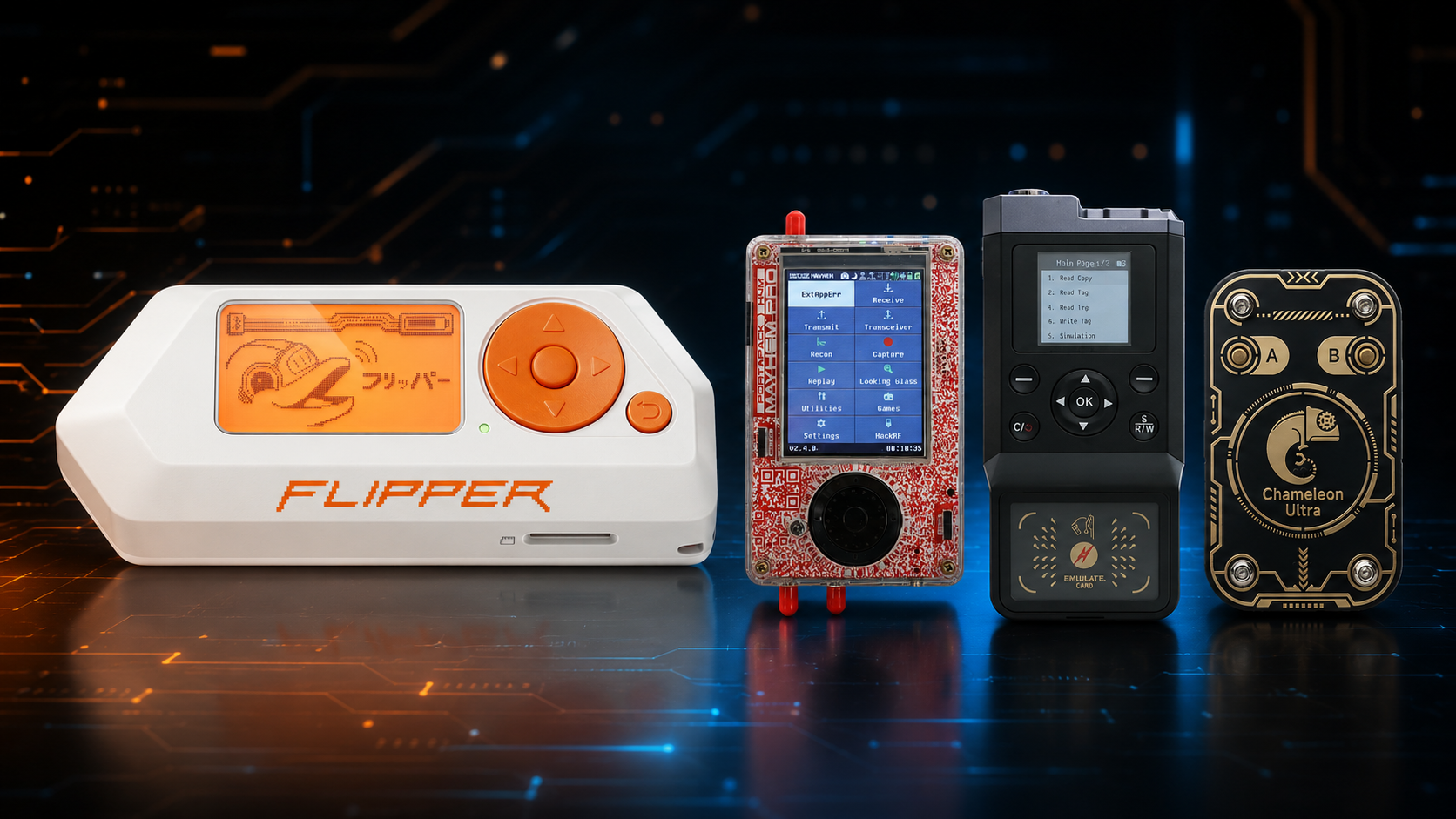
Flipper Zero is still one of the most recognizable portable hardware multi-tools in 2026. It combines NFC, low-frequency RFID, Sub-GHz radio, infrared, iButton, GPIO, USB, Bluetooth, and standalone operation in one compact device.
However, Flipper Zero is not always the best tool for every buyer. Some users need a real wideband SDR. Others want deeper RFID and NFC analysis, more accurate card emulation, guided badge-testing workflows, Linux networking tools, or a more advanced platform for authorized security research.
That is where Flipper Zero alternatives become useful. The best alternative depends on the job. A HackRF PortaPack H4M is stronger for wideband radio exploration. Chameleon Ultra is more focused on compact RFID/NFC emulation. iCopy XS is easier for professional badge-testing workflows. Proxmark3 RDV4 is better for deep RFID research. Flipper One is the future option to watch for Linux, SDR modules, networking, and M.2 expansion.
This guide compares the best Flipper Zero alternatives in 2026 and explains which tool you should buy for authorized RF testing, RFID/NFC audits, portable SDR use, security research, and hardware learning.
Quick Answer: What Is the Best Flipper Zero Alternative?
There is no single perfect replacement for Flipper Zero because the original device combines several technologies in one pocket-sized tool. The best Flipper Zero alternative depends on which feature matters most to you.
| Alternative | Best For | Best Buyer |
|---|---|---|
| HackRF PortaPack H4M | Portable wideband SDR, spectrum exploration, RF learning, and Mayhem firmware | Radio hobbyists, makers, and authorized RF testers |
| HackRF Pro with PortaPack H4M Pro | Newer portable SDR hardware with upgraded board design | Buyers who want the latest preorder HackRF platform |
| Chameleon Ultra | Compact LF/HF RFID and NFC emulation-focused workflows | RFID developers, testers, and security researchers |
| iCopy XS | Guided handheld badge identification and authorized access-control testing | Locksmiths, facility teams, and professional auditors |
| Proxmark3 RDV4 | Advanced RFID/NFC analysis and technical research | Labs, universities, experienced researchers, and red teams |
| PLUTO+ SDR | Ethernet SDR, GNU Radio, 2TX/2RX, and digital communications development | Students, engineers, and RF developers |
| Flipper One | Future Linux cyberdeck with networking and modular SDR expansion | Buyers who can wait for a finished retail product |
The simplest buyer advice is:
- Choose HackRF PortaPack H4M if your real goal is wideband SDR and radio exploration.
- Choose Chameleon Ultra if you want a compact RFID/NFC emulation-focused tool.
- Choose iCopy XS if you want guided professional badge-testing workflows.
- Choose Proxmark3 RDV4 if you want the deepest RFID/NFC research platform.
- Choose PLUTO+ SDR if you want GNU Radio, Ethernet, and digital communications development.
- Watch Flipper One if you want a future Linux networking platform with SDR modules.
Why Look for a Flipper Zero Alternative?
Flipper Zero is a broad general-purpose tool. That is its biggest advantage, but it can also be a limitation. A specialist device may be much better if you already know your main use case.
For example, Flipper Zero has a built-in Sub-GHz transceiver, but it is not a replacement for a wideband SDR. It supports NFC and RFID workflows, but a dedicated Proxmark3 or Chameleon Ultra can provide a more focused RFID research experience. It supports GPIO, but it is not a Linux computer or an Ethernet network analyzer.
Look for a specialist alternative if you need:
- Wider RF frequency coverage
- A portable SDR waterfall and spectrum interface
- Transmit-and-receive SDR hardware for authorized testing
- More focused RFID/NFC emulation
- Guided badge-identification workflows
- Advanced RFID protocol research
- GNU Radio and SDRangel development
- Ethernet-connected SDR operation
- Linux networking tools and modular expansion
What Flipper Zero Still Does Best
Before choosing an alternative, it is important to understand why Flipper Zero remains popular. It is not the most advanced device in every category, but it combines many practical tools in one compact package.
Flipper Zero remains strong for:
- Built-in NFC support
- Built-in 125 kHz RFID support
- Supported regional Sub-GHz radio workflows
- Infrared remote testing
- iButton and 1-Wire keys
- GPIO hardware projects
- USB and Bluetooth workflows
- Standalone operation without a computer
- General-purpose hardware learning
If you want one portable tool that does a little of everything, Flipper Zero may still be the best choice. If you want deeper capability in one specific area, choose a specialist alternative.
Best Flipper Zero Alternative for Wideband SDR: HackRF PortaPack H4M
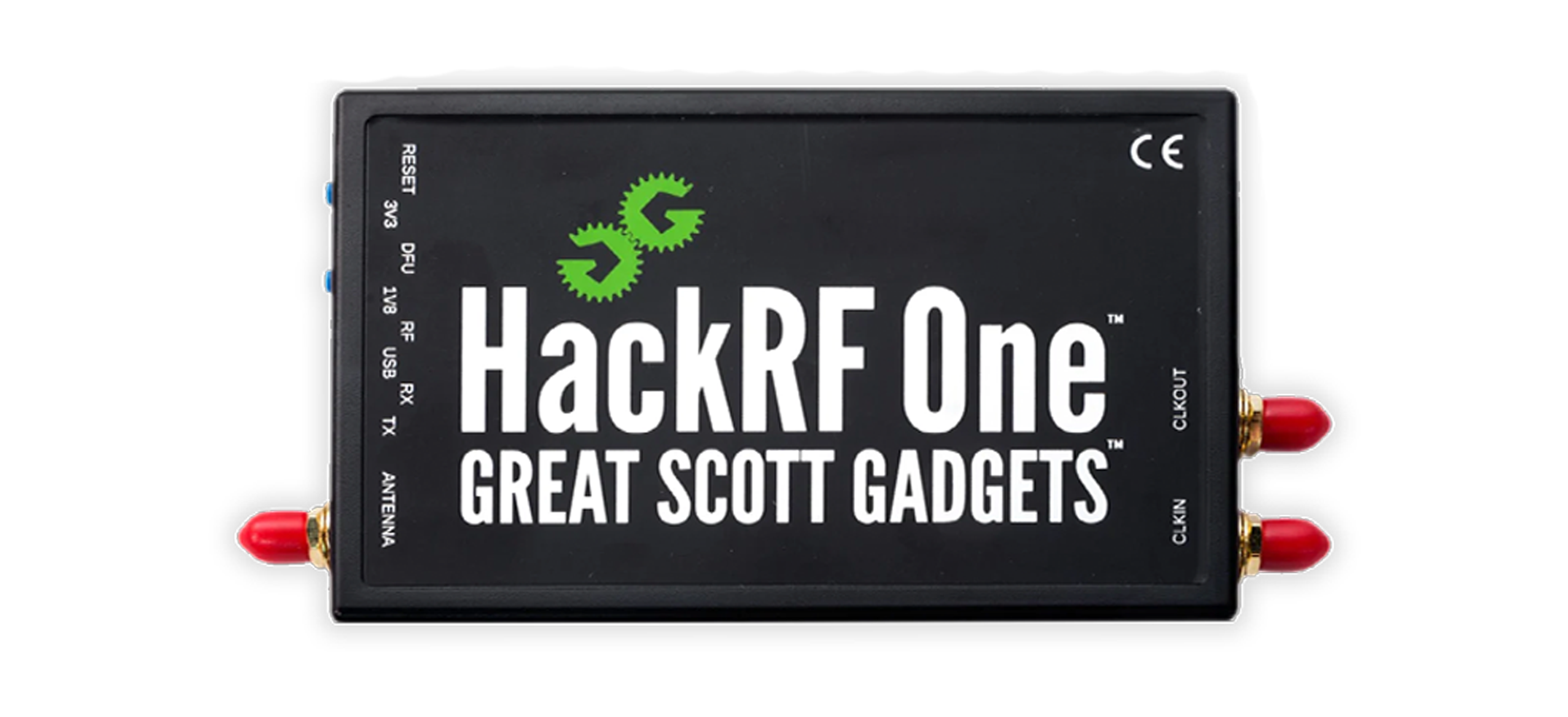
The HackRF PortaPack H4M Mayhem Signature Edition is one of the best Flipper Zero alternatives for buyers whose main interest is radio.
HackRF One is a software-defined radio platform capable of receiving or transmitting radio signals from 1 MHz to 6 GHz. The PortaPack H4M adds a screen, physical controls, microSD support, battery management, portable operation, and Mayhem firmware.
This makes HackRF H4M much more suitable than Flipper Zero for spectrum exploration, wideband radio learning, portable SDR use, and RF experimentation in authorized environments.
Choose HackRF H4M if you want:
- A real wideband SDR platform
- Portable spectrum exploration
- A screen-based waterfall and radio interface
- Mayhem firmware
- RF learning across a much wider frequency range
- Standalone use for many common workflows
- PC-based SDR use when connected by USB
HackRF H4M vs Flipper Zero
| Feature | Flipper Zero | HackRF PortaPack H4M |
|---|---|---|
| Main purpose | General pocket hardware multi-tool | Portable wideband SDR platform |
| Radio focus | Supported Sub-GHz workflows | Wideband RF exploration |
| Frequency coverage | Focused on supported Sub-GHz bands | HackRF One platform covers 1 MHz–6 GHz |
| Spectrum waterfall | Limited compared with a dedicated SDR | Core PortaPack feature |
| NFC and LF RFID | Built in | Not the main purpose |
| Infrared and iButton | Built in | Not the main purpose |
| Best buyer | General hardware explorer | Radio and SDR enthusiast |
HackRF H4M is not a complete Flipper Zero replacement. It is the better option when radio matters more than NFC, RFID, infrared, or iButton.
Newest Portable SDR Alternative: HackRF Pro with PortaPack H4M Pro
Buyers who want a newer portable SDR platform should also consider the HackRF Pro R1.2.1 with PortaPack H4M Pro Mayhem Signature Edition.
This newer preorder model is listed with 100 kHz–6 GHz working coverage, an upgraded LPC4330 MCU, iCE40 UltraPlus FPGA, 32M-bit flash memory, built-in 25 MHz 0.5 ppm TCXO, USB-C, reinforced shielding, and enhanced antenna port protection.
The PortaPack H4M Pro version is designed around a removable 18650 battery format. The battery is not included, so buyers need a compatible cell for portable use.
Choose H4M Pro if:
- You want the latest HackRF Pro board platform.
- You are comfortable ordering a preorder model.
- You want a wider listed lower-frequency range.
- You want upgraded hardware and more future expansion potential.
- You prefer a removable 18650 battery format.
Read the comparison: HackRF Pro vs HackRF One Inside PortaPack H4M: Is the Upgrade Worth It?
Best Compact RFID/NFC Alternative: Chameleon Ultra
The Chameleon Ultra is one of the best Flipper Zero alternatives for users focused on authorized RFID and NFC testing.
Chameleon Ultra is an open-source RFID/NFC tool built around the nRF52840 platform. It is designed around portable LF/HF emulation, supported read/write workflows, wireless control, and a compact keychain-sized format.
Unlike Flipper Zero, Chameleon Ultra is not trying to be a broad multi-tool. Its strength is specialization. It is designed for RFID/NFC developers, security researchers, and authorized testers who want a small device for repeatable card and reader testing.
Choose Chameleon Ultra if you want:
- A compact RFID/NFC-focused device
- LF and HF emulation workflows
- Open-source firmware
- USB and BLE control options
- Portable card-profile management
- A smaller RFID/NFC specialist tool
- Authorized reader-testing workflows
Chameleon Ultra vs Flipper Zero
| Feature | Flipper Zero | Chameleon Ultra |
|---|---|---|
| Main purpose | Broad pocket multi-tool | Compact RFID/NFC specialist tool |
| RFID/NFC focus | One part of a larger toolset | Main design priority |
| Sub-GHz and infrared | Built in | Not the main purpose |
| Wireless control | Bluetooth-supported workflows | BLE-focused control available |
| Best buyer | User who wants broad versatility | User who wants portable RFID/NFC testing |
Chameleon Ultra is the better buy when RFID/NFC emulation is your main goal. Flipper Zero remains better if you also need Sub-GHz, infrared, iButton, and GPIO in one pocket device.
Best Guided Badge-Testing Alternative: iCopy XS
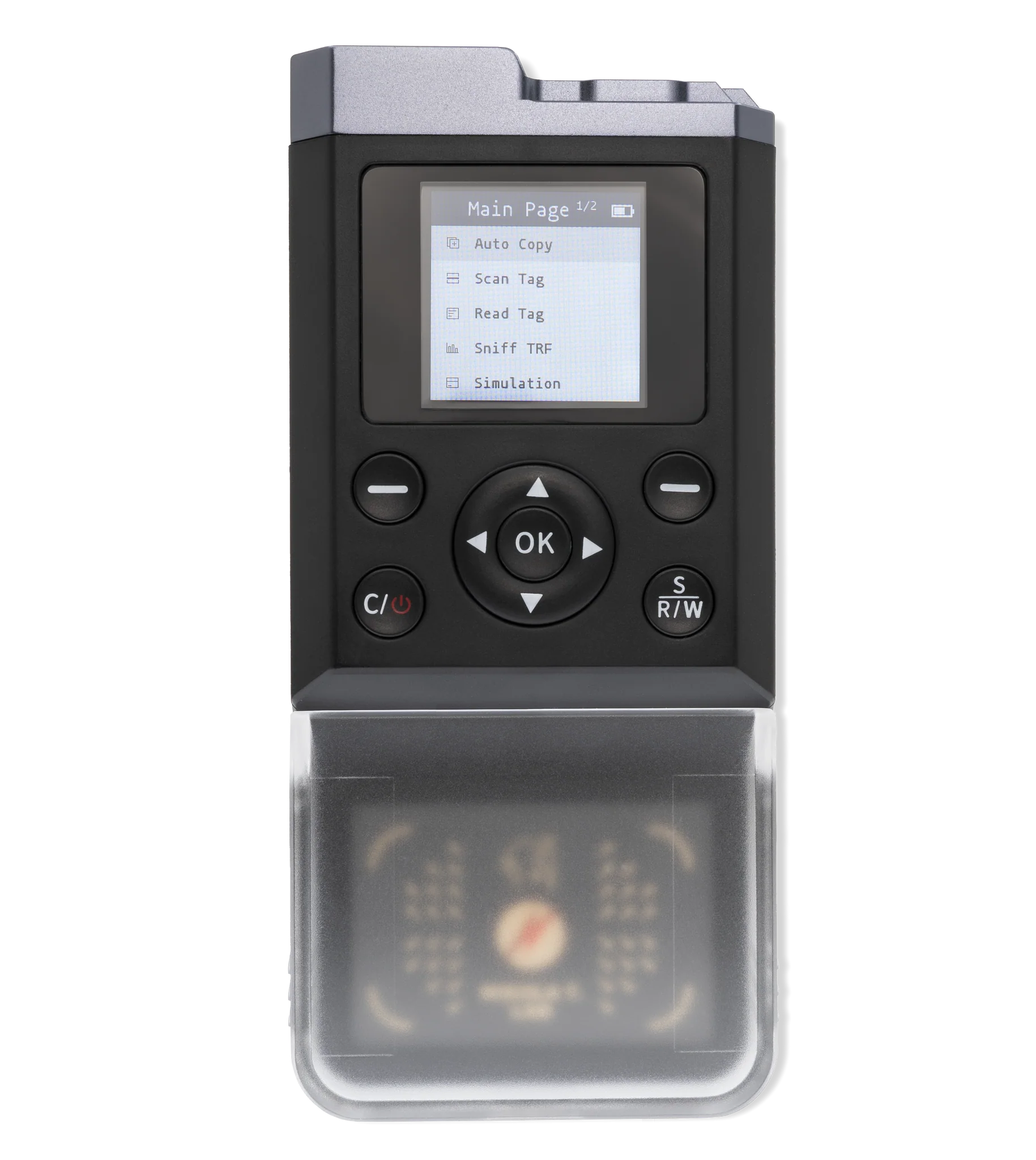
The iCopy XS is designed for users who need a more guided RFID/NFC workflow. It is built around Proxmark technology but adds a handheld interface, screen, physical controls, battery power, offline operation, and Proxmark mode.
This makes iCopy XS attractive for locksmiths, facility teams, authorized access-control auditors, and professionals who need fast badge identification without setting up a laptop for every basic field task.
Choose iCopy XS if you want:
- A handheld RFID/NFC badge-testing tool
- A screen and physical controls
- Portable offline operation
- Low-frequency and high-frequency badge support
- Faster guided field workflows
- Proxmark mode for more advanced PC-connected use
- A professional tool for authorized access-control audits
iCopy XS vs Flipper Zero
| Feature | Flipper Zero | iCopy XS |
|---|---|---|
| Main purpose | General hardware multi-tool | Guided handheld RFID/NFC testing |
| Badge-testing workflow | Useful for supported basic workflows | More focused professional interface |
| Proxmark platform | No | Built around Proxmark technology |
| Sub-GHz and infrared | Built in | Not the main purpose |
| Best buyer | General hardware enthusiast | Professional badge tester or facility team |
Read the full review: iCopy XS Review: Hands-On RFID/NFC Tool for Authorized Badge Testing
Best Advanced RFID Research Alternative: Proxmark3 RDV4
The Proxmark3 RDV4.01 is the best option for users who want deep RFID and NFC research rather than a simplified pocket interface.
Proxmark3 is designed for technical analysis across low-frequency and high-frequency RFID systems. It is better suited to labs, universities, professional researchers, and experienced security teams that need more manual control and are comfortable with a steeper learning curve.
Choose Proxmark3 RDV4 if you want:
- Advanced RFID/NFC analysis
- A research-focused platform
- More manual control
- Command-line workflows
- Protocol learning and lab work
- University or professional security testing
- A platform for users willing to learn deeply
Proxmark3 vs Flipper Zero
| Feature | Flipper Zero | Proxmark3 RDV4 |
|---|---|---|
| Ease of use | Beginner-friendly handheld interface | Higher learning curve |
| RFID research depth | Good for accessible portable workflows | Better for advanced technical research |
| General multi-tool features | NFC, RFID, Sub-GHz, IR, iButton, GPIO | Focused mainly on RFID/NFC research |
| Best buyer | Beginner or general hardware explorer | Experienced researcher or lab user |
Read the comparison: iCopy XS vs Proxmark3 vs Chameleon Ultra: Which RFID Tool Should You Buy?
Best SDR Development Alternative: PLUTO+ SDR
The PLUTO+ SDR AD9363 2T2R Transceiver is not a pocket multi-tool, but it is a better choice if your real goal is SDR development.
PLUTO+ SDR is designed for users who want GNU Radio, SDRangel, digital communications, Ethernet workflows, 2TX/2RX experiments, and AD9363-based development.
Choose PLUTO+ SDR if you want:
- GNU Radio development
- SDRangel workflows
- Ethernet-connected SDR operation
- 2TX/2RX experimentation
- Digital communications learning
- A lab-focused SDR platform
- A stronger development path than a pocket multi-tool
PLUTO+ is not a Flipper Zero replacement for everyday carry. It is an upgrade path for buyers who want a real development platform rather than a compact gadget.
Read the setup guide: PLUTO+ SDR Setup Guide: First Signal with SDRangel, GNU Radio, and Ethernet
Future Flipper Zero Alternative to Watch: Flipper One
Flipper One is one of the most interesting future alternatives, but it is not available as a finished retail product yet.
Flipper Devices revealed Flipper One as an open Linux platform designed around networking, modular expansion, optional SDR modules, cellular connectivity, storage modules, GNSS, AI accelerators, Wi-Fi, and Ethernet.
It is not a direct Flipper Zero replacement. Flipper Zero focuses on physical protocols and portable everyday use. Flipper One aims to be a Linux cyberdeck for connected systems and modular hardware.
Wait for Flipper One if you want:
- A Linux portable multi-tool
- Wi-Fi and Ethernet networking tools
- M.2 SDR modules
- Optional 4G and 5G modem support
- Storage and GNSS expansion
- Local AI experimentation
- A more powerful modular cyberdeck
Read the full explainer: What Is Flipper One? Linux, SDR Modules, 5G, AI, Price, and Release Date Explained
Best Flipper Zero Alternative by Use Case
| Use Case | Best Choice | Why |
|---|---|---|
| General pocket multi-tool | Flipper Zero | Still the best all-in-one option for supported everyday workflows |
| Portable wideband SDR | HackRF PortaPack H4M | Better frequency coverage and spectrum-focused operation |
| Newest portable SDR preorder | HackRF Pro with PortaPack H4M Pro | Newer HackRF Pro hardware and wider listed lower-frequency range |
| Compact RFID/NFC emulation | Chameleon Ultra | Small, open-source, and focused on RFID/NFC workflows |
| Guided professional badge testing | iCopy XS | Screen-based handheld workflow and Proxmark mode |
| Deep RFID/NFC research | Proxmark3 RDV4 | Stronger technical research platform with more manual control |
| GNU Radio and Ethernet SDR development | PLUTO+ SDR | Better for digital communications and lab projects |
| Future Linux network cyberdeck | Flipper One | Designed for networking, modular expansion, and optional SDR modules |
Which Alternative Is Best for Beginners?
The answer depends on what the beginner wants to learn.
- Choose Flipper Zero if you want one accessible general-purpose tool.
- Choose HackRF H4M if you mainly want to learn radio and SDR.
- Choose Chameleon Ultra if you mainly want compact RFID/NFC emulation testing.
- Choose iCopy XS if you need a guided professional RFID/NFC workflow.
- Choose Proxmark3 only if you are comfortable with a steeper technical learning curve.
- Choose PLUTO+ if you want SDR development and GNU Radio rather than a pocket tool.
Which Alternative Is Best for Security Professionals?
Security professionals should choose based on the environment being tested.
- Use iCopy XS for guided authorized badge testing in the field.
- Use Proxmark3 RDV4 for deeper RFID/NFC analysis in a lab.
- Use Chameleon Ultra for compact RFID/NFC emulation-focused testing.
- Use HackRF H4M for authorized RF spectrum exploration.
- Use PLUTO+ SDR for controlled communications research and development.
Many professional teams may benefit from more than one tool because each device covers a different part of the workflow.
Can HackRF H4M Replace Flipper Zero?
HackRF H4M can replace Flipper Zero only if your main priority is radio. It is a much stronger portable SDR platform, but it does not replace Flipper Zero’s built-in NFC, low-frequency RFID, infrared, iButton, and GPIO-focused everyday workflows.
The better question is not “which device is more powerful?” but “which device matches the project?”
Can Chameleon Ultra Replace Flipper Zero?
Chameleon Ultra can replace Flipper Zero for some RFID/NFC-focused users. It is smaller, more specialized, and designed around emulation-focused workflows.
However, it does not replace Flipper Zero’s Sub-GHz radio, infrared, iButton, or general GPIO capabilities.
Can iCopy XS Replace Flipper Zero?
iCopy XS is the better tool for professional badge identification and guided access-control testing, but it is not a general-purpose replacement. It focuses on RFID/NFC workflows rather than Sub-GHz radio, infrared, or hardware GPIO experimentation.
Can Flipper One Replace Flipper Zero?
Flipper One is not intended to replace Flipper Zero. It is a separate Linux networking and modular-hardware platform. Some users may eventually want both devices.
Flipper Zero remains better for built-in pocket tools. Flipper One is designed for Linux, networking, Ethernet, Wi-Fi, optional cellular modems, SDR expansion, and portable computing.
Where to Browse Flipper Zero Alternatives
SDRstore.eu offers several specialist alternatives for radio, SDR, RFID, and NFC projects:
- HackRF, PortaPack H4M, and Mayhem-compatible SDR devices
- RFID and NFC tools
- RFID instruments and readers
- PlutoSDR and PLUTO+ SDR devices
- Software-defined radio equipment
Important Legal and Ethical Note
Flipper Zero alternatives should only be used on systems, cards, readers, networks, devices, and radio environments that you own, manage, or have explicit permission to test.
These tools are useful for education, troubleshooting, security audits, hardware development, access-control improvement, and authorized research. They should not be used to access badges, networks, devices, radio systems, or communications without authorization.
Final Verdict: Best Flipper Zero Alternatives in 2026
Flipper Zero remains one of the best general-purpose pocket multi-tools, but specialist alternatives can be much better for specific projects.
Choose HackRF PortaPack H4M if your main interest is wideband SDR and radio exploration. Choose HackRF Pro with PortaPack H4M Pro if you want the newest portable SDR preorder option. Choose Chameleon Ultra if you want a compact RFID/NFC emulation-focused device. Choose iCopy XS if you want guided professional badge testing. Choose Proxmark3 RDV4 if you need deep RFID research. Choose PLUTO+ SDR if your goal is Ethernet, GNU Radio, and digital communications development.
Flipper One is the future device to watch, but it is not a finished retail product yet. Wait for it if you want a modular Linux cyberdeck with SDR, 5G, AI, storage, and networking expansion.
The best buying decision is not to choose the device with the longest specification list. Choose the tool designed for the project you actually want to complete.
FAQ
What is the best Flipper Zero alternative in 2026?
The best Flipper Zero alternative depends on your goal. Choose HackRF H4M for wideband SDR, Chameleon Ultra for compact RFID/NFC emulation, iCopy XS for guided badge testing, and Proxmark3 RDV4 for advanced RFID research.
Is HackRF PortaPack H4M better than Flipper Zero?
HackRF PortaPack H4M is better for wideband SDR and radio spectrum exploration. Flipper Zero is better as a general pocket multi-tool with built-in NFC, RFID, Sub-GHz, infrared, iButton, and GPIO support.
Is Chameleon Ultra better than Flipper Zero?
Chameleon Ultra is better if your main focus is compact RFID/NFC emulation and authorized reader testing. Flipper Zero is better if you want a broader multi-tool with Sub-GHz, infrared, iButton, and GPIO features.
Is iCopy XS better than Flipper Zero?
iCopy XS is better for guided professional RFID/NFC badge-testing workflows. Flipper Zero is better for general-purpose hardware exploration and a wider range of built-in tools.
Is Proxmark3 better than Flipper Zero?
Proxmark3 is better for deep RFID/NFC research and advanced manual analysis. Flipper Zero is easier for beginners and more versatile as a compact everyday multi-tool.
What is the best Flipper Zero alternative for SDR?
HackRF PortaPack H4M is one of the best portable Flipper Zero alternatives for SDR because it is designed for wideband radio spectrum exploration and Mayhem firmware workflows.
What is the best Flipper Zero alternative for RFID and NFC?
Chameleon Ultra is a strong compact RFID/NFC emulation-focused alternative. iCopy XS is better for guided field workflows, while Proxmark3 RDV4 is better for advanced research.
Is Flipper One a Flipper Zero replacement?
No. Flipper One is a separate Linux network multi-tool and modular cyberdeck project. It is not designed as a direct replacement for Flipper Zero.
Can I buy Flipper One now?
Flipper One is still in active development. A confirmed retail release date, final price, and official preorder date have not yet been announced.
Which Flipper Zero alternative should beginners buy?
Beginners should choose based on their main interest: Flipper Zero for broad hardware learning, HackRF H4M for SDR, Chameleon Ultra for compact RFID/NFC testing, or iCopy XS for guided professional badge workflows.
No posts found
Write a review






We support all major card and digital payment options. More local methods are available and shown during checkout.
You enter into a binding sales contract once you have received an 'order confirmation and sales receipt' email from us, in line with our Sales & Delivery conditions. Therefore, sdrstore.eu has the right to cancel your order in the event of technical problems, delivery failure, Fair use policy and other similar situations.






Your payments are protected by advanced encryption and 3-D Secure authentication for safe online shopping.