





RF Cyber Range Hardware: SDRs, Antennas, Attenuators, Shield Boxes, and Test Signals
An RF cyber range is a controlled training and testing environment where cybersecurity teams, universities, RF engineers, product-security labs, and wireless researchers can safely study radio systems. Instead of testing against live public networks or unknown devices, an RF cyber range uses owned hardware, shield boxes, dummy loads, attenuators, known test signals, logging, and written procedures.
A good RF cyber range is not just a HackRF on a desk. It is a complete controlled RF environment with receive-only monitoring, transmit-capable SDRs, antennas, cabled RF paths, attenuation, shielding, measurement tools, clean datasets, safe test signals, and clear authorization boundaries.
This guide explains how to choose RF cyber range hardware, including SDRs, antennas, attenuators, shield boxes, dummy loads, test signals, GNU Radio, SigMF datasets, spectrum analyzers, VNAs, and RF safety accessories for legal wireless-security training and defensive product testing.
Browse software-defined radio hardware, HackRF SDR devices, RTL-SDR receivers, USRP SDR devices, RF test and measurement equipment, RF dummy loads, and request a formal quote from SDRstore.eu.
Quick Answer: What Hardware Do You Need for an RF Cyber Range?
| Range layer | Recommended hardware | Why it matters |
|---|---|---|
| Receive-only monitoring | RTL-SDR Blog V3 USB-C, antennas, OpenWebRX, SDR++, GNU Radio | Safe starting point for spectrum awareness, signal discovery, training, and baseline monitoring. |
| Transmit-capable SDR | HackRF Pro, PLUTO+, bladeRF, USRP B210, USRP X310 | Needed for controlled lab-generated signals, custom waveforms, protocol research, and advanced exercises. |
| Safe RF path | Fixed attenuators, variable attenuators, dummy loads, DC blocks, filters, couplers | Protects equipment and keeps test signals under control. |
| Shielded environment | RF shield box, shielded pouch, shielded test enclosure, cabled setup | Reduces unintended radiation and prevents outside signals from corrupting exercises. |
| Antennas | Band-specific antennas, directional antennas, near-field probes, GNSS/L-band antennas, Sub-GHz antennas | Allows realistic receive-side monitoring and controlled over-the-air tests inside approved environments. |
| Measurement tools | TinySA Ultra, NanoVNA, RF power meter, spectrum analyzer | Validates frequency, power, antennas, cables, filters, harmonics, and safe signal levels. |
| Compute and logging | Linux workstation, mini PCs, storage, time sync, SigMF, Wireshark, Kismet, GNU Radio | Turns exercises into repeatable labs with evidence, datasets, and reports. |
| Governance | Scope documents, risk assessment, lab rules, exercise sheets, incident logs | Keeps RF testing legal, safe, repeatable, and useful for training or audits. |
The simple rule: build the RF cyber range around control. Control the signals, control the power, control the antennas, control the environment, control the logs, and control who is authorized to run each exercise.
What Is an RF Cyber Range?
An RF cyber range is a wireless-security training and testing environment where radio signals can be observed, generated, measured, logged, and analyzed without affecting real-world systems.
An RF cyber range can be used for:
- Wireless cybersecurity education
- SDR training
- RF product-security testing
- IoT security labs
- Sub-GHz monitoring exercises
- BLE and WiFi audit training
- Drone RF monitoring research
- GNSS interference awareness training
- RF fingerprinting datasets
- Private 5G and MIMO security research
- Incident-response tabletop and technical exercises
The key difference between an RF cyber range and a normal RF lab is that the cyber range is designed for repeatable security exercises. Every device, signal, scenario, capture, antenna, and risk boundary should be documented.
Legal Boundary: Test Signals Must Stay Controlled
An RF cyber range should never become an uncontrolled transmitter bench. Many SDRs can transmit, but that does not mean they should be connected to an antenna in an open environment.
- Use receive-only monitoring for normal facility surveys and training.
- Use cabled RF paths, dummy loads, attenuators, or shield boxes for generated signals.
- Do not jam, spoof, replay, or interfere with public or third-party systems.
- Do not transmit in licensed or restricted bands without authorization.
- Do not test third-party devices without written permission.
- Do not run exercises that could affect WiFi, Bluetooth, GNSS, cellular, aircraft, maritime, emergency, or industrial systems.
- Keep transmit-capable hardware under access control.
- Document every exercise, frequency, power level, antenna, cable path, and operator.
For most RF cyber range exercises, the safest design is conducted testing: SDR output → attenuator → optional filter/coupler → receiver input or dummy load. Over-the-air testing should happen only inside an approved shielded environment or under a legal test plan.
SDR Hardware for RF Cyber Ranges
RTL-SDR: Safe receive-only training and monitoring
The RTL-SDR Blog V3 USB-C is one of the safest and most affordable starting points for an RF cyber range because it is receive-only.
Use RTL-SDR for:
- First SDR lessons
- Waterfall and spectrum training
- Sub-GHz monitoring
- ADS-B, AIS, ACARS, and public signal awareness where lawful
- RF baseline monitoring
- Student benches
- Receive-only incident-response exercises
- OpenWebRX receiver nodes
Limitations: RTL-SDR is receive-only, has limited bandwidth and dynamic range, and does not directly cover 2.4 GHz or 5.8 GHz. It is excellent for safe monitoring and beginner exercises but not enough for every cyber range scenario.
HackRF Pro: Wideband controlled test signal platform
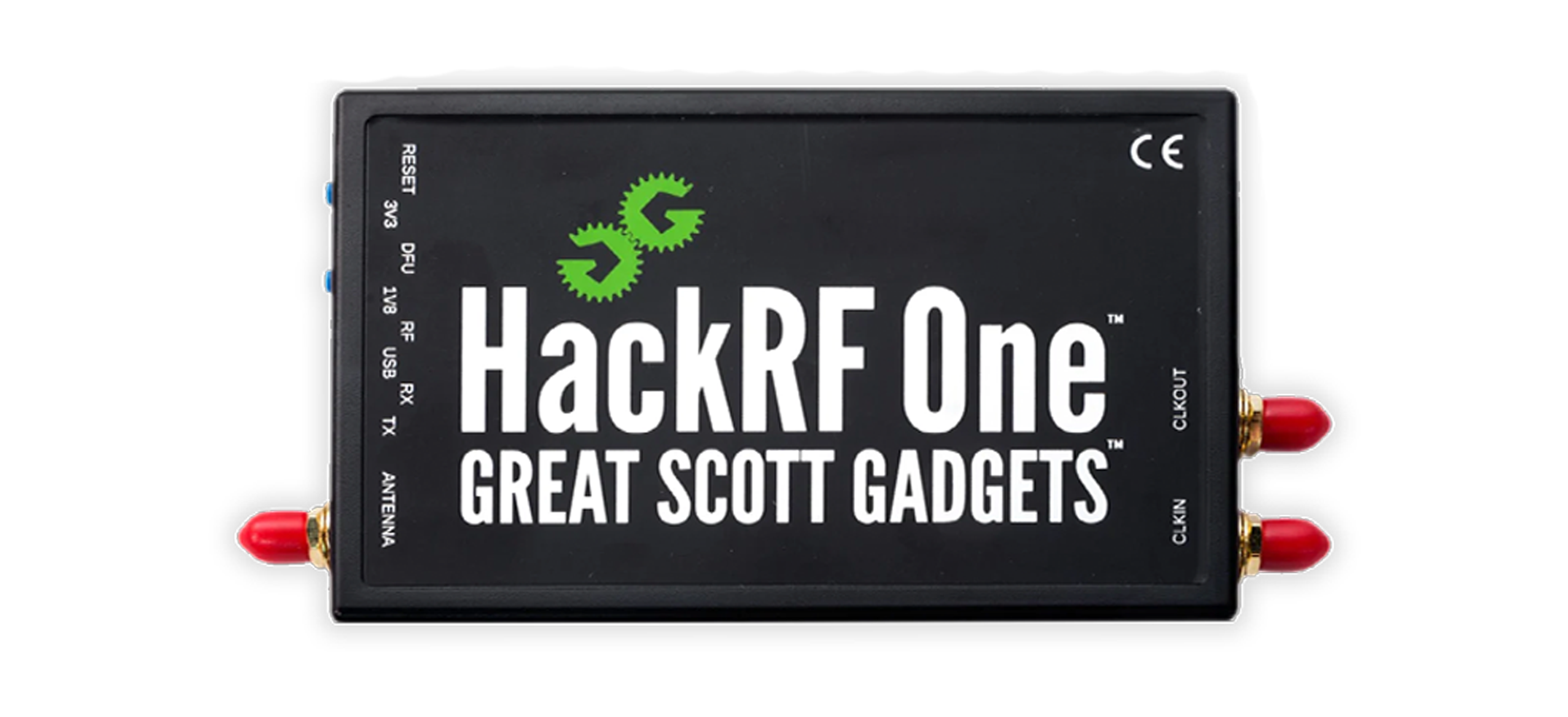
The HackRF Pro is useful for RF cyber ranges because it covers a wide frequency range and supports transmit and receive workflows. It is a strong platform for GNU Radio training, controlled waveform generation, receive-side monitoring, and wireless-security education.
Use HackRF Pro for:
- Controlled lab-generated test signals
- Wideband receive-side monitoring
- GNU Radio exercises
- IoT and Sub-GHz signal labs
- BLE/WiFi RF-layer awareness
- Drone RF monitoring exercises
- RF fingerprinting datasets
- Training students on transmit safety and attenuation
Important note: HackRF Pro is transmit-capable. In an RF cyber range, it should normally transmit only into a cabled attenuated path, dummy load, or shielded test box unless a legal over-the-air test is explicitly approved.
PLUTO+ SDR: AD9363-based intermediate cyber range platform
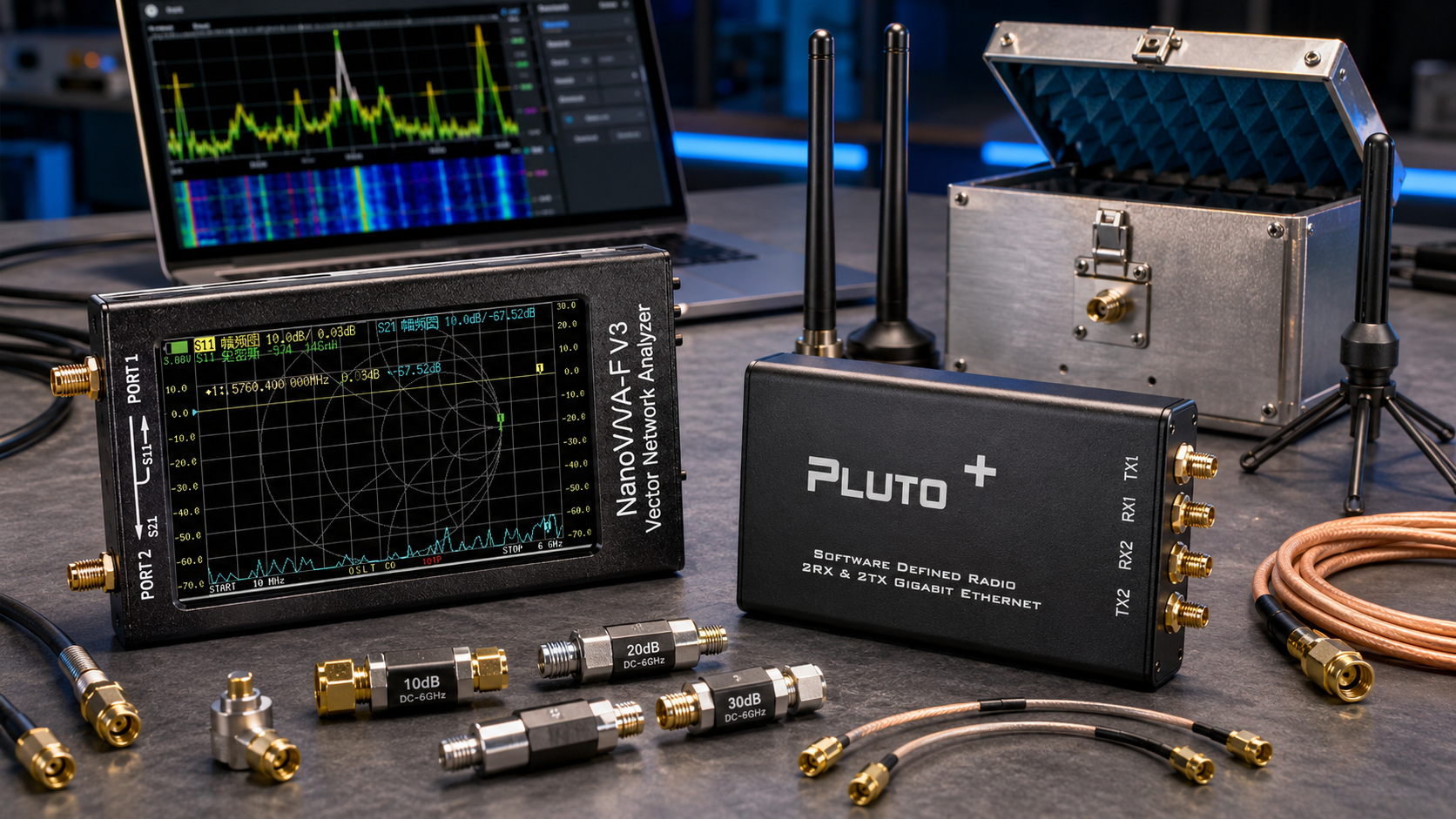
PLUTO+ SDR is useful for intermediate RF training where the lab wants AD9363-based SDR workflows, Ethernet connectivity, and controlled transmit/receive exercises.
Use PLUTO+ for:
- Intermediate SDR training
- Controlled digital communications labs
- GNU Radio and SDRangel exercises
- 2T2R concepts
- Wireless course labs
- Lower-cost research before moving to USRP-class hardware
bladeRF: MIMO and FPGA-oriented wireless security research
bladeRF 2.0 micro is useful when the cyber range includes 2×2 MIMO, FPGA-related concepts, custom waveforms, and advanced SDR development.
Use bladeRF for:
- 2×2 MIMO exercises
- Custom modem research
- FPGA-oriented security labs
- RF fingerprinting datasets
- Graduate wireless-security research
- Private 5G-adjacent training foundations
Choose bladeRF 2.0 micro xA4 for general work and bladeRF 2.0 micro xA9 when more FPGA capacity is required.
USRP B210 and X310: Research-grade RF cyber range platforms
The USRP B210 is a strong research platform for RF cyber ranges that need UHD, GNU Radio, 2×2 MIMO, private 5G foundations, and repeatable SDR workflows.
The USRP X310 is better when the range needs higher bandwidth, stronger timing options, networked SDR operation, and a more durable research platform.
Use USRP hardware for:
- Advanced wireless-security research
- 2×2 MIMO cyber range exercises
- Private 5G and O-RAN training labs
- AI-RAN and neural receiver datasets
- RF fingerprinting research
- Channel sounding and controlled testbeds
- Graduate-level SDR training
Antennas for an RF Cyber Range
Antennas are useful, but they also create risk. In a cyber range, antennas should be selected based on the exercise and the containment plan.
| Antenna type | Best use | Cyber range note |
|---|---|---|
| Small omnidirectional antenna | Receive-only monitoring and low-power shield-box tests | Good for beginner exercises, but avoid open-air transmission without authorization. |
| Directional antenna | Direction-finding, source hunting, perimeter monitoring exercises | Useful for defensive detection labs and controlled investigations. |
| Sub-GHz antenna | 315, 433, 868, and 915 MHz monitoring | Important for IoT, sensors, LoRa, remotes, and telemetry labs. |
| 2.4 GHz antenna | WiFi, BLE, Zigbee, Thread, drone RF, IoT exercises | Use with packet tools and RF spectrum monitoring. |
| GNSS/L-band antenna | Defensive GPS/Galileo interference monitoring exercises | Receive-only monitoring only; do not generate GNSS-like over-the-air signals. |
| Near-field probe | Board-level leakage, EMC awareness, device debugging | Useful for product-security labs and hardware training. |
Antenna rules for safe ranges
- Use cabled RF paths where possible.
- Use antennas mainly for receive-only monitoring and shielded-box tests.
- Label antennas by band.
- Do not connect high-gain antennas to transmit-capable SDRs without authorization.
- Use NanoVNA to check antennas and cables.
- Document antenna location, orientation, and test purpose.
- Keep antennas away from sensitive production systems.
Attenuators: The Most Important RF Cyber Range Accessory
Attenuators reduce signal power. They are essential when connecting a transmitter to a receiver, because many SDR receivers can be damaged or overloaded by signals that are too strong.
Why attenuators matter
- Protect receiver inputs
- Reduce overload and distortion
- Create repeatable signal levels
- Simulate path loss
- Make cabled tests safer
- Help students learn link budgets
- Prevent unrealistic “too perfect” lab conditions
Fixed vs variable attenuators
| Attenuator type | Best use | Notes |
|---|---|---|
| Fixed attenuator | Known safe signal reduction | Use common values such as 3, 6, 10, 20, 30, or 40 dB depending on the setup. |
| Variable attenuator | Training exercises and receiver sensitivity tests | Allows students to change signal level and observe receiver behavior. |
| Step attenuator | Repeatable lab testing | Useful when exercises require known changes in signal level. |
| High-power attenuator | Transmitters and amplifiers | Must be rated for frequency, power, duty cycle, connector, and cooling. |
Always check frequency rating, power rating, connector type, and maximum input level. Do not assume a small SMA attenuator can handle amplifier output.
Dummy Loads: Safe Termination for Test Signals
A dummy load is a 50-ohm RF termination that absorbs RF power and simulates an antenna load. It is essential for safe testing because it lets a transmitter operate without radiating into the environment.
Browse RF dummy loads and testing accessories.
Use dummy loads for
- Transmitter safety checks
- RF cyber range exercises that do not require antennas
- Amplifier and power-chain validation
- Testing signal generators
- Preventing accidental radiation
- Teaching RF safety
Dummy load checklist
- 50-ohm impedance
- Frequency range covers the exercise
- Power rating above expected transmit power
- Connector matches the RF chain
- Cooling or duty-cycle limits understood
- Clearly labeled and stored with the range kit
Examples include compact low-power loads for SDR benches and higher-power loads for transmitter or amplifier validation. For HackRF, PLUTO+, bladeRF, and USRP-class low-power SDR exercises, use properly rated attenuators and dummy loads before connecting any RF chain.
Shield Boxes and Shielded Test Enclosures
An RF shield box helps isolate a device under test from the outside environment. It can reduce unintended radiation, reduce outside interference, and make exercises more repeatable.
Shielding is especially useful for:
- BLE product-security tests
- WiFi lab exercises
- Sub-GHz IoT testing
- RF fingerprinting dataset capture
- Mobile device testing
- Drone Remote ID receiver tests
- GNSS receiver robustness monitoring
- Controlled over-the-air exercises at very low power
Shield box checklist
- Frequency range covers the exercise.
- Shielding effectiveness is suitable for the risk level.
- RF feedthroughs are available if cabled signals are needed.
- Power, USB, Ethernet, or control feedthroughs are available if required.
- Ventilation or thermal limits are understood.
- Antennas inside the box are mounted repeatably.
- The box is tested before relying on it for containment.
Shield boxes reduce risk, but they are not magic. Poor cables, open lids, bad feedthroughs, or high transmit power can still create leakage. For sensitive exercises, measure leakage with a spectrum analyzer before running training.
Test Signals: Safe, Known, and Documented
Test signals are the heart of an RF cyber range. They let students and engineers practice detection, classification, logging, filtering, demodulation, and incident response without targeting real third-party systems.
Good cyber range test signals
- Simple unmodulated carrier at low power inside a cabled or shielded setup
- FSK or PSK training waveform generated for owned lab receivers
- LoRa-like authorized lab transmission from owned development boards
- BLE advertisements from owned test devices
- WiFi packets from a lab access point inside scope
- Sub-GHz sensor messages from owned development boards
- Known IQ recordings replayed in software only
- Noise, fading, and attenuation simulations in GNU Radio
- SigMF datasets used for offline analysis
Test signals to avoid
- Jamming signals
- GNSS spoofing signals transmitted over the air
- Replay of real access-control remotes
- Signals targeting neighboring devices
- Unapproved cellular, aviation, maritime, emergency, or satellite bands
- High-power transmissions from an open bench
- Exercises that disrupt real WiFi, Bluetooth, alarms, sensors, or radios
A safe test signal should have a written purpose, known frequency, known bandwidth, known power level, known RF path, known operator, and known containment method.
Measurement Tools for RF Cyber Ranges
| Tool | Use in RF cyber range | SDRstore.eu link |
|---|---|---|
| TinySA Ultra or spectrum analyzer | Check signal frequency, bandwidth, harmonics, interference, leakage, and test signal presence | Spectrum analyzers |
| NanoVNA | Validate antennas, cables, filters, return loss, SWR, and RF paths | NanoVNA-H4 |
| RF power meter | Measure conducted output power and validate attenuation chains | RF power meters |
| Dummy loads | Terminate transmitters safely without radiating into the environment | RF dummy loads |
| Filters | Reduce overload, isolate exercise bands, and improve receiver behavior | RF test and measurement equipment |
| DC blocks | Protect equipment from unexpected bias-tee voltage | RF test and measurement equipment |
Software for an RF Cyber Range
GNU Radio
GNU Radio is one of the most useful tools for RF cyber ranges because it supports custom SDR signal processing, waveform generation, filtering, demodulation, power logging, and training flowgraphs.
Use GNU Radio for:
- Receiver exercises
- Signal classification training
- Controlled test signal generation
- Demodulation labs
- Noise and fading simulations
- Dataset creation
- RF fingerprinting experiments
SDR++ and SDRangel
SDR++ and SDRangel are useful for interactive spectrum viewing, signal discovery, teaching, and quick receiver demonstrations.
OpenWebRX
OpenWebRX is useful for browser-based receive-only monitoring nodes, shared training receivers, and remote student access to controlled receive environments.
Wireshark and Kismet
Wireshark and Kismet are useful for WiFi, BLE, and packet-level wireless exercises where the correct capture hardware is used. They complement SDR tools by showing protocol behavior, while SDR tools show RF-layer behavior.
SigMF
SigMF is useful for recording IQ datasets with metadata. This is important for repeatable exercises and research because raw IQ files without metadata quickly become hard to interpret.
Store metadata such as:
- Exercise name
- Signal type
- Frequency
- Sample rate
- Bandwidth
- Gain
- SDR model and serial number
- Antenna or cabled path
- Attenuation value
- Shield box or enclosure details
- Operator
- Date and time
- Legal scope
RF Cyber Range Exercises by Difficulty
Beginner exercises
- Find a known signal in the waterfall.
- Measure noise floor before and after changing antenna placement.
- Compare RTL-SDR and HackRF receive behavior.
- Identify a simple lab-generated carrier in a cabled setup.
- Use NanoVNA to check an antenna.
- Use TinySA Ultra to confirm a signal is present.
- Record an IQ file and create SigMF metadata.
Intermediate exercises
- Demodulate a simple FSK training signal from an owned transmitter.
- Build a Sub-GHz device inventory for a lab.
- Capture BLE advertisements from authorized test devices.
- Detect a rogue lab transmitter in a shielded setup.
- Measure the effect of attenuation on receiver performance.
- Compare over-the-air and cabled test results.
- Build a simple RF alert when band power exceeds a baseline.
Advanced exercises
- Create an RF fingerprinting dataset from owned transmitters.
- Build a controlled drone RF monitoring scenario without interference.
- Analyze WiFi packet captures alongside SDR spectrum logs.
- Run 2×2 MIMO channel experiments with proper synchronization.
- Test private 5G lab behavior in a shielded or cabled RF path.
- Train students on RF incident response using prepared signal recordings.
- Compare detection methods across SDR, spectrum analyzer, packet sniffer, and logs.
Recommended RF Cyber Range Packages
Package 1: Beginner RF cyber range for students
- 6–12× RTL-SDR Blog V3 USB-C receivers
- 1–2× HackRF Pro units for instructor-controlled demonstrations
- Band-specific antennas
- Basic SMA cable and adapter kit
- Dummy loads
- Fixed attenuators
- SDR++, SDRangel, GNU Radio, OpenWebRX
- Exercise sheets and safety rules
Best for: universities, workshops, beginner wireless-security training, and safe receive-first SDR education.
Package 2: RF cybersecurity lab bench
- HackRF Pro
- RTL-SDR receiver
- PLUTO+ or bladeRF where 2T2R or MIMO is useful
- TinySA Ultra or spectrum analyzer
- NanoVNA-H4
- RF power meter
- Dummy loads
- Fixed and variable attenuators
- Filters, DC blocks, cables, adapters, and antennas
- GNU Radio, SigMF, Wireshark, Kismet, Python tools
Best for: cybersecurity firms, RF labs, IoT product-security teams, and internal security training teams.
Package 3: Shielded wireless product-security range
- RF shield box or shielded test enclosure
- HackRF Pro or USRP B210
- RTL-SDR monitor receiver
- BLE sniffer and WiFi monitor-mode adapter where needed
- Sub-GHz development boards for owned test devices
- Attenuators, couplers, dummy loads, filters, and DC blocks
- Spectrum analyzer and RF power meter
- Version-controlled capture storage
Best for: IoT vendors, BLE product teams, access-control vendors, embedded device companies, and hardware security labs.
Package 4: Advanced research cyber range
- USRP B210 or USRP X310
- bladeRF 2.0 micro or PLUTO+ for additional lab nodes
- HackRF Pro for wideband exercises
- Multiple RTL-SDR receivers for monitoring
- Clock/reference hardware where needed
- Shield boxes and conducted RF paths
- MIMO antennas and equal-length cables
- RF measurement tools
- GPU workstation for RF machine learning
- Dataset storage and exercise orchestration
Best for: graduate research, RF fingerprinting, AI-RAN, private 5G, MIMO security, and advanced wireless cyber range development.
Package 5: Facility RF incident-response range
- RTL-SDR monitoring nodes
- HackRF Pro for field surveys
- KrakenSDR or directional antenna kit for localization research
- TinySA Ultra or spectrum analyzer
- NanoVNA-H4
- Sub-GHz, 2.4 GHz, 5.8 GHz, and GNSS antennas
- Central logging server
- Incident playbooks
Best for: data centers, factories, universities, ports, logistics sites, critical infrastructure, and facilities that need defensive RF monitoring training.
RF Cyber Range Safety Checklist
- Every exercise has written authorization.
- Every transmit exercise has a frequency, power, RF path, and containment plan.
- Transmit-capable SDRs are not left connected to open antennas by default.
- Dummy loads and attenuators are available at every transmitting bench.
- Maximum SDR input levels are known and posted.
- Shield boxes are tested before sensitive exercises.
- Students and staff know the difference between monitoring and interference.
- All captures are stored with metadata.
- All exercises avoid third-party systems.
- Emergency stop or power-off procedures are clear.
Exercise Documentation Template
| Field | What to record |
|---|---|
| Exercise name | Example: Sub-GHz signal discovery, BLE advertising capture, controlled FSK demodulation |
| Authorization | Course, project, customer scope, lab approval, or internal test plan |
| Frequency and bandwidth | Exact center frequency and expected signal width |
| Transmit source | SDR, development board, signal generator, or recorded file used in simulation only |
| RF path | Cabled, shield box, dummy load, antenna inside enclosure, or receive-only |
| Attenuation | Total attenuation and component values |
| Receiver | SDR model, serial number, gain, sample rate, software |
| Measurement tools | Spectrum analyzer, NanoVNA, RF power meter, logs, screenshots |
| Expected outcome | What students or testers should observe |
| Safety notes | Power limits, bands to avoid, containment requirements, stop conditions |
Common RF Cyber Range Mistakes
Buying SDRs before designing exercises
Start with the training goals. Then choose SDRs, antennas, attenuators, shield boxes, and software around those goals.
Using open-air transmission too early
Most exercises should start with cabled RF paths or shielded environments. Open-air tests add legal, safety, and interference risks.
Forgetting attenuation
Connecting a transmitter directly to an SDR receiver can overload or damage the receiver. Build safe attenuation into every conducted exercise.
Skipping measurement tools
Without a spectrum analyzer, RF power meter, and NanoVNA, the range may not know what it is actually transmitting, receiving, or leaking.
Using random antennas
Antennas should match the frequency, exercise, and containment plan. Poor antennas can ruin datasets and create false conclusions.
Not storing metadata
IQ files without frequency, sample rate, gain, antenna, and exercise details are difficult to reuse. Use structured metadata.
Teaching offensive actions without governance
A cyber range should teach safe, authorized, defensive, and controlled testing. Avoid exercises that encourage unauthorized interference or real-world misuse.
Purchase-Order Justification Examples
HackRF Pro cyber range justification
HackRF Pro is required as a wideband SDR platform for controlled RF cyber range exercises, GNU Radio training, authorized test signal generation, receive-side monitoring, and defensive wireless-security education inside safe RF test environments.
RTL-SDR training justification
RTL-SDR receivers are required for low-cost receive-only SDR training, spectrum monitoring, RF baseline exercises, student lab benches, OpenWebRX receiver nodes, and safe beginner RF cyber range activities.
USRP B210 research range justification
USRP B210 is required as a UHD-compatible 2×2 MIMO SDR platform for advanced RF cyber range exercises, private 5G training, MIMO wireless-security research, RF fingerprinting datasets, and repeatable GNU Radio workflows.
Attenuator and dummy load justification
Attenuators and dummy loads are required to create safe conducted RF paths, protect SDR receiver inputs, prevent accidental radiation, validate transmitter behavior, and teach controlled RF safety procedures.
Shield box justification
RF shield boxes or shielded test enclosures are required to isolate wireless devices under test, reduce unintended radiation, improve repeatability, and support controlled BLE, WiFi, Sub-GHz, IoT, and product-security exercises.
RF measurement tool justification
Spectrum analyzers, NanoVNA, RF power meters, filters, DC blocks, cables, and antennas are required to validate cyber range signal paths, measure antennas, confirm test signals, prevent receiver overload, and produce reliable training evidence.
Request a Quote for RF Cyber Range Hardware
Universities, cybersecurity firms, telecom labs, RF laboratories, IoT product teams, public-sector buyers, training centers, and research groups can request a formal quotation directly from SDRstore.eu.
Use the Add to Quote button on product pages or the document icon on product cards. Add RTL-SDR, HackRF Pro, PLUTO+, bladeRF, USRP B210, USRP X310, TinySA Ultra, NanoVNA, RF power meters, dummy loads, attenuators, filters, antennas, cables, adapters, shield-box requirements, and project notes to one quote request.
A quote request is useful when you need:
- RF cyber range hardware for a university
- Wireless cybersecurity training kits
- Controlled SDR test signal hardware
- Shielded wireless product-security test benches
- RF fingerprinting and ML dataset capture hardware
- Private 5G and MIMO research range hardware
- Sub-GHz, BLE, WiFi, GNSS, and drone RF monitoring exercises
- Formal pricing for company, university, or public-sector procurement
Read the SDRstore.eu quote-request guide.
Related SDRstore.eu Guides
- RF Cybersecurity Lab Equipment Checklist
- SDR for Cybersecurity Research and Authorized Wireless Security Testing
- Sub-GHz Security Testing Tools
- BLE Sniffing Hardware for Authorized Bluetooth Security Testing
- WiFi Packet Capture Hardware for Wireless Security Audits
- Detecting Rogue Wireless Devices with SDR
- RF Spectrum Monitoring for Facilities, Labs, and Critical Infrastructure
- RF Fingerprinting Explained
- Drone RF Detection with SDR
- GNSS Spoofing Detection with SDR
- MIMO Testbed Hardware
- How to Choose SDR Hardware for a Research Grant or University Purchase Order
Official and Technical Resources
- NIST: The Cyber Range: A Guide
- NIST SP 800-115: Technical Guide to Information Security Testing and Assessment
- FCC Jammer Enforcement
- GNU Radio official website
- SigMF official specification
- Great Scott Gadgets HackRF Pro
- Ettus Research USRP B210 official page
- UHD Manual: Device Synchronization
- Wireshark Wiki
- Kismet documentation
Final Recommendation
For a beginner RF cyber range, start with RTL-SDR receivers, one instructor-controlled HackRF Pro, antennas, dummy loads, fixed attenuators, TinySA Ultra, NanoVNA, and receive-first exercises. This gives students practical SDR experience while keeping risk low.
For a serious wireless-security lab, add shield boxes, PLUTO+, bladeRF, USRP B210 or X310, RF power meters, filters, DC blocks, cabled RF paths, structured GNU Radio exercises, SigMF datasets, and formal test documentation.
The best RF cyber range is not the one with the most transmitters. It is the one where every signal is authorized, contained, measured, logged, repeatable, and safe.
FAQ
What is an RF cyber range?
An RF cyber range is a controlled wireless-security training and testing environment where SDRs, antennas, attenuators, shield boxes, dummy loads, test signals, and logging tools are used to safely study radio systems.
What hardware do I need for an RF cyber range?
A practical RF cyber range needs receive-only SDRs, transmit-capable SDRs, antennas, attenuators, dummy loads, shield boxes, RF cables, filters, DC blocks, a spectrum analyzer, NanoVNA, RF power meter, Linux workstations, GNU Radio, and documentation templates.
Is HackRF Pro good for an RF cyber range?
Yes. HackRF Pro is useful for controlled RF cyber range exercises, wideband monitoring, GNU Radio training, test signal generation, and defensive wireless-security labs. Use transmit features only in legal, shielded, cabled, or otherwise authorized conditions.
Is RTL-SDR enough for a beginner cyber range?
Yes, RTL-SDR is excellent for beginner receive-only exercises, spectrum monitoring, Sub-GHz observation, OpenWebRX nodes, and student training. It should be combined with transmit-capable SDRs only under instructor-controlled safe test conditions.
Why do RF cyber ranges need attenuators?
Attenuators reduce signal power, protect SDR receiver inputs, prevent overload, create repeatable signal levels, and simulate path loss in cabled RF exercises.
Why do RF cyber ranges need dummy loads?
Dummy loads provide a safe 50-ohm RF termination for transmitters and signal generators. They allow transmit testing without radiating into the environment.
Do I need a shield box?
A shield box is strongly recommended when the range includes wireless devices, BLE, WiFi, Sub-GHz IoT, RF fingerprinting, or product-security exercises that require controlled over-the-air behavior without affecting the outside environment.
Can I generate test signals in an RF cyber range?
Yes, but only with legal authorization and safe containment. Use cabled RF paths, attenuators, dummy loads, shield boxes, low power, documented frequencies, and known benign test waveforms. Do not jam, spoof, replay third-party signals, or interfere with real systems.
What software is useful for an RF cyber range?
GNU Radio is useful for signal processing and test waveforms, SDR++ and SDRangel for interactive SDR work, OpenWebRX for browser-based receivers, Wireshark and Kismet for packet-level wireless analysis, and SigMF for IQ dataset metadata.
Can SDRstore.eu quote a complete RF cyber range?
Yes. Use the Add to Quote button on product pages or the document icon on product cards. Add SDRs, antennas, attenuators, dummy loads, RF tools, shield-box requirements, cables, filters, and project notes so the full RF cyber range setup can be quoted together.
No posts found
Write a review






We support all major card and digital payment options. More local methods are available and shown during checkout.
You enter into a binding sales contract once you have received an 'order confirmation and sales receipt' email from us, in line with our Sales & Delivery conditions. Therefore, sdrstore.eu has the right to cancel your order in the event of technical problems, delivery failure, Fair use policy and other similar situations.






Your payments are protected by advanced encryption and 3-D Secure authentication for safe online shopping.